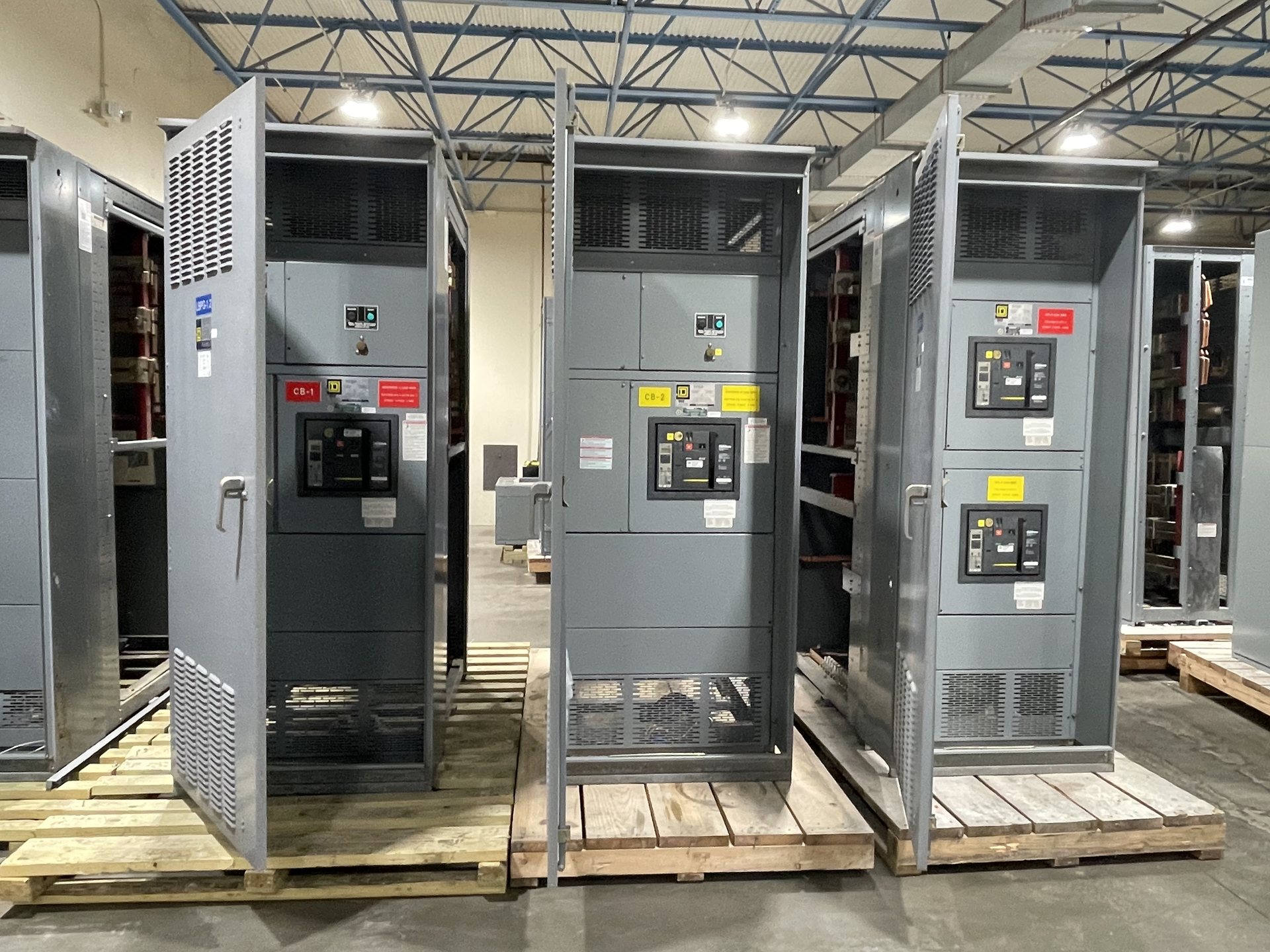
What a 2000-Amp Rating Specifies
A 2000-amp continuous-current designation describes the current the applicable equipment path is specified to carry continuously under its stated conditions. It does not, by itself, establish the rating of every part of an assembly or confirm suitability for a particular load. When requesting pricing, identify which section or path must carry 2000 amps and whether that requirement applies to the main bus, a main device, a feeder, or more than one of these.
The main bus and protective devices have separate ratings and functions. A 2000-amp bus does not automatically mean every breaker or switch is rated 2000 amps, and a 2000-amp device does not establish the capacity of the complete distribution assembly. Provide the one-line diagram and equipment schedule so the proposed arrangement can be reviewed against the required current path, device duties, and operating conditions.
Set Voltage and Phase Before Comparing Designs
Voltage and phase are essential inputs for selecting a 2000-amp assembly. Specify the nominal system voltage, number of phases, frequency, and whether the system is grounded or otherwise configured in a particular way. Also clarify whether the equipment serves a service entrance, a distribution point, or a downstream load. These details affect the available arrangement and component selection; the ampere designation alone cannot resolve them.
Confirm the system information against current project documents rather than relying on a general site description. If the electrical service is changing, note the existing and proposed conditions and identify any transition constraints. Include the source and downstream connection requirements where known. We review these inputs during project scoping so the quotation reflects the intended system, while configuration and applicable standards remain subject to confirmation.
Describe the Load Profile and Growth Plan
A load schedule helps determine how a 2000-amp distribution path will be used. Identify the major loads, expected operating overlap, demand patterns, motor or other significant starting loads, and any planned additions. Continuous operation, changing duty cycles, and future expansion can lead to different feeder layouts or spare-space requirements even when the nominal bus designation stays the same.
Tell us whether the project is new construction, a capacity change, or a replacement in an existing electrical room. For an upgrade, provide available records for the existing equipment and note which loads must remain supported during the changeover. Do not assume an existing 2000-amp label answers questions about present loading, remaining capacity, or compatibility with new devices; those conditions need project-specific review.
Define Fault Duty and Protection Requirements
Available fault current and the required short-circuit performance are separate from continuous-current capacity. A 2000-amp designation does not state how the equipment is to withstand or interrupt a fault. Provide the available fault-current information at the installation point, its source and date, and any project-required ratings or coordination criteria. If these values have not been established, identify that as an open engineering item rather than treating the ampere rating as a substitute.
Share the protective-device schedule, coordination or arc-energy study requirements, and any specified trip functions or adjustable settings that govern the design. The appropriate configuration depends on the complete electrical system and project documents. We review these requirements for the quoted assembly; final protection decisions and engineering coordination should be made by qualified project professionals. Testing, installation, servicing, and energization require qualified personnel following approved procedures.
Choose the Enclosure and Plan the Physical Fit
Enclosure selection for 2000-amp equipment depends on where and how the assembly will be installed. Describe whether the location is indoors or outdoors, the exposure to moisture, dust, corrosive conditions, or other environmental factors, and any specified enclosure requirements. Include room conditions that could affect access or equipment arrangement. These inputs should be stated in the project documents instead of inferred from the equipment’s current rating.
Provide the available equipment-room dimensions, access routes, working clearances, cable entry direction, and conductor termination needs. Existing walls, overhead services, and adjacent gear may constrain the section layout or shipping configuration. For replacement projects, drawings and photographs can help explain site conditions, but they do not replace field verification by the project team. Confirm physical interfaces and installation constraints before approving the final configuration.
Scope New Equipment, Retrofit Components, and Procurement
We supply new equipment and new retrofit components only. For a retrofit, identify the existing manufacturer and model information, section dimensions, bus details, device type, connection arrangement, and any available nameplate or drawing data. State whether the scope is intended to replace a complete assembly or address a defined portion of an existing lineup. Compatibility must be reviewed against the actual equipment and documents; a current rating alone is not enough to establish interchangeability.
For a useful quotation, send the one-line diagram, load and device schedules, voltage and phase, fault-duty requirements, enclosure conditions, physical constraints, and requested component-origin requirements. We build to specification using American components as specified by the customer; component origin and project documentation must be confirmed for each quotation, and no independent domestic-content certification is implied. Lead time, engineering, and applicable standards are also subject to project review. For switchboard assemblies, UL 891 is the relevant switchboard standard; verify listing and standards applicability for the specific configuration.