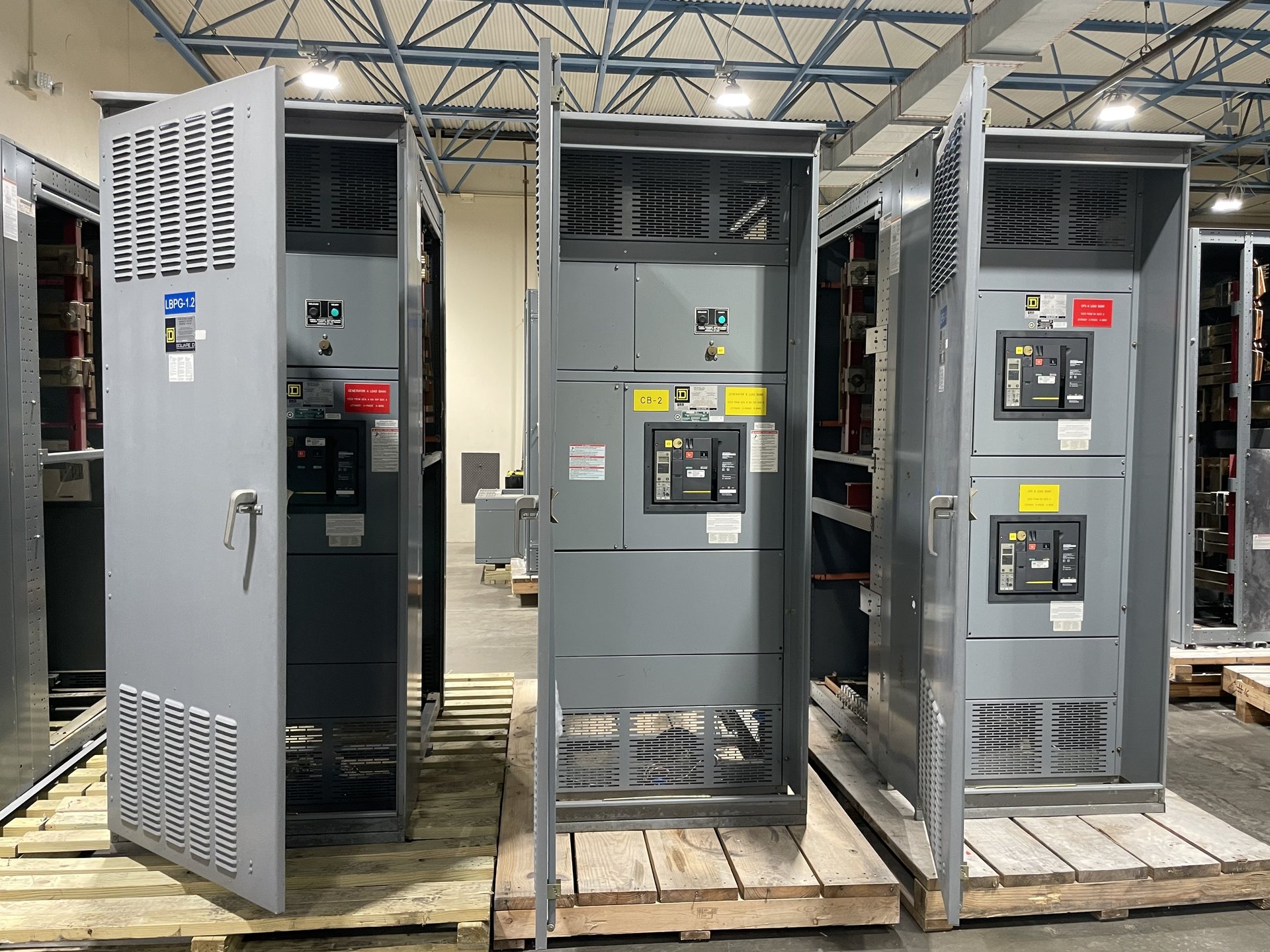
Choose the product by its place in the power system
Start with the one-line diagram and identify what each assembly must do: receive utility or generator power, control and protect a feeder, supply motor loads, transfer between sources, or distribute branch circuits. The name used on an older drawing may not match the function required in a redesigned system. Confirm the upstream source, downstream loads, protective-device responsibilities, available space, and intended operating arrangement before requesting a quotation.
Voltage class is a design boundary, not a product-family substitute. Low-voltage switchboards and panelboards generally distribute power within low-voltage systems, while medium- and high-voltage applications call for equipment designed for those system conditions and duties. A product heading alone does not establish a voltage rating or configuration. Provide system voltage, phase, frequency, fault-duty information, and the relevant project criteria so the proposed equipment can be reviewed against the actual application.
Switchgear for circuit control and protection
Switchgear is specified where the system requires coordinated switching, circuit protection, isolation, or control at a defined point in the distribution architecture. The appropriate construction depends on the voltage class, source arrangement, connected load, fault conditions, and operating requirements. For a useful review, identify incoming and outgoing circuits, protective-device functions, metering or control needs, and any required separation or access provisions shown in the project documents.
Do not treat the word switchgear as a complete specification. A request should state the equipment's role, electrical ratings required by the design, enclosure and environmental conditions, control power needs, interfaces, and any applicable project standards. Include the one-line diagram and schedules, and flag changes to the existing system. Engineering scope, availability, component origin, lead time, and supporting documentation are confirmed for each quotation; no standard configuration should be assumed from the product name.
Switchboards and panelboards serve different distribution scales
A switchboard commonly receives a major feeder or source and distributes power through multiple outgoing circuits to downstream equipment. Its sections, bus arrangement, protective devices, metering, and service functions depend on the project design. When specifying one, document the incoming supply, feeder count and loads, available fault information, connection orientation, cable entry, mounting conditions, and coordination requirements. These details influence both the assembly layout and the interfaces contractors must plan for.
Panelboards typically organize branch-circuit distribution closer to the served loads, such as lighting, receptacles, or smaller equipment. Their schedules, circuit spaces, enclosure, and incoming connection need to suit the intended application and installation conditions. A switchboard and panelboard are not interchangeable just because both distribute electricity. We supply UL 891 switchboard assemblies; the applicable standard and listing for the specific configuration should be verified, and UL 891 should not be taken as a blanket claim for other product types.
Motor control centers organize motor-feeding units
Motor control centers bring motor-control units together in a coordinated assembly, helping define where starters, drives, and associated control equipment sit within a facility's distribution system. Their suitability depends on the motor list and operating strategy, not merely on a preferred lineup footprint. Share motor horsepower or load data, voltage, starting method, duty, control sequence, space constraints, and the relationship between the center and its upstream protective equipment.
Resolve interfaces before equipment is released for manufacture. Confirm whether the scope calls for individual motor feeders, variable-speed control, local or remote control interfaces, communications, spare unit spaces, and specific cable access. Document heat, dust, moisture, corrosive exposure, and access limitations that may affect the enclosure or arrangement. Existing-system replacement work also needs dimensional and connection information; new retrofit components are subject to fit, compatibility, and engineering review rather than assumed interchangeability.
Transfer equipment and busway address source and route
Transfer equipment is selected when loads must be supplied from alternate sources, such as utility and generator power. Specify which sources are involved, which loads transfer, the required operating sequence, control and indication needs, and whether the design calls for automatic or operator-controlled operation. The project engineer should establish the transfer scheme and system coordination. Equipment configuration, ratings, interfaces, and documentation must be reviewed for the specific application rather than inferred from a general product label.
Busway provides a defined route for distributing power through a building or industrial space and may suit layouts where a continuous, planned distribution path is useful. Scoping requires route drawings, source and tap-off locations, mounting and support constraints, environmental conditions, and coordination with structural and architectural work. Confirm the required electrical characteristics, feeder interfaces, and future connection needs. Route changes, obstructions, and field dimensions should be resolved against coordinated project documents before a quotation is finalized.
Scope new equipment and retrofit components clearly
We manufacture and supply new electrical distribution equipment and new retrofit components. For new assemblies, send the latest one-line diagram, equipment schedules, specifications, installation drawings if available, and required submittal format. Identify the project location in Texas or elsewhere, requested delivery destination, decision milestones, and any special packaging or coordination needs. We serve Texas from the United States and ship nationwide.
For retrofit components, provide the existing manufacturer's identification, model or catalog information where available, clear photographs, nameplate data, dimensions, connection details, and the equipment's intended function. Compatibility must be assessed against the installed assembly and project requirements. Ask which component-origin information and test or compliance documents can be supplied for the quoted configuration. Customers may specify American components, but origin and applicable requirements need confirmation; no independent domestic-content certification or blanket Buy American compliance is implied.