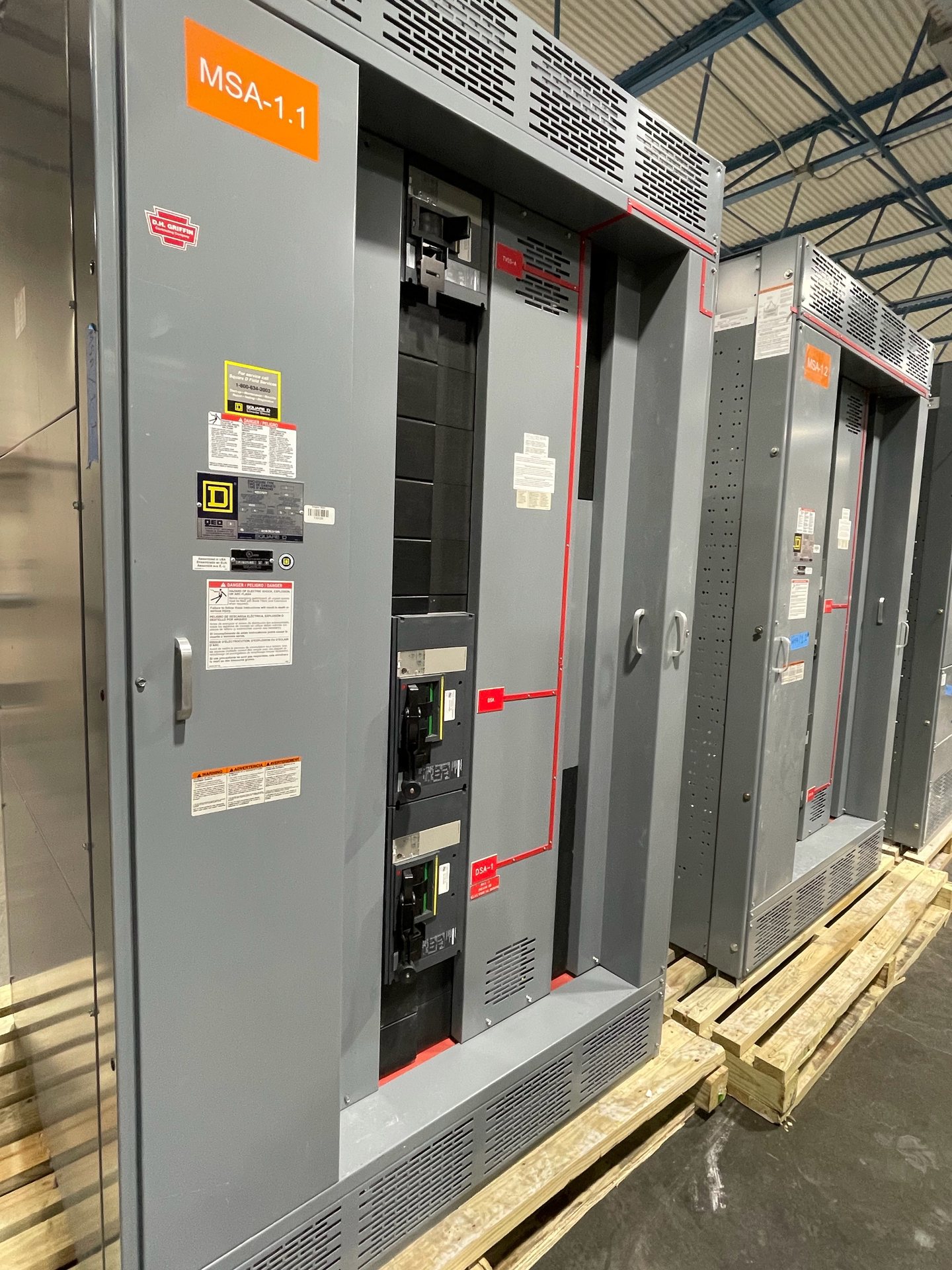
Scope the 3000-Amp Service at the Utility Interface
Start with the serving utility’s written service requirements and confirm the point of delivery, service voltage and phase, grounding method, available fault current, and metering approach. Ask whether the utility requires a particular service entrance arrangement, compartment access, sealing provision, or equipment interface. A nominal 3000-amp rating alone does not establish the acceptable configuration; utility approval and project-specific engineering are essential before equipment is released.
Provide the utility service requirements, one-line diagram, load information, and site constraints with the pricing request. Identify whether the service is new construction or a replacement, whether existing conductors or enclosures must be retained, and who is responsible for utility review. New retrofit components must match the existing equipment and interface conditions; do not assume a component is suitable based only on its ampere rating or physical appearance.
Choose a Service Disconnect Arrangement
Define how the service disconnect function will be provided and how the equipment will be divided into sections. The one-line should identify the main device, downstream distribution, protective-device functions, and any separately required disconnects. Confirm the number of mains or service disconnects permitted by the adopted code and utility rules, the intended operating access, and how the arrangement affects feeder continuity during maintenance or future expansion.
For a 3000-amp assembly, device selection and bus configuration must be evaluated together with fault-current duty, protective-device coordination, enclosure dimensions, and access clearances. Specify the required trip or protective functions and provide coordination requirements from the project engineer. We review the intended configuration rather than treating 3000 amps as a complete design specification. Applicable standards and any listing requirements should be verified for the actual assembly and its final configuration.
Resolve Metering Before Finalizing the Layout
Metering requirements can determine section dimensions, barriers, wiring routes, and access. Confirm whether the utility requires its own metering compartment or accepts another arrangement, and establish who furnishes, installs, and maintains the metering equipment. Ask the utility to identify required instrument-transformer provisions, test facilities, meter access, sealing, and compartment responsibility. These details should be shown on the approved one-line and equipment elevations before fabrication planning proceeds.
Coordinate metering with the service disconnect and bus layout so that the required utility and customer access can be maintained without conflicting with adjacent devices or cable space. Provide any utility drawings, metering specifications, and review comments with the request for pricing. Requirements can vary by utility and project, so an arrangement accepted for one service should not be assumed acceptable for another 3000-amp installation.
Reserve Conductor Landing and Routing Space
A 3000-amp service may require multiple parallel conductors, but the number, conductor size, material, insulation, and routing method must come from the engineer and applicable requirements. Identify the service conductor entry direction, termination orientation, bending constraints, lug requirements, and whether conductors approach from overhead, below grade, or another defined route. Provide actual field dimensions and obstructions; nominal enclosure dimensions do not demonstrate that conductors can be installed and terminated as intended.
Review cable compartments and landing areas against the conductor schedule before approving drawings. Confirm the number of conductors per phase and neutral, grounding conductor arrangement, terminal provisions, and any separation or barrier requirements. Where an existing service is being replaced, document incoming conductor conditions and the available space for new retrofit components. Installation and termination must be performed by qualified personnel under approved project procedures.
Coordinate Grounding and Bonding Details
Document the service grounding and bonding concept, including the equipment grounding path, neutral treatment, grounding electrode conductor connection, and any required bonding points. The engineer should identify the grounding electrode system and how it connects to the service equipment under the adopted code. Confirm whether utility rules impose additional interface requirements. Avoid inferring a grounding scheme from a prior installation, since system configuration and service conditions can differ.
Show grounding and bonding locations on project drawings and specify the intended conductors and termination provisions. Check that the selected layout keeps connections accessible and does not conflict with metering compartments, cable landings, or removable barriers. The equipment quotation should be based on the project’s documented grounding requirements; field changes or incomplete information may affect the final design and should be resolved with the responsible engineer and utility before release.
Prepare Submittals and Purchase Requirements
A useful submittal package begins with a current one-line, utility service criteria, load and conductor schedules, fault-current information, and equipment elevation or space constraints. Include the required device functions, metering provisions, enclosure conditions, connection details, and any project-specific documentation or inspection requirements. Ask which drawings, component data, and test records will be available for the proposed configuration; availability and scope must be confirmed during quotation review.
For purchasing, distinguish new service entrance equipment from new retrofit components and clearly identify the equipment being replaced or interfaced. Provide requested component-origin requirements, while recognizing that origin and any domestic-content compliance must be reviewed and cannot be assumed from a general description. Confirm engineering scope, applicable standards, listing requirements, submittal milestones, and lead time with the quotation. Installation, servicing, testing, and energization require qualified personnel following approved procedures and applicable utility and code requirements.