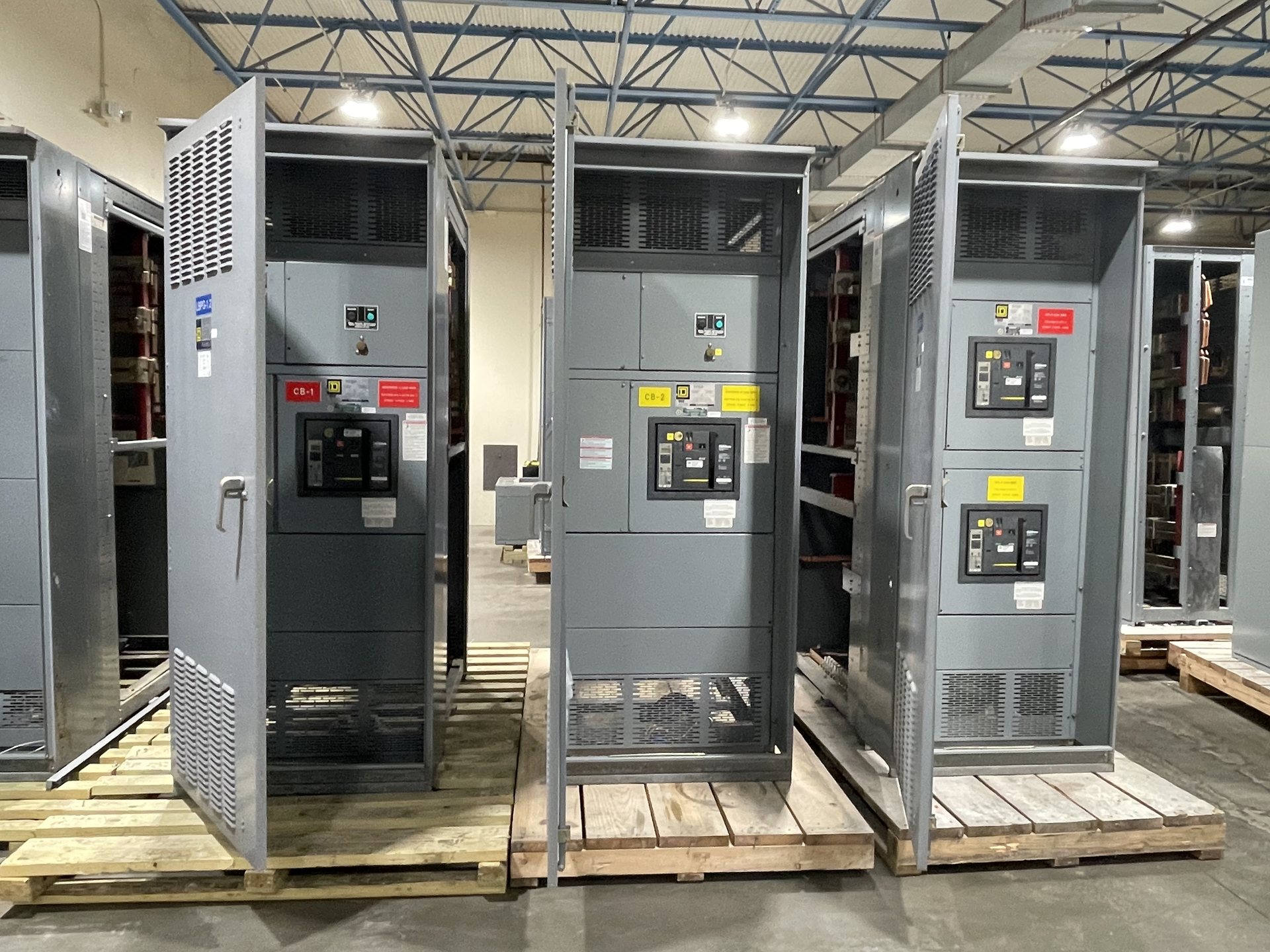
Define what the 3000-amp rating covers
Start by identifying whether 3000 amps is the required rating for the main bus, a main protective device, a feeder device, or another part of the assembly. Those ratings serve different purposes and should not be treated as interchangeable. A 3000-amp bus does not, by itself, establish the rating of each breaker or prove that a particular load can be served. Provide the one-line diagram and equipment schedule so the design basis can be reviewed.
Clarify whether the specified current is continuous load, a nameplate requirement, or a rating carried forward from existing drawings. Include expected demand, any load growth allowance, and how loads are distributed among sections and feeders. If the project requires a 3000-amp main device as well as a 3000-amp bus, state both explicitly. This lets the quotation address the intended ratings rather than rely on an ambiguous equipment label.
Match voltage, phase, and system arrangement
Voltage and phase are fundamental selection inputs for 3000-amp equipment. Specify nominal system voltage, phase, frequency, and conductor arrangement, including neutral requirements where applicable. Also identify whether the equipment is intended for service entrance, distribution, or another point in the system. These details affect the assembly configuration and the devices and accessories that can be specified; the current designation alone does not determine any of them.
Share the available one-line diagram and describe the upstream source and downstream distribution arrangement. Note any tie sections, alternate sources, metering provisions, or transfer requirements that shape the lineup. If the project involves replacement equipment, provide the existing nameplate data and connection details rather than assuming a replacement should duplicate every legacy feature. Final suitability depends on engineering review of the complete system and the specified configuration.
Describe the load profile and operating duty
A 3000-amp continuous-current requirement should be evaluated against how the connected loads operate, not just their summed nameplate values. Document expected demand, operating schedules, major motor or other significant load characteristics, and whether loads start or change together. Identify anticipated expansion and any unusual operating conditions. This information helps distinguish the required continuous rating from a peak, standby, or future-capacity figure and informs the layout of mains, feeders, and distribution sections.
Explain how the equipment will be used day to day: which sources normally supply it, whether any loads are critical, and what switching or isolation functions the project requires. Include coordination and protection objectives available from the electrical design. Do not assume a 3000-amp designation guarantees a particular operating result or makes a configuration suitable for every load profile. Our engineering review uses the project documentation to clarify scope and identify open design decisions before pricing.
Specify enclosure and installation constraints
Describe the installation environment and the enclosure requirements that apply to the equipment location. State whether the assembly will be indoors or outdoors, the available space, access and working clearances, and any environmental exposure that affects enclosure selection. Provide room plans, equipment elevations, and the intended cable-entry direction when available. A 3000-amp rating does not establish enclosure type, lineup dimensions, shipping configuration, or suitability for a particular site.
For retrofit work, identify the existing equipment manufacturer and model if known, along with section dimensions, bus arrangement, mounting details, and interface points. Photographs and field-verified measurements can help reveal constraints that drawings omit, but they do not replace an engineering review. We supply new retrofit components only. The quotation should define exactly which new components or complete assembly are included and which existing interfaces must be retained.
Establish fault duty and protection requirements
Provide the available fault-current information at the proposed equipment location and identify the project’s required short-circuit ratings and protective-device criteria. The 3000-amp continuous-current value is not a fault-duty rating, and it cannot establish an assembly’s ability to withstand or interrupt a fault. Include upstream protective-device information and coordination requirements where available. The responsible engineer should confirm the applicable design values for the actual system and installation point.
State any required protective functions, trip-unit features, metering, or communications expectations, along with coordination study or other project documents that govern selection. Device ratings and characteristics must be evaluated as part of the assembly and system, not inferred from the bus current. Applicable standards and any listing requirements should be verified for the exact configuration. UL 891 applies to switchboards; it is not a blanket listing for every type of switchgear or every assembly.
Prepare a complete, quote-ready specification
For pricing, send the one-line diagram, load and feeder schedules, voltage and phase, required main and bus ratings, fault-duty information, enclosure and installation details, and any applicable specifications. Identify whether the request is for a new assembly or new retrofit components, and attach existing equipment data for retrofit evaluation. Call out required submittals, drawings, test documentation, standards, and delivery destination. Complete inputs help us assess scope; availability, engineering, lead time, and documentation remain subject to project review.
Customers may specify American components, and we build to the approved project requirements using the component choices confirmed in the quotation. Component origin and any domestic-content or procurement requirements must be reviewed for the particular configuration; do not assume independent verification or Buy American or BAA compliance. Before release, review the approved drawings, ratings, interfaces, and exclusions against the project documents. Installation, servicing, testing, and energization must be performed by qualified personnel under approved procedures.