What a 400-Amp Rating Does—and Does Not—Specify
A continuous-current rating describes current an appropriately configured component or assembly can carry continuously under its applicable conditions. When a request says “400-amp equipment,” clarify what carries that rating: the switchboard main bus, an incoming breaker or other main device, a feeder device, or a particular section. Those ratings may be related, but they are not interchangeable. The quotation should identify each rating separately rather than treating 400 amps as a complete design description.
Share the one-line diagram and identify the source, distribution arrangement, and intended loads. Confirm whether 400 amps is the required bus rating, the selected main-device rating, a calculated load value, or an existing equipment constraint. Also ask whether the project requires continuous-load provisions or other design margins. The manufacturer can review the requested configuration, but the engineer of record remains responsible for system calculations and application requirements.
Coordinate Main Bus and Device Ratings
The bus provides a current path through the assembly; protective devices control and interrupt their assigned circuits within their ratings. A 400-amp bus does not automatically mean that the main breaker is rated 400 amps, and a 400-amp main device does not establish the required rating of every feeder. Specify the bus and each significant device by location and function, and identify any restrictions imposed by the existing system or project design.
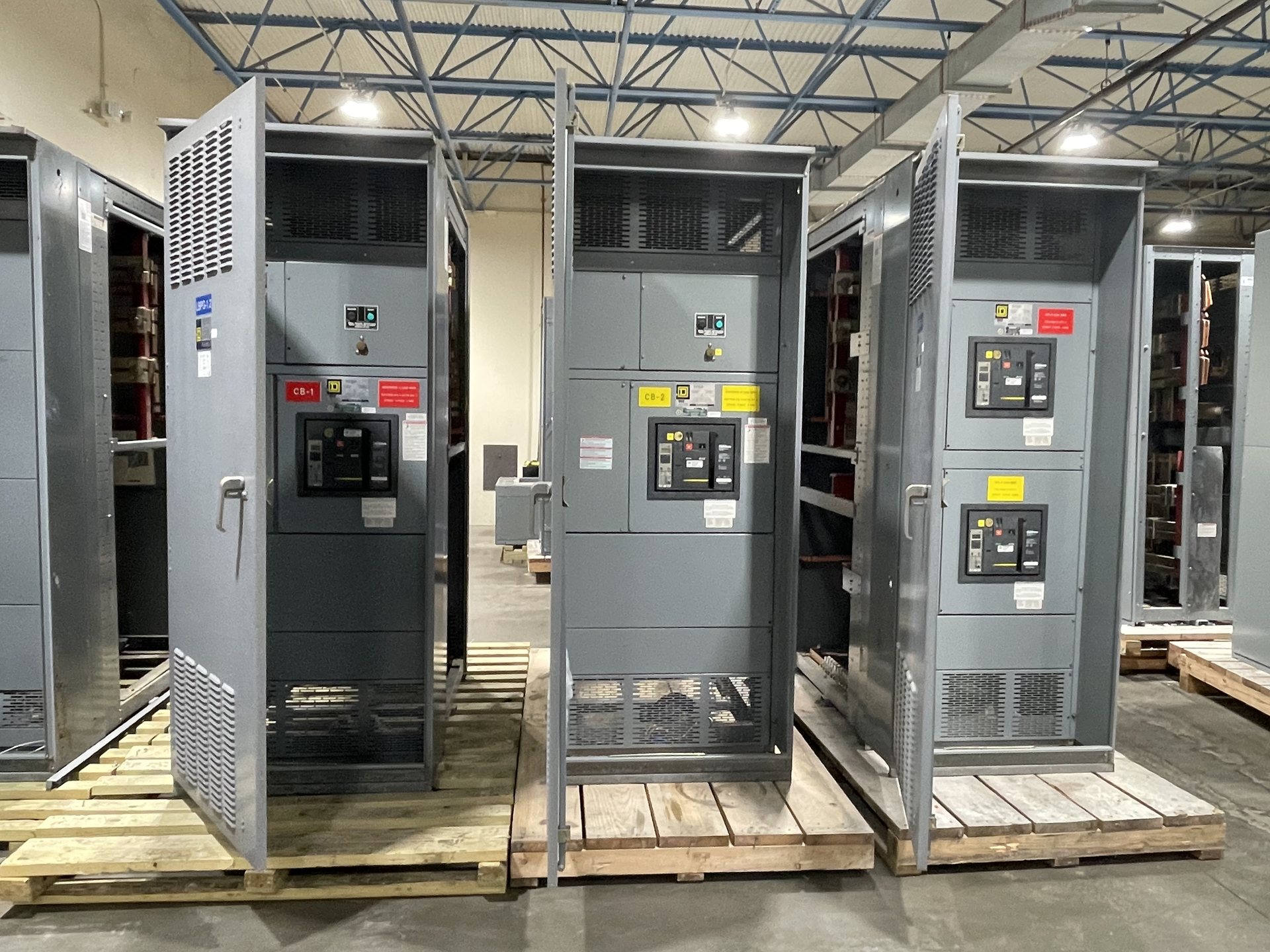
For a replacement or expansion, document the existing gear manufacturer and model where known, section arrangement, bus connections, device types, and available space. If the scope is a retrofit, distinguish new retrofit components from reused equipment and state what must remain compatible. Provide photographs and nameplate information when available, but do not rely on appearance alone to establish electrical suitability. Compatibility, dimensions, connection details, and ratings require configuration-specific review.
Specify Voltage, Phase, and System Arrangement
Voltage and phase are essential selection inputs for any 400-amp distribution assembly. Provide nominal system voltage, number of phases and wires, frequency when relevant, grounding arrangement, and the source configuration. Identify whether the equipment serves a main distribution point, a downstream panel, or a dedicated load. A current designation without these details cannot establish the proper bus arrangement, devices, insulation requirements, or system interfaces.
Include the one-line diagram and note any unusual operating conditions, such as multiple sources, transfer equipment, or future tie-ins. Identify the incoming and outgoing conductor or bus connections required by the design, including entry direction where it affects the enclosure layout. Do not assume that equipment designed for one voltage or phase arrangement can be adapted to another by changing a device alone; the complete configuration must be reviewed against the project requirements.
Match the Design to the Load Profile
Two projects with a 400-amp designation can have different operating demands. Describe the connected loads, expected demand, load types, operating schedule, and any known starting or inrush characteristics. Identify critical loads, planned additions, and whether loads operate concurrently. These details help the design team understand how the requested current rating fits the application; they do not replace the electrical calculations and code review required for the project.
For purchasing and engineering review, provide available load schedules, feeder schedules, and project drawings, and flag any data that is preliminary. Explain whether the equipment must accommodate spare device positions, planned feeders, or a future increase in distribution needs. State which requirements are fixed and which may be evaluated during design. This avoids treating unused space or a nominal bus rating as proof that future capacity has been reserved.
Define Enclosure and Fault-Duty Requirements
Specify where the equipment will be installed and the enclosure conditions required by the project. Provide indoor or outdoor application, environmental exposure, available room dimensions, access and working-space constraints, cable entry preferences, and any project-required enclosure rating. Confirm orientation and connection clearances with the site and design team. A nominal 400-amp rating does not determine enclosure construction or establish that the equipment fits a particular room or installation.
Fault duty is a separate and critical selection input. Provide the available fault current at the equipment location, the protective-device information needed to evaluate the system, and the required short-circuit rating or other project criteria. Do not infer fault capability from a 400-amp continuous-current designation. The proposed assembly and its protective devices must be reviewed for the specified system conditions, with applicable ratings and documentation confirmed for the quoted configuration.
Plan the New Equipment or Retrofit Scope
Switchgear Builders Texas supplies new electrical distribution equipment and new retrofit components. For a new assembly, define the required sections, mains and feeders, metering or control provisions, cable and bus interfaces, and project-specific accessories. For a retrofit, identify the equipment receiving the new components and provide the information needed to assess fit and electrical compatibility. A retrofit component must be specified against the actual installation, not selected by amperage alone.
A complete request for pricing should include drawings, schedules, site constraints, required delivery destination, requested documentation, and the project schedule. State whether the specification calls for American components and identify any applicable project clauses. Component origin and any domestic-content requirements must be confirmed for the quoted scope; the request itself does not establish independent verification or Buy American/BAA compliance. We serve Texas from the United States and ship nationwide, subject to project review.
Review Standards, Submittals, and Project Readiness
Before release, compare the proposed configuration with the approved drawings and project specification: bus and device ratings, system voltage and phase, load arrangement, enclosure requirements, fault duty, interfaces, and accessories. Request the submittals needed for engineering approval, such as configuration drawings and applicable component information. Confirm which standards apply to the specific assembly. UL 891 is a switchboard standard; its applicability and any listing status must be verified for the proposed configuration rather than assumed from the 400-amp rating.
Confirm the quoted scope, component origin, engineering review, documentation, and lead time with the manufacturer for each project. Resolve drawing comments and interface questions before procurement or site scheduling. Installation, servicing, testing, and energization must be performed by qualified personnel under approved procedures. Clear technical inputs help the project team evaluate the 400-amp equipment as a complete, application-specific assembly instead of relying on a single current figure.