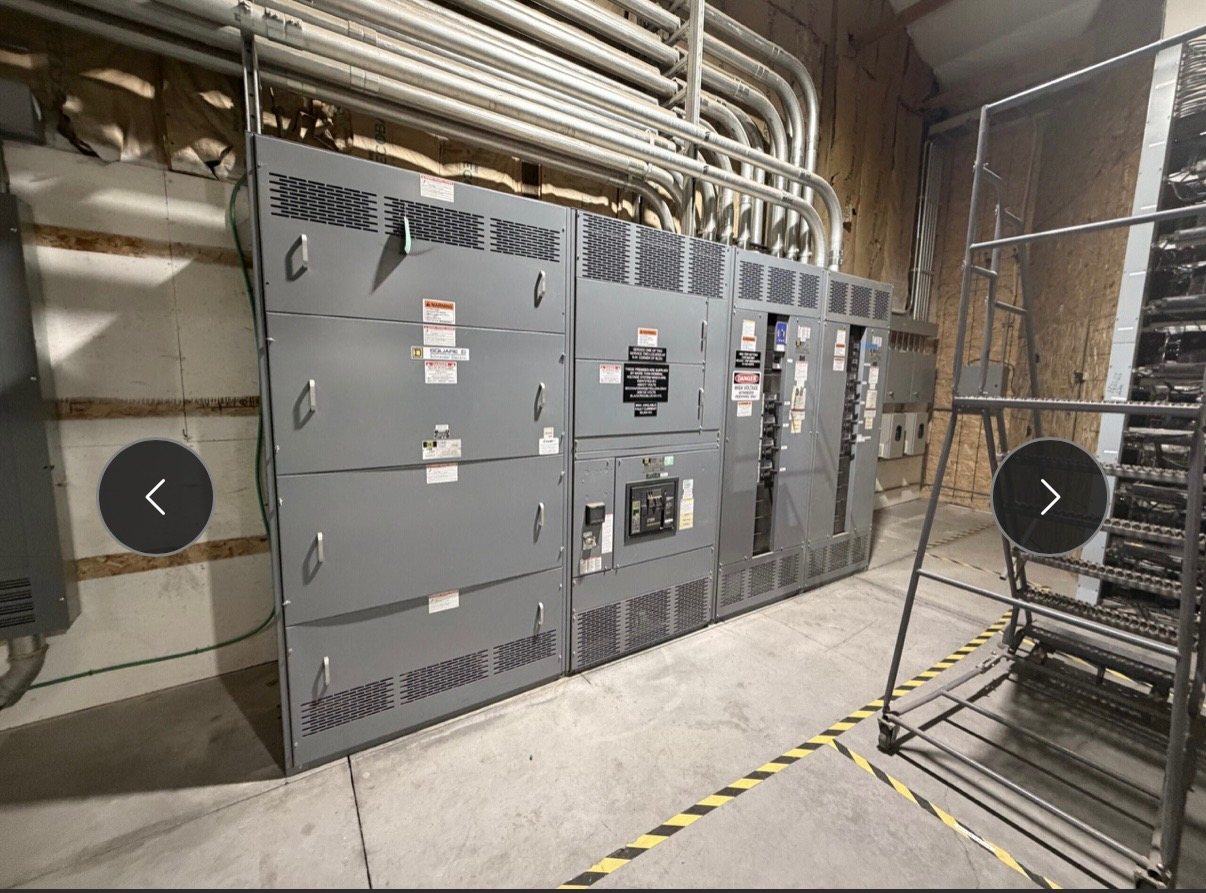
Define the 600-Amp Retrofit Scope
Start by identifying exactly what the 600-amp rating describes: a main bus, a feeder, a switchboard section, or a specific protective device. Record the equipment manufacturer and model, nameplate data, number of sections, circuit arrangement, and any field changes. A 600-amp designation alone does not establish that an existing bus can accept an extension or that a new assembly will coordinate with the connected distribution system.
Decide whether the project calls for a full replacement, a new adjacent section, or new retrofit components intended to interface with retained equipment. Specify which existing parts are to remain and which are to be removed. Provide one-line diagrams, photographs, equipment schedules, and the reason for the work, such as capacity changes, damaged components, or obsolescence. We manufacture new equipment and new retrofit components only.
Measure Existing Bus and Connection Interfaces
Interface measurements need to be taken from the actual equipment, not inferred from a nominal amp rating or a catalog image. Document bus width and thickness, phase arrangement, spacing, orientation, connection-hole pattern, and the position of the neutral and grounding bars where applicable. Record the location of supports and barriers, as well as clearances that affect a joint or an adjacent section. Include measurement units and identify the reference surfaces used.
For enclosure fit, capture overall width, height, and depth; section boundaries; mounting and anchoring points; door swing; cable-entry locations; and top, bottom, or side access constraints. Note conduit, cable, and busway approaches, plus obstructions that could block installation or future access. Supply scaled drawings when available and distinguish field measurements from dimensions taken from legacy documents. Qualified personnel should assess the equipment using approved site procedures.
Verify Thermal and Fault Ratings
Confirm the equipment’s rated current in context: identify the main device, continuous-load assumptions where relevant, bus rating, feeder ratings, and any derating conditions stated in the documentation. Review enclosure conditions, ventilation, conductor terminations, and the way the assembly is installed. The existing 600-amp nameplate value does not by itself establish the rating of a proposed extension or prove that retained equipment remains suitable for the intended duty.
Obtain available fault-current information and the existing assembly’s short-circuit or withstand ratings and protective-device details. Compare the proposed configuration with the project’s applicable system study and coordination requirements. If those records are unavailable or the electrical system has changed, identify that uncertainty for engineering review before finalizing the scope. Rating suitability, protective-device selection, and any required study must be resolved for the specific configuration, not assumed from a similar installation.
Choose Replacement or Extension Design
A complete replacement can provide a coordinated new assembly, while an extension may preserve serviceable sections and add needed distribution capacity. The choice depends on interface compatibility, equipment condition, available space, circuit requirements, and the effect of removing or retaining existing components. Ask whether the design needs a new main, additional feeder positions, metering provisions, control wiring, or a different cable-entry arrangement, and identify spare capacity requirements.
Where new equipment must connect to retained gear, define the exact transition boundary and the responsibilities for engineering and field verification. Do not assume that matching dimensions establish electrical or mechanical compatibility. Provide the existing drawings, measured interfaces, system ratings, and any project-specific requirements so the proposed arrangement can be reviewed. Switchboard assemblies supplied to the project may be evaluated against UL 891 as applicable; listing status and applicable standards must be verified for the final configuration.
Plan the Outage and Field Sequence
Build the outage plan around what must be isolated, removed, connected, inspected, and returned to service. The owner, electrical contractor, and relevant facility teams should establish the outage window, switching authority, access conditions, work boundaries, and any loads that need an alternate operating plan. Confirm who will disconnect existing conductors, handle equipment removal, prepare mounting surfaces, and complete field connections before the new assembly arrives.
Coordinate delivery and staging with the site’s access route, rigging limits, floor conditions, storage space, and installation sequence. Identify prerequisites such as approved drawings, completed interface checks, required permits, and readiness of cables and raceways. Installation, inspection, testing, and energization must be performed by qualified personnel under approved procedures. The manufacturer’s project review can address equipment scope and documentation, but it does not replace the site’s safety controls or outage authorization.
Prepare a Complete Request for Pricing
For a useful quotation, provide the one-line diagram, equipment schedules, nameplate information, photographs, interface measurements, available fault-current data, and the desired replacement or extension boundary. State the required incoming and outgoing arrangements, circuit count, enclosure conditions, cable or busway entry, control and metering needs, and any space or access limits. Identify applicable project specifications and the documents required for submittal review.
Also state the requested delivery destination in Texas or elsewhere in the United States, the project milestone, and the outage date that the equipment must support. These details allow the scope, engineering review, component origin, documentation, and lead time to be considered for the specific request. Availability and delivery timing are subject to project review; no rating, interface, standard, test record, or domestic-content requirement should be treated as confirmed until addressed in the quotation.