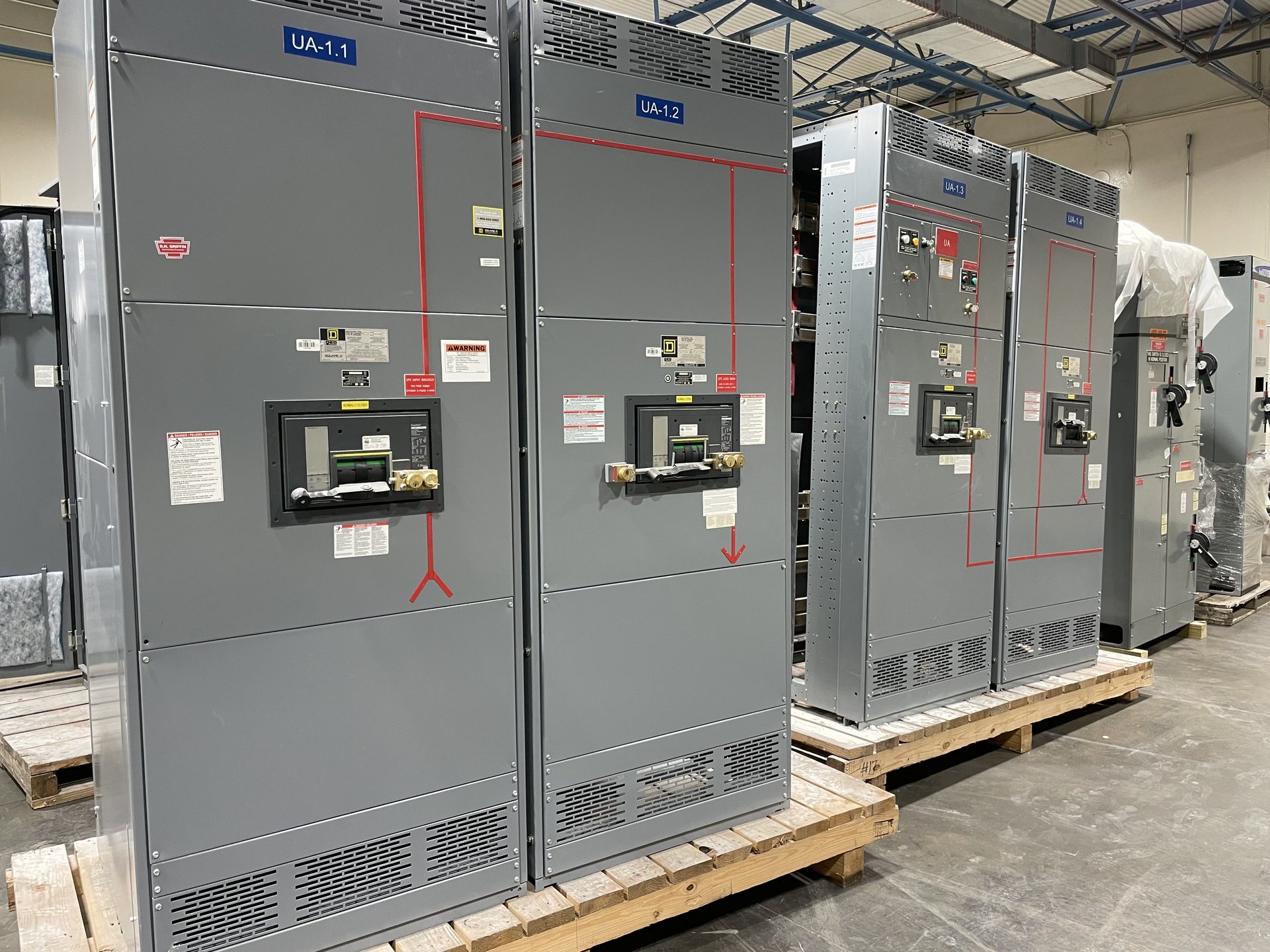
Define the Austin Retrofit Scope from Existing Conditions
Begin by identifying exactly what is being modernized: an entire lineup, a section, a main or feeder device, or associated control and metering components. Record manufacturer and model information where available, but do not rely on nameplates or old drawings alone. A useful survey captures equipment arrangement, enclosure dimensions, compartment and door clearances, cable entry and termination locations, bus configuration, device mounting, control wiring, and visible obstructions around the lineup.
Compare the records with field conditions and flag gaps before requesting pricing. Note equipment condition and operating constraints without attempting work on energized gear; surveys, testing, installation, and energization belong to qualified personnel following approved procedures. Provide photographs, marked-up one-lines, panel schedules, available maintenance records, and the site’s access limitations. These details help determine what can be replaced within the existing footprint and what may require adjacent equipment or installation changes.
Check Replacement Compatibility Before Selecting Equipment
A replacement device or section must fit electrically and physically, not merely resemble the equipment being removed. Review enclosure dimensions, mounting and racking arrangement, bus connections, phase orientation, barriers, cable bending space, terminal access, control voltage, interlocks, metering, and protective-device interfaces. Identify which existing parts the project intends to retain and which will be replaced with new components. Retained interfaces need explicit review because small differences can affect installation and operation.
Share the existing equipment’s manufacturer data, drawings, and measured interface details when asking us to evaluate a new configuration. If the original documentation is incomplete, identify which dimensions and connections still need field verification instead of assuming compatibility. The quotation and engineering review should establish the proposed scope, required adaptations, exclusions, and documentation needed for approval. Do not treat a retrofit as a direct replacement until the actual mechanical and electrical interfaces have been assessed.
Confirm Bus and Fault Ratings for the System
Modernization must preserve ratings appropriate to the complete electrical system. Provide the system voltage, continuous-current requirements, bus rating, available fault-current information, and the protective-device characteristics used in the coordination study. Confirm whether the scope affects main, tie, or feeder equipment and whether any upstream source or transformer changes are planned. A new section cannot be selected from the existing gear’s appearance or one nameplate value alone.
Ask the project engineer to identify the governing fault-duty basis and any required withstand, interrupting, or short-circuit ratings for the proposed configuration. These values depend on the system and must be evaluated for the specific assembly and devices. We can review stated project requirements during quotation and engineering, subject to available design information and configuration review. Applicable standards and any requested listing must be verified for that specific assembly; UL 891 applies to switchboard assemblies, not every type of switchgear.
Build an Outage Sequence Around Austin Operations
For an Austin facility, the outage plan should be developed around the actual loads served, operating hours, and consequences of losing each source or feeder. Identify critical loads, available alternate feeds, temporary-power requirements, switching restrictions, and the parties authorized to approve an interruption. Establish which equipment can be isolated in each phase and whether the project requires separate outages for removal, installation, inspection, and return to service.
Create a sequence with defined prerequisites, decision points, and responsibilities rather than relying on a single assumed shutdown window. Coordinate utility or owner requirements, permits, access, equipment delivery, and readiness of the receiving area before committing to an outage date. The manufacturer can use the approved sequence to inform configuration and documentation, but outage duration and installation timing depend on site conditions and must be confirmed by the project team.
Coordinate Field Installation and Existing Interfaces
Installation planning should resolve how new equipment reaches the electrical room and connects to existing infrastructure. Confirm route dimensions, door and elevator limits, floor loading where relevant, rigging access, laydown space, working clearances, cable routes, and the means to remove existing equipment. Document whether terminations are top or bottom entry and whether cable lengths, conduit locations, or bus connections constrain the replacement arrangement.
Assign responsibility for field measurements, removal, anchoring, bus and cable connections, control-wiring verification, and system integration. Identify the latest approved drawings and the process for resolving discrepancies discovered after removal. Installation, testing, and energization require qualified personnel using approved procedures; new equipment design does not replace site-specific safety planning. Early coordination helps the contractor, engineer, owner, and manufacturer address fit and interface questions before they threaten the planned outage.
Request Pricing with a Complete Project Package
A focused pricing request should include the one-line diagram, equipment schedules, existing nameplate data, survey measurements, photographs, rating requirements, and the intended replacement boundary. Add the project location in Austin, desired delivery constraints, installation sequence, control and metering requirements, and any specified American-component requirements. State what documentation is needed for design review, approval, installation, and closeout, and identify unresolved conditions that may affect the scope.
We supply new equipment and new retrofit components built to specification, with short lead times subject to project review. Availability, engineering, component origin, lead time, and test documentation must be confirmed for each quotation. Requests for pricing are appropriate before final design, provided assumptions and open questions are clearly stated. The resulting proposal should distinguish included equipment and documentation from field labor, retained components, site work, and other items outside the manufacturer’s scope.