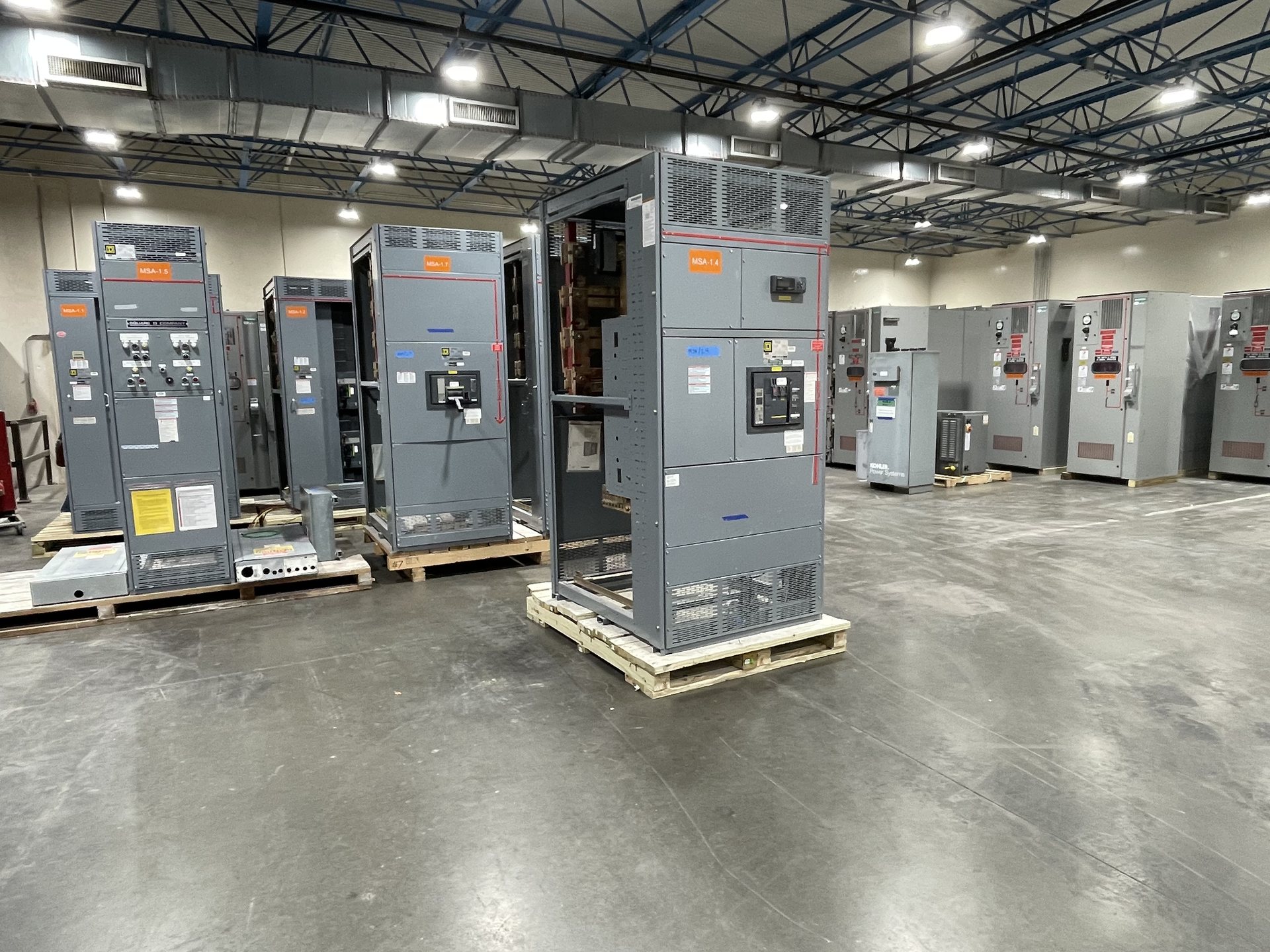
Select Bus and Breakers from the System Design
For a Brownsville low-voltage switchgear specification, define the bus arrangement and breaker functions from the one-line diagram and load requirements. Identify main, tie, and feeder devices; continuous current needs; number of poles; and any required metering or control provisions. Confirm whether the design calls for a particular bus material, plating, or arrangement, and state those requirements explicitly rather than relying on assumptions from a prior project.
Breaker selection should account for the system voltage, frame and trip requirements, protective functions, and the connection method needed for the assembly. Decide whether drawout or fixed construction suits the operating and maintenance plan, and document interlocking or transfer schemes when applicable. We review these choices against the project documents and quotation scope; suitability and availability are subject to engineering review and confirmation.
Establish Available Fault Current Before Specifying Ratings
Available fault current at the switchgear location is a key input to equipment selection. Provide the latest short-circuit study or the utility and transformer data needed to establish the expected fault level, including transformer impedance, upstream protective devices, and relevant conductor information. If the source arrangement can change, such as with alternate feeds or parallel sources, include those operating configurations in the study and identify the governing condition.
The specified assembly and breakers must be evaluated against the documented system conditions, including interrupting and withstand requirements as applicable to the design. Do not select ratings by copying another facility’s schedule or assuming that a nominal voltage determines fault performance. If the study is pending or based on preliminary utility data, identify that status in the request so the rating basis, assumptions, and need for later confirmation are clear.
Account for Brownsville Site and Enclosure Conditions
Describe where the switchgear will be installed and the conditions it will encounter. State whether the location is indoors or outdoors, whether it is conditioned or exposed to ambient temperature swings, and whether moisture, dust, corrosive agents, or washdown are concerns. For Brownsville projects, provide the actual site and room conditions rather than treating the city name as a substitute for an environmental specification.
Enclosure and construction choices should follow the installation environment, access needs, and applicable project requirements. Include the intended enclosure type or environmental protection criteria, available working and equipment clearances, cable entry direction, and any constraints on shipping or movement into the electrical room. These details can affect section layout, access, and termination planning. Confirm the final configuration and applicable standards during quotation review; do not assume a particular listing applies to every assembly.
Coordinate Equipment With Installation Drawings
Send the current one-line diagram together with plans, elevations, conduit or cable routing information, and the electrical room layout. The drawings should show the equipment footprint, lineup orientation, wall and door locations, adjacent gear, and the intended route for incoming and outgoing conductors. Identify whether cables enter from above or below and note any bus duct or transition requirements, since these affect section arrangement and connection locations.
Check that drawing revisions, equipment tags, feeder names, and electrical schedules agree before requesting pricing. Mark dimensions that are fixed by the building or installation sequence, and distinguish confirmed site conditions from design assumptions. Coordination early in the process can reveal conflicts involving access, cable bend space, structural supports, or future expansion. Installation and energization must be performed by qualified personnel under approved project procedures.
Define New Equipment and Retrofit Scope Clearly
We supply new equipment and new retrofit components. For a new lineup, describe the required sections, breaker functions, metering, control features, and any specified accessories. For a retrofit, identify the existing switchgear manufacturer and model if known, provide nameplate and compartment information, and state precisely which new component is required and what existing equipment it must interface with.
Retrofit compatibility should be established from verified dimensions, mechanical interfaces, electrical characteristics, and the existing assembly’s condition—not from appearance or a description such as “same size.” Provide clear photographs and available drawings, but treat them as supplemental to dimensional and technical data. We review the proposed scope before quotation and confirm what can be supplied. Do not assume a new component is interchangeable until the relevant interface and design requirements have been checked.
Prepare a Complete Quotation and Submittal Package
A pricing request is most useful when it includes the one-line diagram, fault-current basis, load or feeder schedule, enclosure conditions, and installation drawings with revision dates. Add required system voltage and current parameters, bus and breaker preferences, control or metering needs, and any project specifications that affect construction. State whether a firm design basis is available or whether quantities and ratings remain preliminary.
Identify the documents needed for review, approval, installation, and turnover, such as arrangement drawings, wiring information, bills of material, or factory documentation required by the project. Availability, engineering, component origin, lead time, and test documentation must be confirmed for each quotation. Customers may specify American components, but domestic-content requirements and component origin should be stated and reviewed for the particular scope; no blanket compliance assumption should be made.