Select bus and breakers around the actual load
For a Dallas commercial, industrial, or institutional project, begin bus selection with the one-line diagram, load schedule, and expected operating profile. Identify the main and feeder functions, connected loads, anticipated demand, and any planned expansion. The designer should establish the required continuous current and system voltage, then determine whether the proposed bus arrangement and feeder layout fit the service and distribution plan. A headline amperage alone does not define a suitable assembly.
Breaker selection should follow the protection scheme and the loads each device serves. Confirm breaker type and frame or trip requirements against the design, available space, conductor termination needs, and coordination objectives. Provide the intended main-device arrangement, feeder quantities, and any required accessories or control interfaces when requesting pricing. We build new equipment to specification; the proposed breaker and bus configuration must be reviewed against the project documents before availability and engineering are confirmed.
Establish available fault current before specifying interruption
Available fault current at the switchgear connection point is a defining input, not a value to estimate from the equipment nameplate or a neighboring building. Ask the electrical engineer or serving utility for the applicable study information, including the point of evaluation and assumptions used. Changes in transformer data, source configuration, conductor length, or upstream equipment can change the calculated fault current and therefore affect the required equipment ratings.
Provide the current short-circuit and coordination study, or its relevant design conclusions, with the quotation package when available. The responsible engineer should reconcile the specified interrupting and withstand requirements with the selected breakers and assembly configuration. Do not treat a breaker rating as a substitute for evaluating the complete system. Final suitability depends on project engineering and confirmed equipment data; the quotation should identify what assumptions and documents remain open.
Match the enclosure to the Dallas installation environment
Dallas-area installations may place electrical equipment in conditioned electrical rooms, unconditioned service spaces, or locations exposed to moisture, dust, heat, or other contaminants. Describe the actual setting rather than selecting an enclosure from a broad project category. Useful details include indoor or outdoor placement, exposure to weather or washdown, ventilation, ambient conditions, access restrictions, and whether the equipment is near process activity or vehicle movement.
The enclosure and construction should suit the specified environment while preserving required working clearances, cable access, and maintenance access. Identify the room layout, floor and wall conditions, entry route, and any constraints on sections or shipping dimensions. If the equipment will be installed outdoors or in a space with unusual environmental demands, state those conditions in the specification and request review. The final enclosure configuration and applicable requirements are confirmed for the quoted assembly.
Coordinate equipment details with installation drawings
A switchgear schedule cannot resolve every field interface. Coordinate the proposed lineup with the latest one-line diagram, plan view, elevations, equipment-room layout, and conduit or cable routing information. Confirm the intended line and load sides, incoming service arrangement, feeder exits, section sequence, and orientation. These details help identify conflicts with walls, doors, structural elements, overhead services, and adjacent electrical equipment before the assembly configuration is finalized.
For a useful drawing review, provide revision dates and identify which documents govern where drawings differ. Include project-specific requirements for cable entry, termination space, access, and connections to upstream or downstream equipment. Installation drawings should be reconciled by the project’s responsible design and construction team; equipment review does not replace site verification. Qualified personnel must handle installation, servicing, testing, and energization under approved procedures.
Define new equipment and retrofit scope clearly
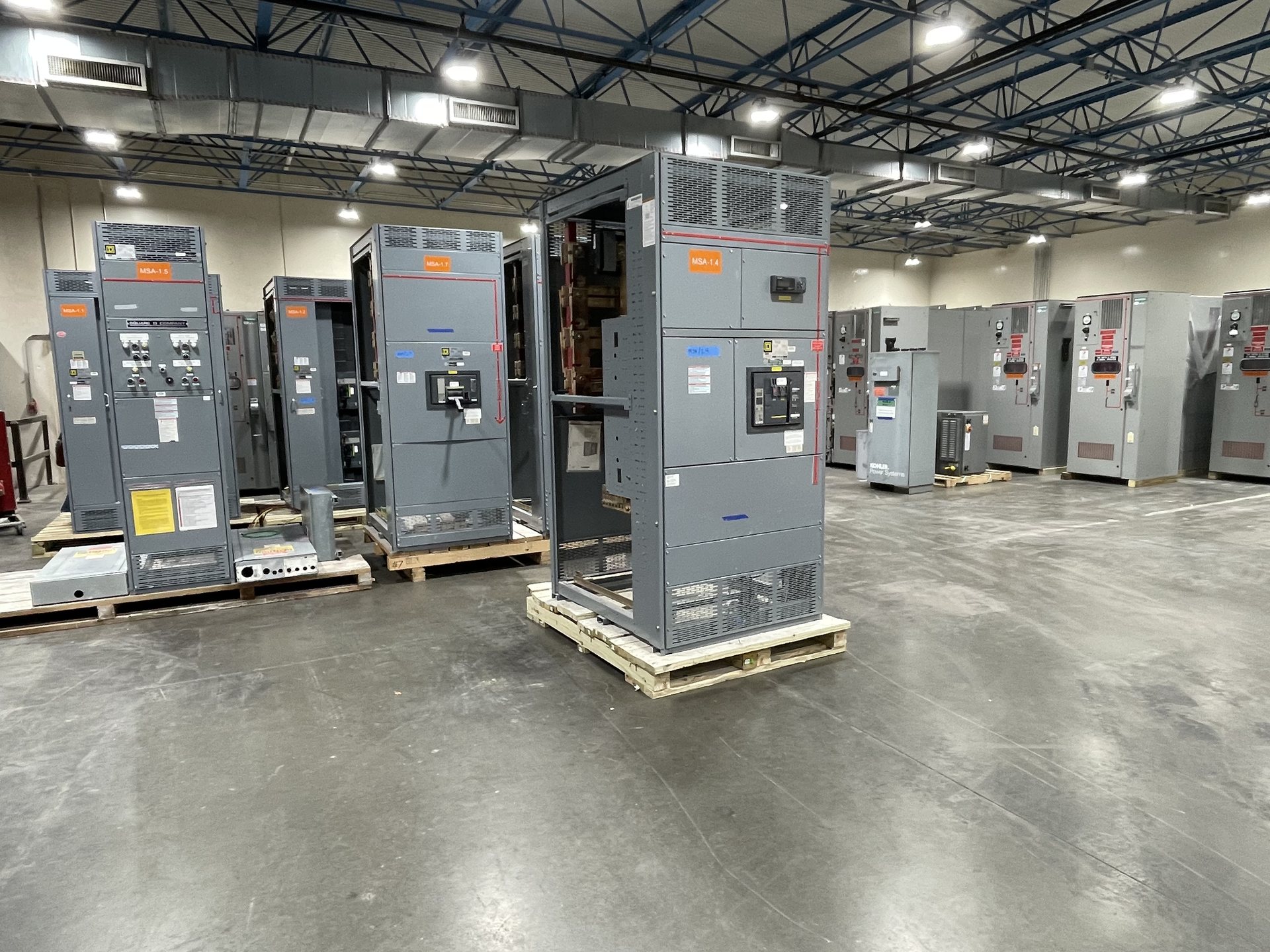
This page concerns new low-voltage switchgear and new retrofit components supplied by the manufacturer. For a replacement or retrofit project, distinguish the new equipment being quoted from existing infrastructure that will remain. Provide available nameplate data, dimensions, connection details, and drawings for the existing assembly, along with the intended scope of replacement. Do not assume that an existing device’s appearance or nominal rating establishes interchangeability.
The design team should identify which interfaces must be maintained, what will be removed, and whether the project requires new sections, breakers, or other new components. Existing bus geometry, mounting, control wiring, and protection requirements may affect the feasibility of a retrofit configuration. We review the supplied information for the requested scope and confirm engineering and availability with the quotation.
Prepare a complete quotation and compliance package
A focused pricing request should include the project location in Dallas, required delivery timing, system voltage, design current, one-line diagram, load schedule, fault-current information, and the specified breaker and bus arrangement. Add enclosure conditions, room and access constraints, drawing revisions, and any project-specific documentation requirements. If values are preliminary, label them as such and identify who will confirm them. Clear inputs help us identify open engineering questions instead of treating assumptions as final requirements.
State component-origin preferences and applicable project standards explicitly. We build to specification using American components when requested, but component origin and documentation must be confirmed for each quotation; this does not itself establish compliance with a domestic-content rule. UL 891 applies to switchboards, not universally to every switchgear configuration. Verify the applicable standards and any required listing for the proposed assembly. Lead time, testing documentation, and final configuration are subject to project review.