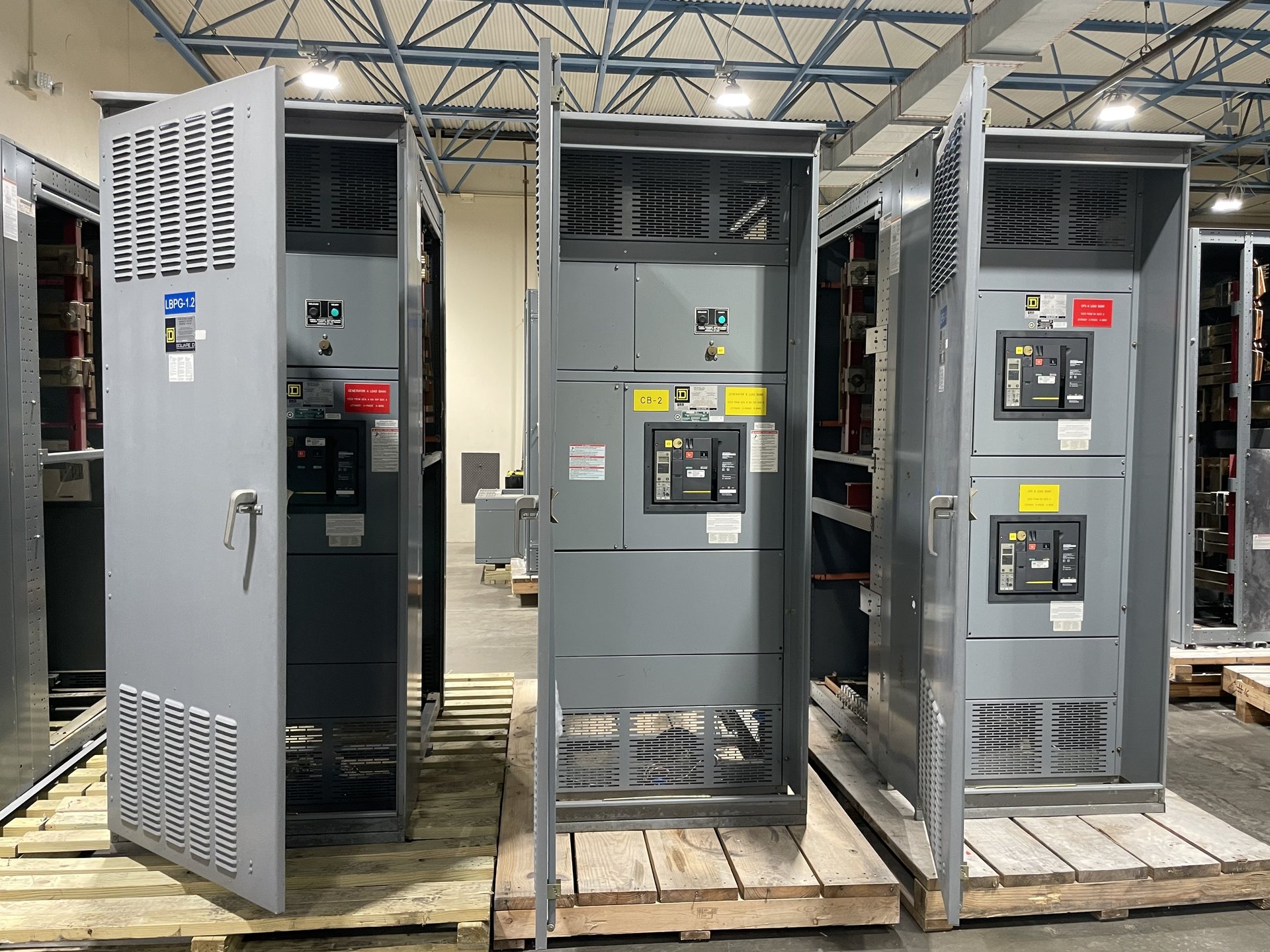
Select bus and breakers around the project load
For an El Paso project, begin bus selection with the one-line diagram, connected and calculated loads, system voltage, incoming source arrangement, and anticipated expansion. Ask whether the bus must serve multiple sections, support future feeder additions, or accommodate a tie breaker. These details affect lineup arrangement and bus design. The quoted configuration, ratings, and component availability must be confirmed during project review rather than inferred from a general low-voltage description.
Breaker selection should follow the circuit function and documented load characteristics. Provide feeder quantities, load types, operating requirements, and any requested trip or frame characteristics. Identify which breakers are mains, ties, and feeders, and whether the design calls for fixed or drawout construction. If new retrofit components are requested, include the existing equipment manufacturer and model, photographs, nameplate information, and compartment details; compatibility must be reviewed before a component is specified.
Establish available fault current and equipment duty
Available fault current at the switchgear terminals is a key input to equipment selection. It depends on the utility source, transformer impedance and size, conductor lengths, and other system elements. Provide the latest fault-current study or the source data needed for the project engineer to establish the value at the proposed equipment location. Confirm whether the study reflects the operating configuration, including alternate sources and closed ties, rather than relying on a value from an earlier project stage.
The specified assembly and breaker characteristics must be reviewed against the calculated fault duty and the protection scheme. Ask the engineer to identify the required interrupting and short-circuit ratings, any selective coordination objectives, and relevant study assumptions. Do not assume a rating from a similar lineup will suit this installation. The final proposal depends on configuration review, component availability, and confirmation of applicable ratings and documentation for the quoted equipment.
Match the enclosure to the installation environment
El Paso site conditions should inform enclosure and placement decisions, but a city name alone does not define the environment. Tell us whether the lineup will be indoors or outdoors, in a conditioned electrical room, or in an area exposed to dust, moisture, temperature changes, or other site-specific influences. Include the room or pad layout, access constraints, ventilation approach, and any project-required enclosure designation so the proposed arrangement can be evaluated for the actual location.
Review working space, door and breaker access, cable entry, and paths for moving the lineup into position. Note overhead services, walls, structural obstructions, and the locations of conduits or bus connections. If environmental controls or special construction are required by the project, identify them in the specification rather than leaving them to assumption. Enclosure suitability, options, and any limitations should be confirmed as part of the equipment quotation and coordinated with the responsible design professionals.
Coordinate the lineup with installation drawings
The electrical one-line explains the system, while plan, elevation, and wiring documents clarify how the equipment must fit and connect. Send the current drawing set, including revisions, lineup dimensions or constraints, incoming and outgoing conductor routes, and the intended section arrangement. Flag discrepancies between the one-line and plans, such as a feeder shown in one location but assigned to a different section elsewhere. Resolving these items before release reduces avoidable redesign and field coordination problems.
Confirm connection requirements, cable or busway entry, access direction, foundation or housekeeping-pad details, and the location of auxiliary wiring interfaces. Identify who is responsible for final dimensions, field verification, and drawing approval. Ask which submittals are required for review, such as general arrangement, equipment schedules, or wiring information, and when they are needed. Available engineering and documentation are project-specific; establish their scope during quotation instead of assuming every drawing or revision is included.
Plan protection and control interfaces
Breaker settings and protective-device coordination belong to the project protection design. Provide the current coordination and arc-flash study, if available, and state whether settings are preliminary or approved. Identify the devices that must coordinate, the intended operating sequence for main and tie breakers, and any control or interlock requirements. These inputs help distinguish required functions from preferences and allow the proposed lineup to be reviewed without treating a generic breaker arrangement as a complete protection solution.
Document metering, communications, indication, control power, and external signals as specific interface requirements. Indicate what is furnished with the switchgear and what is supplied by other parties, including any required terminal points or protocol details. Installation, servicing, testing, and energization require qualified personnel following approved procedures. Equipment documentation can support project coordination, but it does not replace the engineer’s approved settings, site procedures, or responsibility for safe commissioning.
Prepare a complete request for pricing
A useful request for pricing identifies the project location, requested delivery destination, quantity, system characteristics, lineup sequence, main and feeder details, and required accessories. Attach the one-line, relevant studies, specifications, and current installation drawings, and list open questions or exceptions. State whether the request is for a new lineup or new retrofit components. Complete inputs make it easier to identify design decisions that need clarification and to confirm whether the requested configuration can be offered.
We manufacture and supply new equipment. Pricing, component origin, availability, engineering scope, lead time, and test documentation must be confirmed for each quotation. Customers may specify American components, but domestic-content requirements and any requested compliance documentation need to be reviewed rather than assumed. For switchboard assemblies, UL 891 may be relevant; verify listing and applicable standards for the specific configuration instead of treating the standard as a blanket claim for all equipment.