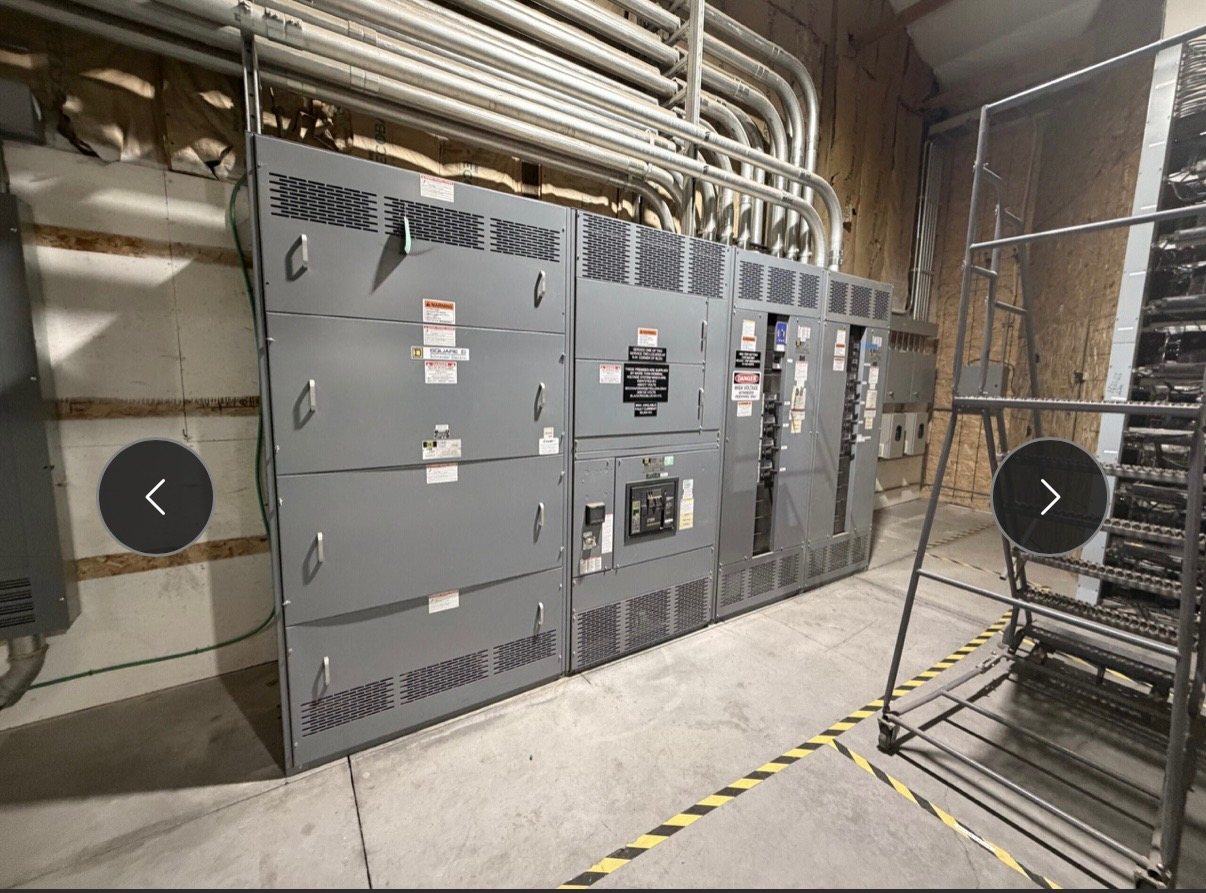
Scope the El Paso Retrofit Around Existing Equipment
A useful retrofit scope begins with an accurate survey of the equipment being modified or replaced. Record manufacturer and catalog information where available, lineup arrangement, compartment dimensions, bus orientation, cable-entry locations, control voltage, protective-device details, and the condition of interfaces that will remain in service. For El Paso facilities, also identify environmental and operating conditions that affect enclosure selection, access, and planned maintenance. Photographs and legible nameplate records help resolve gaps before design review.
Separate the work into equipment to remain, equipment to be removed, and new equipment or components to be supplied. Identify whether the project is a complete lineup replacement, a replacement assembly intended to fit an existing structure, or a broader modernization that changes controls or protection. Do not assume an existing assembly can accept a new component because dimensions look similar. We use documented interfaces and project requirements to assess feasibility and define what must be verified in the field.
Check Replacement Compatibility Before Ordering
Compatibility is more than matching width and height. The review should address mounting points, bus connections, phase arrangement, clearances, cable lugs and landing space, door and barrier interfaces, grounding provisions, auxiliary circuits, and the relationship between the new equipment and adjacent sections. Confirm the exact equipment function and the intended method of connection. If drawings are incomplete or the assembly has been modified, flag those conditions early so the quotation can identify assumptions and required field measurements.
For a replacement assembly in an existing lineup, provide original drawings, current one-lines, photographs, nameplate data, and any records of prior changes. Specify which dimensions are verified and which are estimates. The project team should decide whether the existing enclosure and bus are suitable to remain, and who is responsible for confirming their condition and interfaces. We manufacture new equipment and new retrofit components.
Validate Bus and Fault Ratings as a System
Bus ampacity and short-circuit withstand are system-level design checks, not values to carry forward automatically from an old nameplate. Provide the available fault-current information at the equipment location, upstream protective-device data, system voltage, grounding arrangement, and intended operating configuration. The engineer of record should evaluate how source changes, transformer replacements, tie operation, or added generation affect the required ratings. A replacement must be suitable for the actual system conditions, not merely resemble the installed assembly.
Document the required continuous-current rating, short-circuit rating and duration where applicable, and any coordination or protection objectives that govern the design. Clarify whether existing upstream devices remain and provide their relevant settings or study information. We review these requirements as part of the project specification, while the responsible electrical engineer confirms system calculations and coordination. Applicable standards and any requested listing must be verified for the specific configuration; UL 891 applies to switchboards, not automatically to every switchgear assembly.
Sequence Outages to Protect Facility Operations
An outage plan should state which loads can be interrupted, which must remain energized, and what temporary operating arrangement is permitted. For El Paso projects, coordinate these constraints with the facility’s operating calendar, critical-load requirements, utility interface, and any parallel work involving transformers or feeders. Determine whether replacement can be completed in one outage or must be divided into phases. Each phase needs defined electrical boundaries, dependencies, approval authority, and criteria for returning equipment to service.
Build the schedule around confirmed engineering and procurement milestones rather than an assumed delivery date. Allow time for submittal review, resolution of field measurements, site readiness, installation planning, and required inspections or documentation. Identify decision deadlines for long-lead design choices, including enclosure details, control interfaces, and protective-device requirements. Lead time is subject to project review and confirmation in the quotation. Installation, testing, and energization must be performed by qualified personnel under approved procedures.
Coordinate Field Installation and Interfaces
Field coordination starts by assigning responsibility for measurements, removal, rigging, anchorage, conduit and cable work, bus connections, controls, and final system integration. Confirm equipment access routes, doorway and aisle clearances, floor conditions, lifting provisions, and the space needed to position and secure the new assembly. Where existing sections remain, define how mechanical and electrical interfaces will be checked before fabrication and again before installation. These details help prevent a design that fits a drawing but conflicts with site conditions.
The contractor and facility team should provide current site drawings, installation constraints, applicable safety requirements, and a contact path for design questions. Establish how deviations discovered during removal will be documented and reviewed before work proceeds. Confirm who will supply field terminations, labels, interconnecting conductors, and any controls not included in the equipment scope. We can review interface requirements during quotation and submittal development, but site-specific installation decisions remain with the qualified project team.
Prepare a Complete Modernization Quotation Package
A focused request for pricing should include the equipment schedule, one-line diagram, existing lineup drawings, rating requirements, control schematics, desired scope boundaries, and the proposed outage sequence. Note whether the project requires new switchboards, new retrofit components, or both, and identify equipment that will remain. Include known field conditions and list unresolved items explicitly. This lets us assess the configuration and identify the engineering inputs needed to produce a meaningful quotation for an El Paso project.
Ask the quotation to identify the proposed scope, assumptions, exclusions, submittal requirements, and documentation available for the specific assembly. State any required standards, listing needs, component-origin preferences, and inspection or test-document requests so each can be reviewed for the design. American components can be specified, with availability and origin confirmed for the quoted configuration; this does not itself establish domestic-content compliance. Pricing, lead time, engineering, and documentation are confirmed project by project before purchase.