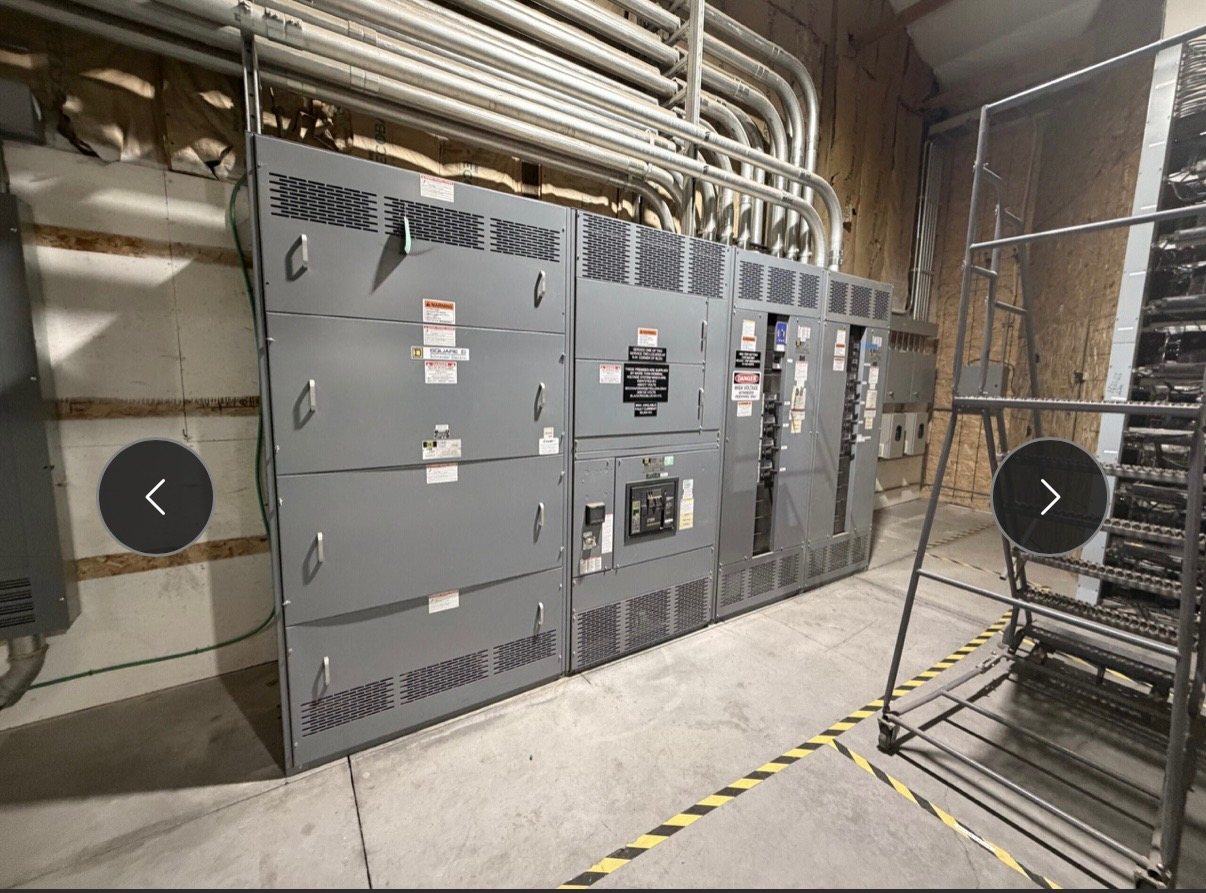
How a Switchboard Organizes Distribution
A low-voltage switchboard provides a central point to receive and distribute electrical power. Its incoming main section connects the source to the assembly, while feeder sections supply downstream panels, equipment, or other loads. The arrangement should reflect the one-line diagram and the intended division of loads—not simply the number of outgoing circuits. When requesting pricing, identify the source, distribution purpose, and planned feeder destinations so the proposed layout can be reviewed against the application.
A switchboard is not interchangeable with every assembly called switchgear. Switchboards are generally used for low-voltage distribution, with sections and devices arranged for the specified service and feeder functions. The term switchgear can refer to equipment with different construction and application requirements, including medium-voltage assemblies. Describe the required equipment class, voltage, and installation context rather than relying on informal terminology. Applicable standards and any listing requirements should be confirmed for the exact configuration.
Define Mains, Sources, and Feeder Functions
The main device and incoming connection establish how the assembly interfaces with its source. Provide the project voltage, phase and wire arrangement, source description, and the required main-device function. If the design includes multiple sources, a tie, or a transfer arrangement, show those relationships on the one-line diagram and state the intended operating scheme. These details affect section arrangement and coordination; they should not be left for the manufacturer to infer from a general equipment label.
For each feeder, supply the connected load or intended destination and the project-defined device requirements. Include available fault-current information and coordination or protection criteria when the engineering documents provide them. Clarify whether spare ways are required and how many, while distinguishing planned future positions from installed feeder devices. A complete feeder schedule helps align the proposed assembly with the distribution design and gives the engineer and purchasing team a consistent basis for reviewing quotations.
Plan Metering and Measurement Needs
Metering requirements influence both the electrical arrangement and the physical space reserved in a switchboard. Specify whether the project calls for service or distribution metering, which quantities are to be measured, and whether the design documents identify instrument transformers, meters, or communications interfaces. The utility or project engineer may set requirements that are specific to the installation. Share those criteria with the quotation request instead of assuming that a standard meter arrangement will satisfy them.
Also identify who will furnish and integrate any metering or monitoring elements, and provide relevant interface requirements from the project documents. Clarify whether readings must be available locally, remotely, or through a specified building or energy-management system. Any communications protocol, accessory, or metering component must be reviewed as part of the quoted configuration. We confirm component scope and documentation during project review; availability and details are not guaranteed before that review.
Coordinate Physical Sections and Installation Space
Switchboard sections group the main, feeder devices, and related equipment into an assembly suited to the specified distribution plan. Review the proposed section lineup against the one-line diagram, feeder schedule, room layout, and access constraints. Provide the available installation footprint, required cable entry and exit directions, and any project-defined enclosure or environmental requirements. These inputs help the manufacturer evaluate whether the intended electrical arrangement can be represented in a practical physical configuration.
For replacement or expansion planning, document the existing equipment identification, connection arrangement, dimensional constraints, and the interfaces that must be retained. Photographs and drawings can help explain the installation, but they do not replace verified project dimensions or engineering review. A retrofit request is for new equipment or new replacement components. Confirm the scope clearly so the quotation can distinguish a complete new assembly from specifically identified new components.
Prepare Documents for a Useful Quotation
A focused request for pricing should include the latest one-line diagram, equipment schedule, feeder information, metering requirements, and any project specifications that govern the switchboard. Identify the required voltage and other design parameters, as well as the location served in Texas or elsewhere. Include the requested delivery destination and target project milestones for review, but treat timing as subject to engineering, component availability, and quotation confirmation rather than a guaranteed lead time.
If the project requires drawings, submittals, or particular test records, list them with the quotation documents and state the review milestones that matter to the project team. Specify any requested American components by requirement and identify the governing project language. Component origin and documentation must be confirmed for the quoted configuration; no general domestic-content certification should be assumed. Clear, consistent documents reduce ambiguity between the engineer’s design intent and the equipment scope being priced.
Review Standards, Submittals, and Project Boundaries
UL 891 applies to switchboards, but it is not a blanket listing for every switchgear assembly or every configuration. If the project requires a specific standard, listing, or approval, state it in the specification and verify its applicability to the proposed assembly. Do not infer that a particular switchboard is listed or labeled without configuration-specific confirmation. The same review should identify the required drawings, device data, and other submittal information needed for engineering approval.
Before purchase, align the approved one-line diagram, section layout, device schedule, metering scope, and delivery requirements with the final quotation. Confirm exclusions and any customer-furnished interfaces so there is a clear boundary between the switchboard and adjacent systems. Installation, servicing, testing, and energization must be performed by qualified personnel under approved procedures. Switchgear Builders Texas manufactures new equipment to specification; availability, engineering, component origin, lead time, and test documentation are confirmed for each quotation.