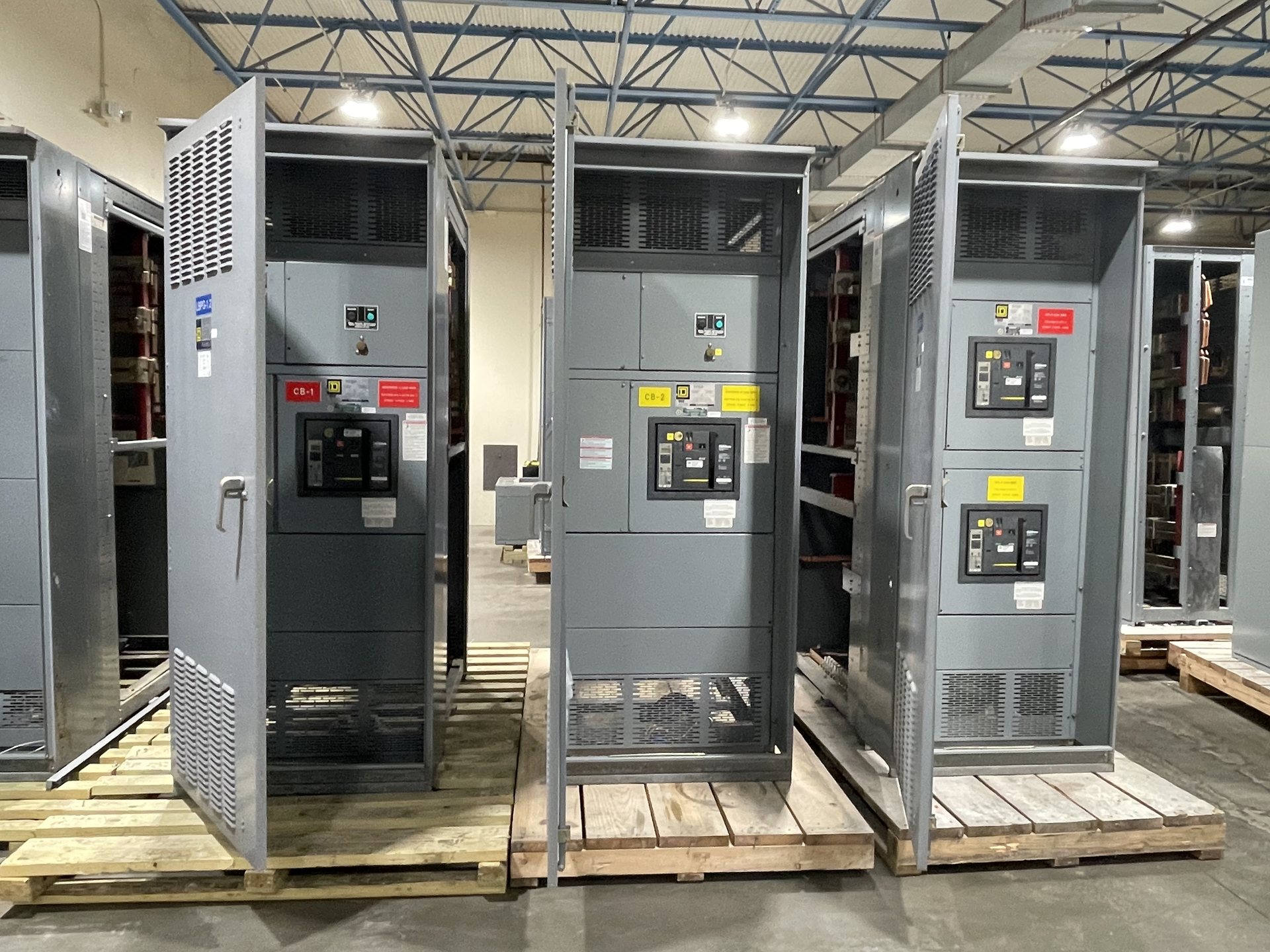
Select bus and breakers around the Frisco project load
Start with the electrical load and distribution plan, not a catalog frame size. Identify the service or feeder function, nominal system voltage, phase and wire arrangement, continuous and noncontinuous loads, planned demand, and any anticipated expansion. The engineer should establish the required bus ampacity and whether the arrangement needs a main device, feeder breakers, tie provisions, or separate sections. These choices shape the lineup and must be reconciled with the one-line diagram.
Breaker selection requires its own schedule of functions and ratings. Define frame and trip requirements, poles, interrupting duty, trip-unit features, and whether devices need fixed or drawout construction. Confirm which breakers serve essential loads or require selective coordination, and identify any metering or control interfaces. For a Frisco project, send the load schedule and one-line together so the quoted assembly can be checked against the intended distribution scheme rather than inferred from a location or building type.
Establish available fault current before choosing interrupting duty
Available fault current at the switchgear location is a key design input. Request the utility or upstream-system fault-current information for the point of connection, then account for transformer impedance, conductor lengths, and other upstream equipment as the responsible engineer determines. A value from a different service point or an earlier design revision may not represent the final installation. Provide the calculation basis and location on the single-line or study documentation.
The selected assembly and each protective device must be evaluated for the applicable short-circuit conditions and system voltage. Where the design uses series ratings or other coordination assumptions, provide the supporting basis and identify upstream and downstream devices. Do not treat a breaker rating or a familiar project precedent as proof of suitability. We review the supplied design information during quotation; final equipment selection and compliance should be confirmed by the project’s qualified electrical engineer.
Match enclosure construction to the installation environment
Describe where the lineup will be installed and what surrounds it: conditioned electrical room, unconditioned interior space, or an area exposed to weather, dust, moisture, washdown, or corrosive conditions. Note ambient temperature, ventilation, elevation where relevant to design, access constraints, and any site-specific environmental requirements. Enclosure type and construction should follow the actual exposure and governing project documents, not an assumption that all Frisco installations have the same conditions.
Room layout can constrain equipment as much as the enclosure specification. Provide the available footprint, ceiling height, working-space and egress requirements, access route, door and aisle locations, and any restrictions on moving or assembling sections. Identify cable-entry direction and whether conduits, busway, or other connections approach from above, below, or the sides. These details help define a buildable arrangement and reduce the risk of a quoted lineup conflicting with the electrical room.
Coordinate equipment dimensions with installation drawings
A useful drawing package includes the current one-line diagram, switchgear elevations and plan view, breaker and load schedules, cable or busway connection details, and the applicable grounding and control schematics. Mark drawing revisions and identify which documents govern if details differ. For retrofit work, add field-verified existing dimensions, connection locations, access clearances, and photographs or records that establish the interface. New retrofit components must be specified against the actual equipment and documented configuration.
Review the equipment outline against architectural, structural, mechanical, and electrical drawings before release. Check section sequence, incoming and outgoing paths, conduit stub locations, floor openings, anchorage requirements, and required front, rear, or side access. Confirm that proposed cable bending space and connection details are compatible with the field layout. If a drawing is preliminary, identify open items rather than allowing an unresolved dimension or interface to become an assumed design condition.
Define standards, documentation, and component requirements
State the project’s governing codes, specifications, and requested equipment standards in the pricing package. UL 891 applies to switchboards; it is not a blanket listing for every type of low-voltage switchgear. Listing status and applicable standards must be verified for the specific configuration. If the project requires particular inspections, test records, labels, or submittal documents, name them explicitly so their availability can be reviewed for the quoted assembly.
Specify American components when that is a project requirement and identify any component schedule, approved-equipment list, or domestic-content condition the team must consider. Component origin and documentation are confirmed for each quotation; a request alone does not establish independent verification or certify compliance with Buy American, BAA, or other domestic-content rules. Include required submittal formats, drawing review milestones, and closeout records in the procurement documents so expectations are clear before approval.
Plan procurement and retrofit scope around project milestones
For a pricing request, provide the delivery destination in Frisco, requested quantities, target approval and shipment dates, and the latest document revision. Include known decision deadlines, required submittal reviews, and any phased-delivery needs. Lead time is subject to project review and confirmation for the selected components and configuration; it should not be assumed from a general estimate. Resolve technical questions and drawing comments early enough for the purchasing team to compare complete, equivalent scopes.
For replacement or modification work, identify whether the scope is a complete new lineup or new retrofit components, and document the existing make, model, ratings, device types, dimensions, and connection interfaces where available. Do not assume that physical fit alone establishes electrical compatibility. A qualified engineer should review the proposed integration and protection scheme. Installation, servicing, testing, and energization must be performed by qualified personnel under approved procedures.