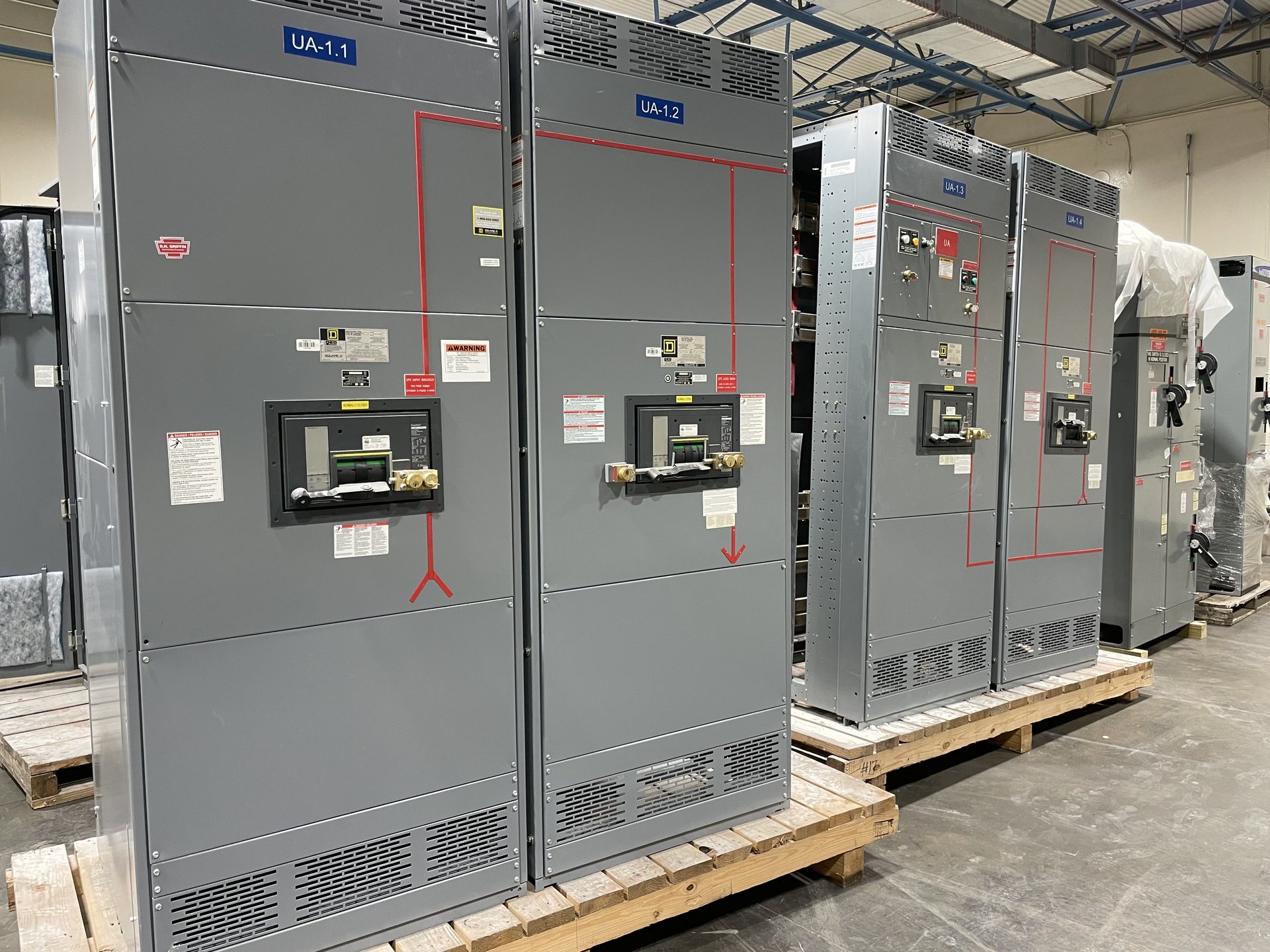
Coordinate the pre-energization review
Start with a defined review meeting and a written list of equipment included in the energization boundary. Identify the owner’s representative, engineer of record, installing contractor, commissioning lead, and qualified personnel responsible for electrical safety and authorization. Confirm which assemblies, sections, feeders, and new retrofit components are in scope, and distinguish them from connected equipment or work governed by another procedure.
Agree on how open items will be recorded, who can accept or close each item, and what evidence is required for closure. The checklist is a coordination aid, not permission to energize or a substitute for approved drawings, manufacturer instructions, site safety rules, or the project’s commissioning plan. Keep the review specific to the installed configuration and the approved procedures for that site.
Reconcile approved documents and equipment identity
Compare the delivered equipment identification and configuration with the current approved submittals, one-line diagram, control schematics, and applicable schedules. Check that section names, feeder designations, ratings, protective devices, metering, control power, and specified accessories agree across the documents. Record discrepancies for engineering disposition rather than relying on handwritten field changes or assumptions about what was intended.
Confirm that the latest approved revisions are available to the people conducting the review, and identify which documents govern any unresolved design question. Assemble the equipment-specific manuals and applicable wiring diagrams, along with approved settings and coordination information. For new retrofit components, verify their specified interfaces and the approved documentation for how they relate to the existing installation; do not assume compatibility based on appearance alone.
Verify installation completion and open work
The installing contractor should document that the work included in the energization boundary is complete in accordance with approved project documents and the manufacturer’s instructions. Review equipment anchorage, alignment, compartment and cover installation, grounding and bonding provisions, conductor terminations, control connections, and labeling as applicable to the supplied configuration. Record any incomplete work, damage, or departure from the approved design for evaluation and resolution.
Check that construction activity that could affect the equipment has been addressed, and that temporary materials, tools, and debris are managed under the site’s approved procedures. Confirm that required inspection records are available and that identified deficiencies have a documented disposition. Installation completion should be attested by the responsible contractor or qualified personnel; a visual coordination review by the owner does not replace the contractor’s scope or required inspections.
Review test records and acceptance evidence
Collect the inspection and test records required by the project specifications, approved commissioning plan, and applicable procedures. Establish which tests were performed, by whom, on what equipment, and under what approved procedure; confirm that results are traceable to the relevant assembly or component. Review exceptions and corrective-action records, and ensure that required retesting or engineering review has been completed and documented.
Use only test documentation appropriate to the actual supplied configuration. Test scope and records are not universal across all switchgear, switchboards, or retrofit work, so the project team should determine applicable requirements rather than infer them from a generic checklist. For UL 891 switchboard assemblies, verify the applicable standard and listing status for the specific configuration through project documentation. Do not treat the standard as a blanket claim for other equipment.
Confirm clearances, access, and work boundaries
Review the equipment’s location and surrounding area against approved plans, manufacturer instructions, and site requirements. Confirm that required working space, access to operating and maintenance points, door or cover movement, and routes for authorized personnel are addressed. Consider nearby piping, stored materials, temporary barriers, other construction, and any site-specific restrictions that could affect safe access or the approved work boundary.
Before any energization activity, the responsible qualified personnel should verify that the work area and boundaries meet the site’s approved electrical safety procedures. Confirm how adjacent equipment and connected systems are handled, and who controls access during the activity. This guide does not establish clearance dimensions or direct live work; required distances and safeguards depend on the applicable design, regulations, equipment, and approved site procedures.
Verify settings and operational readiness
Check that protective-device and control settings have an approved basis and correspond to the current coordination study, design documents, and specified equipment. Confirm device identification and setting records, including any required review or sign-off, before the project treats the configuration as ready. If the installed device or configuration differs from the approved design, refer the discrepancy to the responsible engineer for documented resolution.
Confirm that operating instructions, control interfaces, interlocks, indication, and any required communications have been reviewed for the supplied scope. Identify who is authorized to operate each function and how operating status will be communicated during the planned activity. Do not infer correct settings from factory defaults or prior equipment records. Setting changes, functional checks, and other verification must follow approved procedures and be performed by qualified personnel.
Document authorization and turnover
Before the planned activity, assemble the completed coordination record: applicable approved documents, installation completion evidence, test records, settings documentation, open-item dispositions, and required approvals. The owner or designated authority should confirm that the project’s defined prerequisites are satisfied. Record who reviewed the package, the scope covered, the date, and any conditions or exclusions so that authorization is traceable rather than assumed.
Energization is authorized only by the personnel designated under the project and site procedures, with the required qualifications and safety controls in place. Keep final records with the owner’s equipment documentation and turnover package, including approved as-built updates and the applicable manufacturer materials. For project quotations, identify required documentation and any new retrofit components in the specification; availability, engineering, lead time, component origin, and test documentation must be confirmed for each quotation.