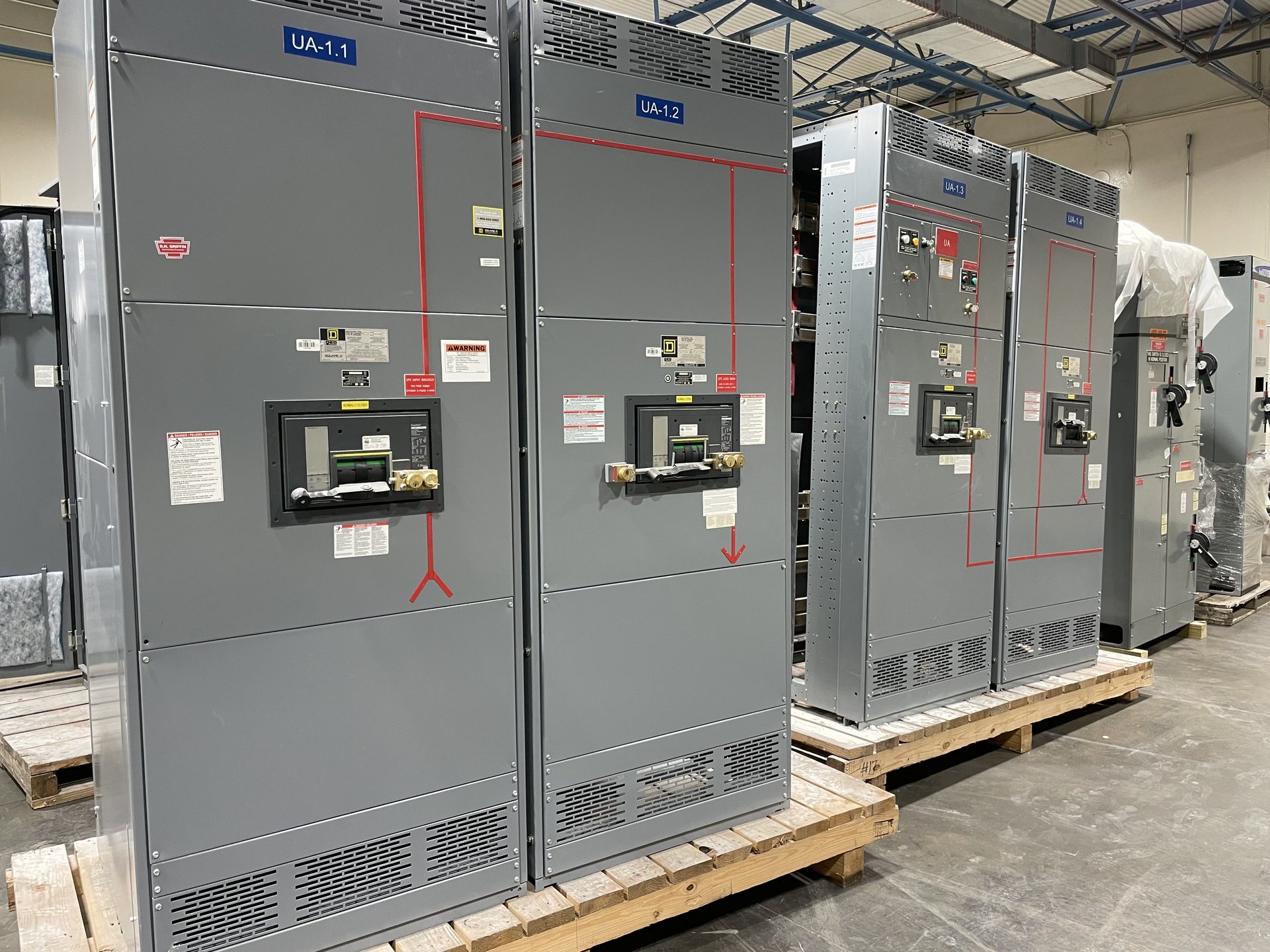
Plan the plant-main distribution path
Start with the complete electrical path from the service entrance to the plant’s major load groups. Identify where incoming conductors terminate, how the main section connects to feeder sections, and which downstream panels, motor-control assemblies, transformers, or packaged systems are supplied. This one-line view reveals whether the requested equipment is a single main switchboard, a multi-section assembly, or part of a larger distribution arrangement.
For a plant project, clarify whether the new assembly serves a new facility, a capacity increase, a replacement, or a phased production expansion. Note the available room, access route, intended section arrangement, cable entry direction, and connection points to existing equipment. These details help determine a buildable configuration and expose interface questions that should be resolved before the equipment is specified or priced.
Define the incoming service interface
The incoming service determines key equipment requirements. Provide the nominal system voltage, phase and wire arrangement, frequency, utility or upstream source information, and the service conductors’ termination requirements. Confirm whether the source is utility service, a transformer, or another plant distribution source, and document any alternate-source or transfer arrangement that affects the main section. Do not assume that equipment can be selected from voltage alone.
Coordinate service details with the serving utility, electrical engineer, and installation contractor. Confirm the service disconnect arrangement, grounding and bonding design, metering provisions, and any required barriers or compartments. Identify cable or bus connections, conductor quantity and size where established, and entry location. Open items should be clearly marked for engineering review rather than treated as final design inputs in a pricing request.
Match main and feeder sections to plant loads
Build a feeder schedule that connects each outgoing section to its actual destination. For each feeder, indicate the load type, intended protective-device function, required connection arrangement, and any known continuous or starting demand. Separate production machinery from HVAC, lighting, pumps, compressors, process systems, and essential services where their operating or continuity needs differ. This helps the manufacturer review section space and feeder provisions against the plant’s distribution plan.
Document how loads operate, not just their nameplate totals. Motor starting, variable-frequency drives, power-factor correction, nonlinear loads, and simultaneous process operation can affect electrical design and coordination. Identify spare feeder provisions and expected near-term additions, distinguishing planned circuits from speculative future capacity. Final ratings and device selections require review of the complete design and applicable project criteria; a generic plant load estimate is not a substitute.
Establish fault-current and protection requirements
Fault-current capability must be based on the available fault current at the equipment connection point and the characteristics of the upstream source. Provide the engineer’s or utility’s available-fault-current information, source transformer data when applicable, and the proposed protective-device arrangement. The equipment’s interrupting and short-circuit ratings must be appropriate for the system and configuration; do not infer an acceptable rating from the plant’s normal operating current.
Share the coordination study or its relevant design criteria when available, including upstream and downstream device information and any selective-coordination objectives. Identify generator contributions, parallel sources, or operating modes that may change fault-current conditions. If the study is pending, say so in the request. Rating, protection, and coordination decisions should be confirmed by qualified project professionals using current system data before equipment release.
Coordinate replacement work and new retrofit components
For a plant upgrade, provide existing-equipment manufacturer and model information when known, photographs or drawings of the relevant sections, nameplate data, and the intended points of connection. Explain which functions must remain in service during the project and whether work is planned as a full replacement or a limited modification. Existing section dimensions, bus arrangements, device interfaces, and condition can constrain what is compatible.
We supply new equipment and new retrofit components only; compatibility must be reviewed against the documented assembly and project requirements. A component that appears similar by appearance or rating may not fit, connect, or coordinate correctly. Identify the exact existing assembly and requested function, and allow engineering review to determine whether a proposed new component is appropriate. Installation, servicing, testing, and energization require qualified personnel following approved procedures.
Prepare a complete quotation and submittal package
A useful pricing request includes the one-line diagram, load or feeder schedule, service data, fault-current information, equipment layout, and applicable project specifications. Add the desired main and feeder arrangement, metering or control needs, enclosure and environmental requirements, cable-entry preferences, and any known restrictions on dimensions or access. Identify which documents are preliminary and which have been approved, so the review can focus on unresolved technical inputs.
State the project location in Texas or elsewhere, required delivery destination, quotation schedule, and anticipated release or installation milestones. Lead time, engineering scope, component origin, and available test documentation are confirmed for each quotation and configuration. The customer should specify any American-component requirements; origin and domestic-content requirements must be reviewed for the quoted equipment and are not independently certified by a general statement. Verify applicable standards and any requested listing for the specific assembly.