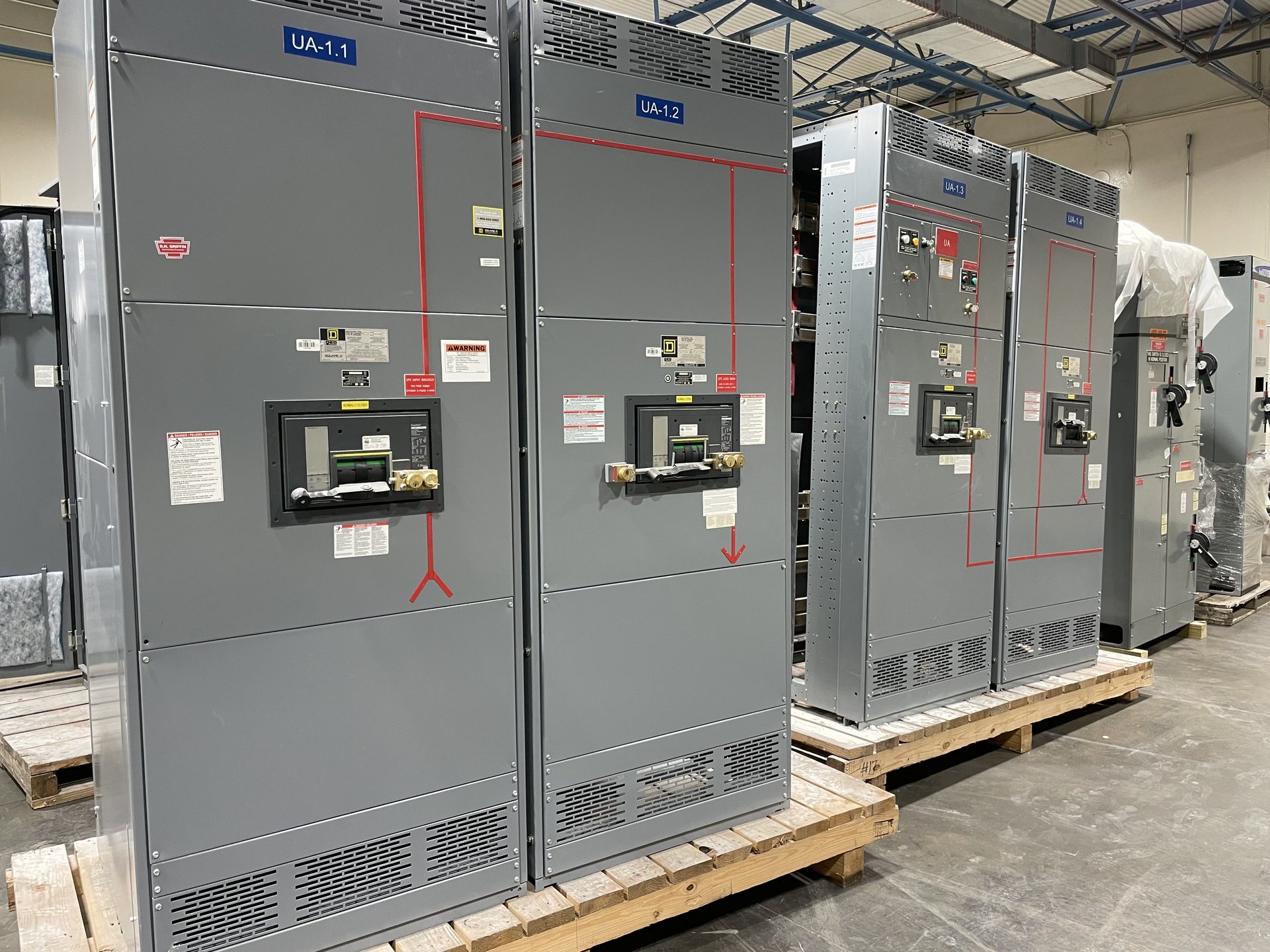
Survey Existing Equipment Before Defining the Retrofit
A useful retrofit survey records more than the switchgear nameplate. Document the manufacturer and model, assembly type, enclosure dimensions, bus arrangement, incoming and outgoing connections, breaker or switch types, control voltages, and available space for cable entry and termination. Photographs and existing drawings can help establish the configuration, but field verification matters when records are incomplete or the installation has changed over time.
For a Killeen project, identify which loads and downstream systems depend on each section, how the equipment is accessed, and what adjacent electrical gear may constrain removal or installation. Note corrosion, heat damage, modifications, unusual cable routing, and clearance limitations for review by qualified project personnel. A clear survey helps distinguish components that can remain from interfaces that may require new equipment, new retrofit components, or additional engineering.
Check Replacement Compatibility at Every Interface
Replacement compatibility is not established by matching a catalog number or the outside dimensions alone. Compare the existing lineup’s mounting and compartment arrangement, bus connections, breaker interfaces, cable space, door and barrier clearances, control wiring, and connection locations with the proposed configuration. State which original components are expected to remain and which will be replaced; assumptions about reuse should be reviewed before equipment is specified.
Where an existing assembly has been modified, provide revision drawings and describe known changes to protection, metering, interlocks, or auxiliary circuits. The engineering review should also identify any transition sections, adapters, or enclosure changes needed to connect new equipment to retained gear. We manufacture new equipment and new retrofit components to specification; the proposed arrangement, interfaces, and applicable standards must be confirmed for each quotation.
Coordinate Bus Ratings and Available Fault Duty
Bus selection needs to account for the intended continuous load and the design basis for the installation, not simply the rating printed on an older section. Share the system voltage, expected operating load, source and transformer information, planned capacity changes, and any load-growth assumptions. Engineers can use those details to evaluate the proposed bus configuration and identify whether the existing distribution arrangement remains suitable for the modernization scope.
Available fault current and equipment withstand or interrupting ratings are separate, essential checks. Provide the latest available fault-current study, protective-device information, and relevant utility or source data for review; do not assume that an existing rating is adequate for a changed source or network. The project team should confirm the required ratings and coordination basis for the final configuration. Ratings, components, and documentation are subject to project-specific engineering review.
Build Outage Sequencing Around the Facility
A retrofit plan should define what must be de-energized, what must remain in service, and whether the work can be divided into phases. Map critical loads to the sections being replaced and identify dependencies such as transfer equipment, standby generation, control power, and shared bus connections. The owner and electrical contractor can then evaluate temporary power needs and determine whether planned outages align with operational, safety, and access constraints.
Establish decision points before ordering: verified equipment scope, approved drawings, outage windows, temporary arrangements, and acceptance responsibilities. Changes in field conditions or load requirements can affect the sequence and should be escalated through the project’s approved review process. Installation, testing, and energization require qualified personnel working under approved procedures; this planning guidance does not replace the facility’s safety program or electrical engineering review.
Prepare the New Equipment Scope and Documentation
A complete request for pricing helps align the proposed new equipment with the retrofit’s actual boundaries. Include one-line diagrams, panel or lineup schedules, available dimensions, connection details, system voltage, required bus and fault ratings, control requirements, and the intended reuse or replacement of existing sections. Identify the project location in Killeen, the responsible engineering contact, and any submittal or coordination requirements that affect the review.
Ask which drawings, component details, and test documentation are available for the proposed configuration, and confirm when each deliverable will be supplied. Specify desired American components where required and have component origin and project documentation reviewed for the particular quotation; do not treat a request as independent verification or as certification of domestic-content compliance. UL 891 applies to switchboards, not every form of switchgear, so verify listing and applicable standards for the specific assembly.
Coordinate Delivery, Removal, and Field Installation
Field coordination begins before equipment arrives. Confirm the delivery route, receiving capacity, rigging and movement path, access openings, staging location, and conditions around the electrical room. Compare the proposed equipment’s dimensions and shipping configuration with the verified site measurements. The contractor should coordinate these logistics with facility representatives and the project schedule rather than assume that existing access will accommodate the replacement lineup.
Before installation, align the approved equipment drawings with the field plan for removal, positioning, connections, control wiring, and inspections. Identify responsibility for disconnecting retained circuits, managing existing cables, resolving discrepancies, and recording approved changes. Availability, engineering, lead time, component origin, and test documentation are confirmed for each quotation, so raise schedule constraints early. Switchgear Builders Texas supplies new equipment for Killeen projects from the United States; field work remains subject to qualified personnel and approved procedures.