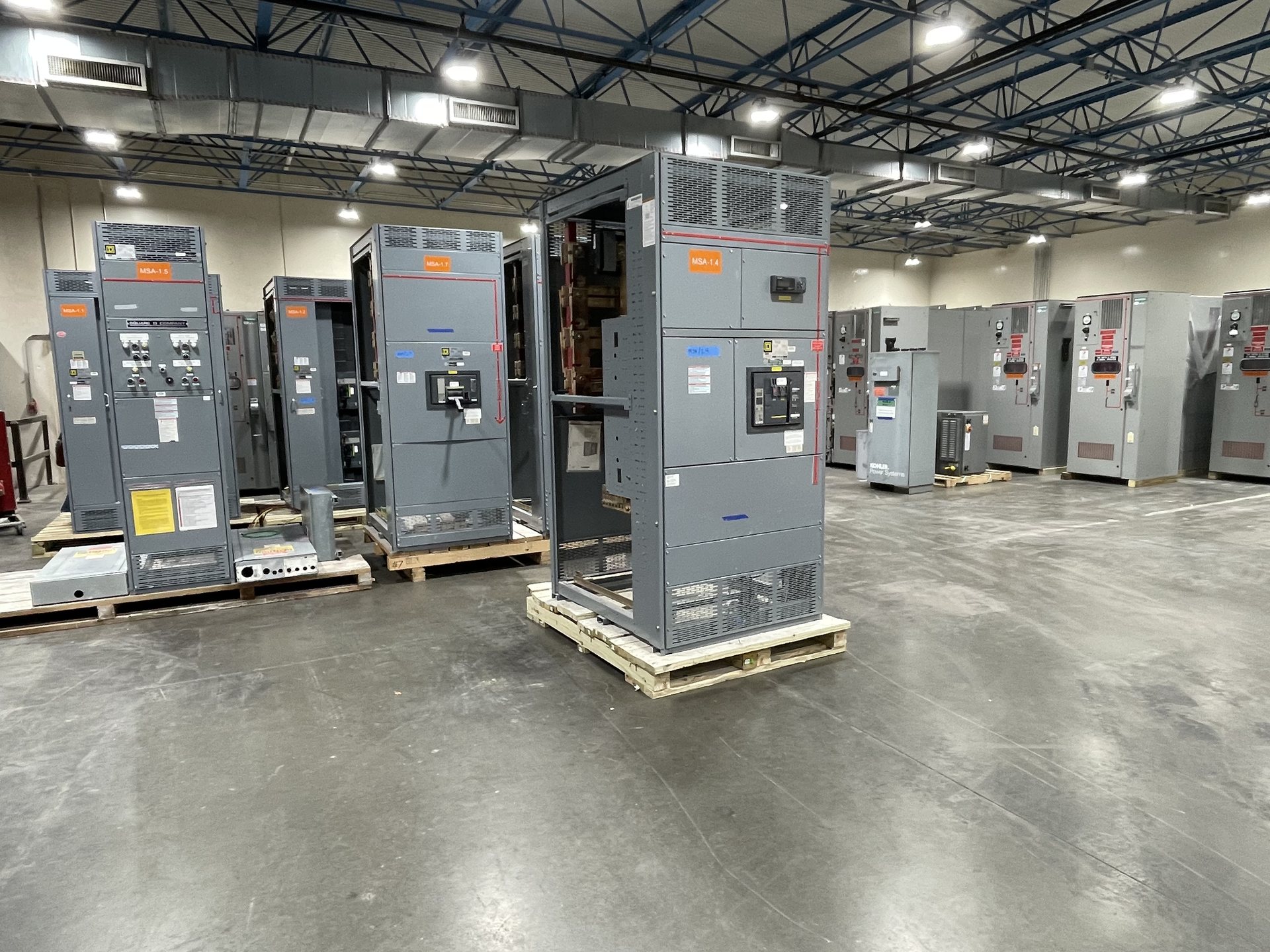
Survey Existing Equipment Before Defining the Retrofit
A useful retrofit scope begins with the equipment’s manufacturer, model, nameplate data, arrangement, and present function—not an assumed replacement based on appearance. Record enclosure dimensions, compartment layout, cable entry and exit points, bus orientation, control power, protective-device details, and the condition of accessible connections. For Lubbock projects, the site team should also identify room access, lifting restrictions, environmental conditions, and any operating limits that constrain removal or replacement.
Drawings and photographs help, but field measurements and a documented equipment survey are essential when records are incomplete or revisions have accumulated. Identify which information is verified, which is estimated, and which still requires confirmation. Share available one-lines, elevations, wiring diagrams, equipment schedules, and protection settings with the quotation request. That evidence lets us assess whether the scope is a new assembly replacing existing gear or new components intended to interface with retained equipment.
Check Replacement Compatibility at Every Interface
Physical fit is only one part of replacement compatibility. The review should account for mounting points, bus connections, phase arrangement, neutral and ground paths, conductor termination space, barriers, cable bending room, and the location of control and instrument wiring. Confirm whether the project requires reuse of an enclosure or other existing parts; retained items must be inspected and documented by the responsible project team. We supply new equipment and new retrofit components.
Electrical and functional interfaces need equal attention. Clarify the source and load configuration, metering and control functions, interlocks, communications needs, and the intended protective-device coordination. Where an existing design depends on a specific trip unit, accessory, or control sequence, provide the applicable part information and diagrams rather than relying on a visual match. Final interface details depend on engineering review and the accuracy of the project records.
Coordinate Bus Ratings and Available Fault Current
The replacement design must be evaluated against system voltage, continuous current requirements, bus configuration, and available fault current at the equipment location. Ask the electrical engineer to confirm the study basis, source contributions, transformer data, and any changes to the distribution system that could affect the fault-duty requirement. Do not assume the existing nameplate value is sufficient for a changed source, revised transformer, or expanded load.
Bus capacity and short-circuit performance are related but distinct design considerations. Document the required bus rating, the applicable short-circuit or withstand rating, and any series-rating assumptions that the project intends to use. Those assumptions need to align with the complete protective-device arrangement and applicable project requirements. Ratings, component selection, and test documentation must be reviewed for the quoted configuration; they should not be inferred from a general product category or a previous installation.
Plan Outage Sequencing Around Operating Constraints
A modernization plan should describe what must remain energized, which loads can be interrupted, and whether temporary power is part of the project. Identify critical processes, allowable outage windows, required notifications, and the sequence for isolating and replacing each section. For Lubbock facilities with weather-sensitive operations or time-dependent production, project stakeholders should establish constraints early so the equipment scope and delivery plan can be reviewed alongside the shutdown strategy.
Build the schedule around approved switching procedures, required permits, access, removal, installation, inspections, and readiness reviews—not only the equipment ship date. Confirm who controls the outage, who verifies prerequisites, and how schedule changes will be communicated among the owner, engineer, contractor, and manufacturer. We can review project timing and manufacturing requirements for a quotation, but lead time is subject to project review and is not a delivery guarantee.
Prepare the Site for Field Installation Coordination
Before equipment release, resolve the site conditions that affect installation: route from receiving area to electrical room, door and corridor clearances, floor capacity, anchorage requirements, working space, and removal path for existing gear. Confirm the installation contractor’s scope for demolition, rigging, foundations, conductors, terminations, and control wiring. Drawings should identify interface dimensions and the information needed for coordination, while field verification remains the responsibility of qualified project personnel.
Use a responsibility matrix to distinguish manufacturer deliverables from engineering, contractor, and owner tasks. Establish who reviews submittals, confirms dimensions, manages conduit or bus transitions, and records field changes. Installation, inspection, testing, and energization require qualified personnel following approved procedures and applicable requirements. If a condition differs from the approved drawings, stop and route the discrepancy through the project’s documented review process rather than assuming the equipment can be modified in the field.
Request a Quote With Reviewable Project Records
A focused pricing request can include the one-line diagram, equipment schedule, existing nameplate photographs, survey measurements, required ratings, interface drawings, and the proposed outage window. State whether the scope is a replacement assembly or new components for a defined retrofit, and identify any retained equipment that the design must accommodate. Include the project location in Lubbock, shipping requirements, drawing and submittal needs, and the decision date for procurement planning.
Specify component-origin requirements directly and identify any contractual domestic-content provisions that need review. American components can be requested, but origin and any compliance documentation must be confirmed for the quoted configuration; a component request alone does not establish Buy American Act compliance or other domestic-content eligibility. For switchboard assemblies, confirm whether UL 891 applies to the intended configuration and verify listing and applicable standards for the specific design. Availability, engineering, documentation, and lead time are confirmed during quotation review.