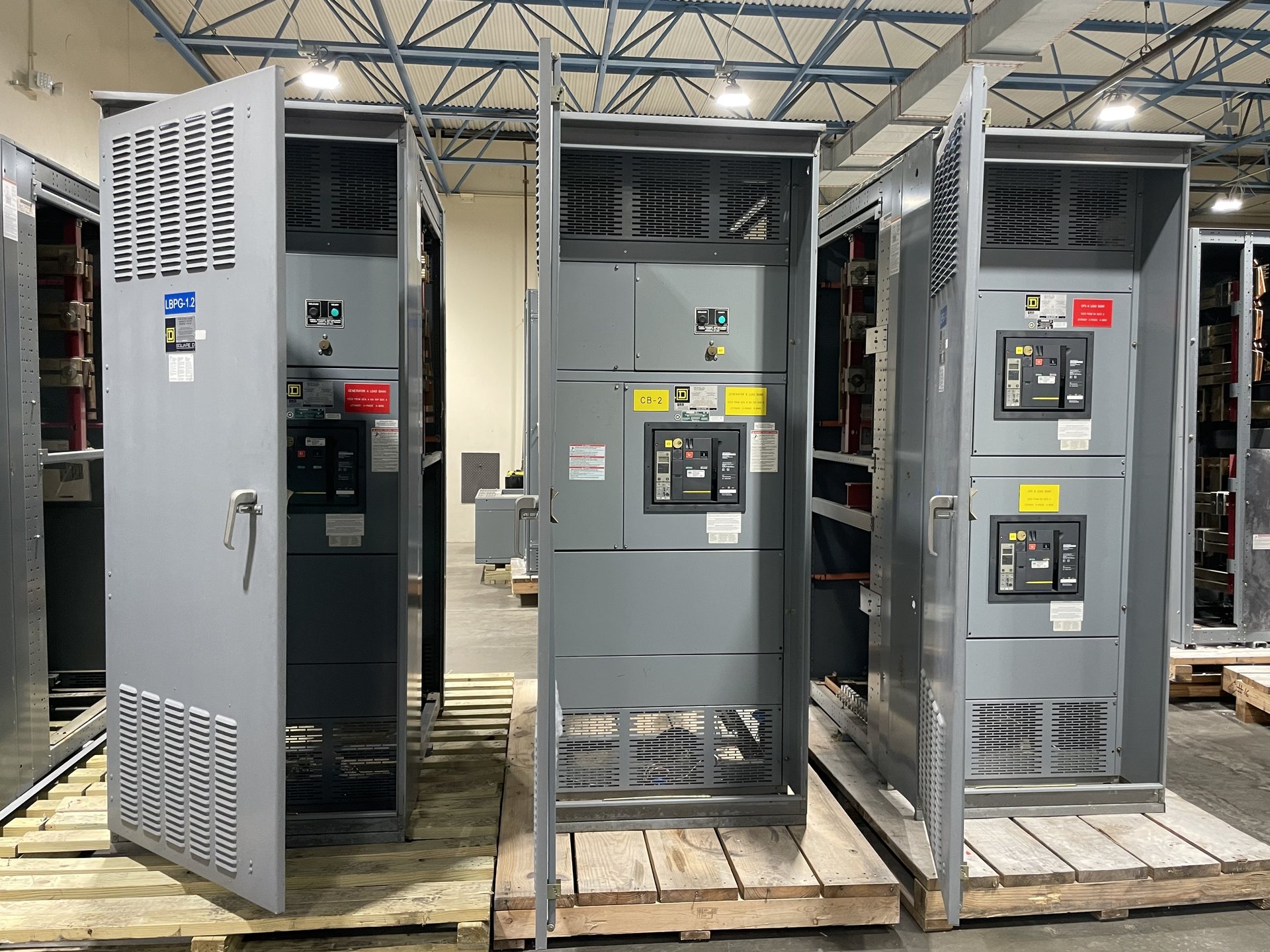
Select bus and breakers as one coordinated assembly
For a McKinney project, start by matching the bus arrangement to the one-line diagram and the way the distribution system must operate. Identify the main and feeder sections, bus ties, source connections, and any provisions for future loads. Specify the system voltage, phase and wire configuration, and required bus ampacity from the project design. A bus rating alone does not establish that a complete assembly is suitable for the application.
Breaker selection also depends on the load and system design. Provide the breaker type, frame and trip requirements where defined, pole count, accessory needs, and the number and location of outgoing circuits. Ask the engineer to confirm how the selected breakers fit the proposed bus and assembly configuration. We review these inputs for quotation; final equipment details should align with approved design documents and the applicable standards.
Establish available fault current at the equipment
Available fault current is a critical input, not a value to estimate from a service size or a nearby installation. Obtain the calculated current at the switchgear connection point from the electrical engineer or serving utility, and note the assumptions behind that calculation. Transformer data, conductor impedance, source configuration, and upstream equipment can affect the result. Submit the latest study or documented value with the request for pricing.
Compare the project fault-current study with the interrupting capabilities of the proposed breakers and the short-circuit rating required for the assembled equipment. If a transformer, generator, utility source, or system configuration changes, have the engineer reassess the calculation and equipment selection. Do not treat a component rating as confirmation of the complete assembly’s suitability. The quoted configuration and applicable ratings must be reviewed for the specific project.
Define the enclosure for the actual installation environment
Describe where the switchgear will be installed in McKinney: indoors or outdoors, in a conditioned electrical room or a space exposed to weather, dust, moisture, or other site conditions. State the required enclosure type and any design constraints arising from the location. Room dimensions, access routes, ventilation, mounting surface, and service clearances can influence section layout and access. Provide the project criteria rather than relying on a generic indoor or outdoor description.
Also identify environmental conditions that may affect the equipment, such as ambient temperature, corrosive exposure, condensation risk, or nearby heat-producing systems. The design team should confirm applicable enclosure requirements and coordinate any environmental mitigation with the building plans. These details help us evaluate the requested configuration, but they do not replace site-specific engineering. Suitability, enclosure construction, and any applicable listing or standards must be verified for the quoted assembly.
Coordinate equipment dimensions with installation drawings
Switchgear dimensions and connection points need to match the room and the installation plan. Send the latest electrical one-line, switchgear elevation, room plan, and relevant conduit or cable-entry drawings with the request for pricing. Call out the intended lineup orientation, incoming and outgoing cable directions, bottom or top entry, and any busway connection. Include door swing, working-space constraints, adjacent equipment, and the route for moving sections into position.
Compare the equipment layout with the structural, architectural, and electrical drawings before release for manufacture. Confirm floor loading and anchoring requirements with the responsible design professionals, and identify any limits on section width, height, or handling access. Resolve drawing conflicts before they become field changes. Our review can use the supplied project documents to define the quoted equipment, while installation drawings and final approvals remain subject to the project’s engineering and construction process.
Specify new equipment or new retrofit components clearly
We supply new equipment and new retrofit components only. For a new lineup, identify the required sections, breaker positions, metering or control provisions, and any future-space requirements. For a retrofit, provide the existing equipment manufacturer and model information, clear photographs where appropriate, dimensional drawings, breaker compartment details, connection geometry, and the intended function of the replacement component. These details help determine whether the requested new component can be engineered for the existing installation.
A retrofit component should not be selected from a nameplate description alone. The project team should document the existing bus and breaker interfaces, electrical ratings, interlocks, mounting and operating arrangements, and any modifications already made to the equipment. We review the submitted information before quoting a configuration. Do not assume interchangeability or compatibility until the specific equipment and interfaces have been evaluated and confirmed.
Prepare a complete McKinney project quotation package
A focused quotation package can include the one-line diagram, load and circuit schedule, fault-current calculation, enclosure and site criteria, installation drawings, and a written scope of supply. State the preferred bus and breaker configuration, required metering or control features, and any project-specific documentation needs. Identify the design stage and note which ratings or dimensions remain under review. Clear assumptions make it easier to distinguish fixed requirements from items that need engineering confirmation.
We manufacture to specification and can review new equipment requirements for projects in McKinney, Texas, while serving Texas from the United States. Request pricing with the project documents and desired delivery context; lead time is subject to project review and is confirmed for the quotation. Ask which drawings, ratings, component-origin details, and test documentation can be provided for the proposed configuration. Verify the applicable standards and any required listing for the assembly rather than assuming coverage from an individual component standard.