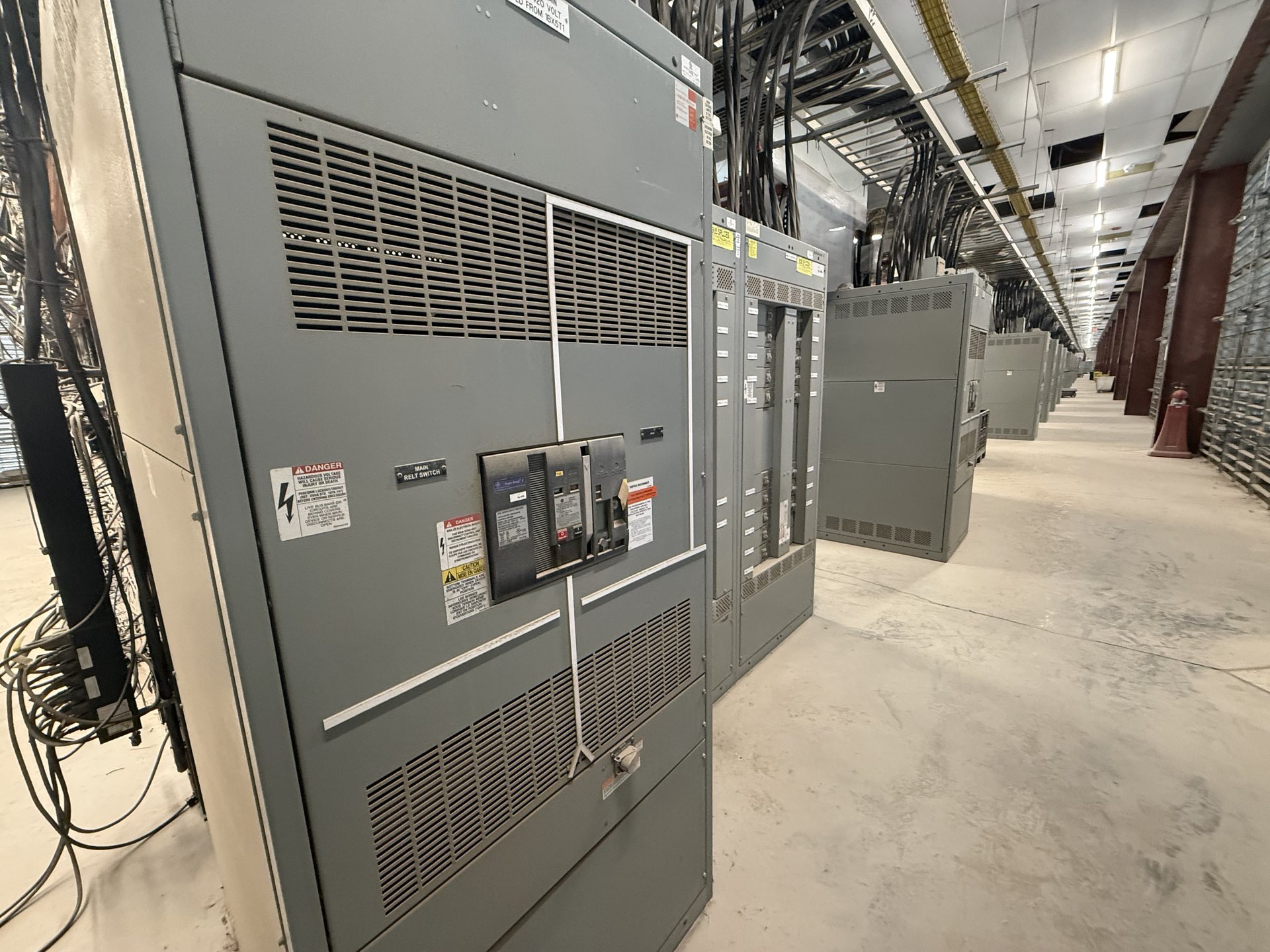
How Metal-Clad Compartmentalization Shapes the Design
In applicable metal-clad designs, grounded metal barriers separate the circuit breaker compartment from other compartments, such as those for bus connections, incoming or outgoing cables, and control wiring. The exact arrangement depends on the lineup design and project requirements. When requesting pricing, identify the intended functions of each cubicle, the lineup sequence, and any access or separation requirements that govern the installation.
Compartment boundaries affect dimensions, equipment interfaces, maintenance access, and the way conductors enter or leave the lineup. Provide available room dimensions, cable approach, termination constraints, and adjacent equipment details early in the review. Do not assume that a familiar lineup arrangement will fit a new application without engineering confirmation; the manufacturer must review the specified configuration and interfaces for the particular project.
Drawout Breaker Positions and Operating Requirements
A drawout breaker arrangement is defined by more than the breaker itself. The specified design may provide operating positions that connect the breaker to the primary circuit, isolate it from that circuit, or permit removal from its compartment. Interlocks and position indications are part of the equipment’s operating scheme. State the required breaker functions, control voltage, operating sequence, and any project-specific interlocking needs for review.
Clarify how the equipment will be accessed and maintained, including whether breaker removal space, lifting provisions, or handling equipment must be coordinated with the room layout. Confirm the intended racking method and the operating instructions and diagrams required with the assembly. Installation, inspection, testing, and energization must be performed by qualified personnel under approved procedures; drawout construction does not make live work safe.
Grounded Barriers, Shutters, and Access Protection
Grounded metal barriers help separate compartments and reduce the chance of inadvertent contact with parts outside the compartment being accessed. Depending on the design, shutters may cover primary disconnect contacts when a breaker is withdrawn. These features are design-dependent and should not be treated as a substitute for isolation, grounding, lockout, or approved work procedures. Specify the access and protection features required by the project rather than relying on a general product label.
Ask how compartment doors, barriers, shutters, and interlocks are arranged for the proposed configuration, and identify any site rules or operating constraints that affect access. The scope review should establish which components are included and which interfaces are by others. Applicable construction and listing requirements must be checked for the specific assembly; a standard name alone does not establish that a proposed configuration is listed or suitable.
Protection, Relaying, and Control Coordination
Metal-clad switchgear commonly integrates circuit breakers with protective relays, control circuits, instrument transformers, and indication, but the required package varies by application. Define the protection functions and interfaces needed for each breaker position, along with relay preferences, control power, metering, alarms, and communications requirements. Provide available system information and protection criteria so the design review can identify missing inputs before the quotation is finalized.
Protection settings and coordination are project engineering matters, not universal features of a switchgear lineup. Identify who will supply relay settings, complete coordination studies, and approve control logic, and state what drawings or data are required for that work. Confirm whether the requested scope includes specified relays, control wiring, terminal blocks, or communications provisions. Final components, engineering scope, and documentation are confirmed during project review.
Define Ratings, Interfaces, and Applicable Standards
A useful request for pricing identifies the system voltage, continuous current, short-circuit duty, frequency, grounding arrangement, and required breaker ratings, where established by the project. These are design inputs, not a promise of availability or a standard offering. Also provide the one-line diagram, equipment schedule, service conditions, and the intended source and load arrangement so the manufacturer can evaluate the lineup as a coordinated assembly.
State the applicable product standards and any owner, utility, or specification requirements, then ask that their applicability be reviewed for the proposed design. Metal-clad switchgear standards are distinct from UL 891, which applies to switchboards and should not be used as a blanket designation for switchgear. Confirm the governing standard, configuration, and any required listing or test documentation for the specific equipment in the quotation.
New Equipment, Retrofit Components, and Submittals
Switchgear Builders Texas supplies new metal-clad equipment and new retrofit components. For a new lineup, provide the required cubicle count, breaker functions, bus arrangement, cable connections, auxiliary devices, and installation constraints. For a retrofit request, identify the existing switchgear manufacturer and model, compartment dimensions, breaker nameplate information, connection geometry, and available drawings.
Retrofit compatibility must be established from project-specific equipment information; a similar-looking breaker or compartment is not proof of fit or suitability. Submit clear nameplate photographs, dimensional drawings, wiring diagrams, and modification history when available. Ask which submittals are included, such as arrangement drawings, connection details, elementary diagrams, and component data. Component origin, engineering, lead time, and documentation are confirmed for each quotation, including requests for American components.