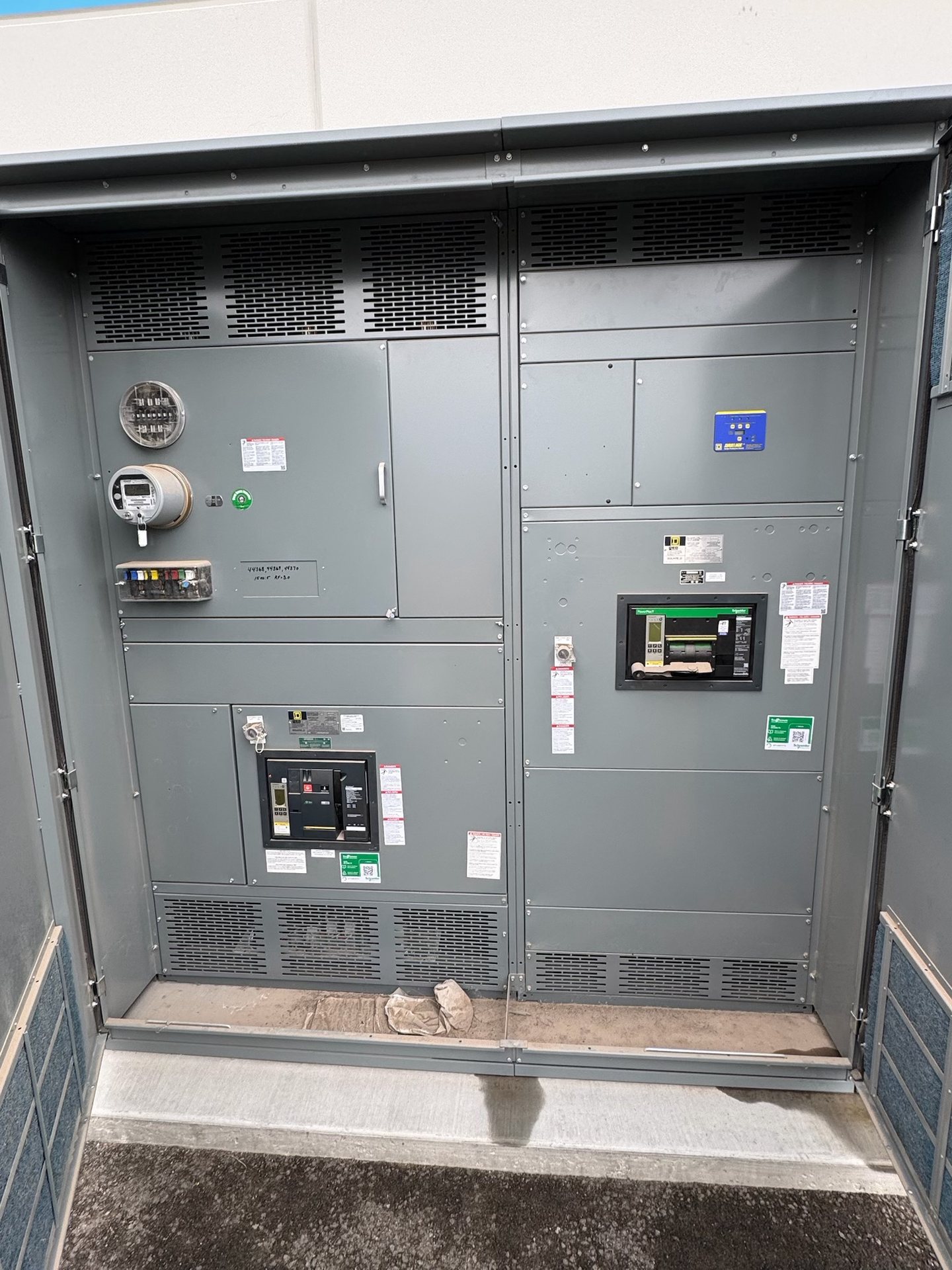
What Metal-Enclosed Switchgear Includes
The term describes equipment grouped within a metal enclosure, but it does not by itself define the switching device, protective functions, internal barriers, access arrangement, or electrical ratings. Depending on the design, an assembly may bring together circuit-interrupting devices, disconnecting means, protective relays, instrument transformers, controls, and bus. The single-line diagram and equipment specification establish what functions are required and how the assembly interfaces with the power system.
When requesting a quotation, identify the system voltage, continuous current and interrupting requirements, source and load arrangement, and intended operating functions. Clarify whether the project needs main, feeder, tie, or other switching positions, plus metering, relaying, and control provisions. These are design inputs, not assumptions based on the words “metal-enclosed.” Engineering review determines whether the requested arrangement is suitable and what details remain to be resolved.
Applications and System Interfaces
Metal-enclosed assemblies may be specified for utility, industrial, commercial, or infrastructure power systems where switching and protection equipment must be grouped in a defined enclosure. Application-specific requirements vary: a facility distribution lineup may have different source arrangements and protective coordination needs than a process installation or a system with multiple incoming supplies. The application, rather than a generic product label, should guide the equipment layout and functional scope.
Document how the assembly connects to upstream sources, transformers, downstream switchboards, motors, or other loads. Include the project single-line diagram, available system information, cable or bus entry preferences, and any space or access constraints. Note whether future feeders, tie operation, metering, or remote control are anticipated. For Texas projects, the same technical scoping is essential.
Metal-Enclosed Versus Metal-Clad
Metal-enclosed is a broad construction description for electrical equipment housed in a metal enclosure. Metal-clad generally refers to a more specifically compartmented form of switchgear with defined separation of major components and particular construction features. The terms are related, but they are not interchangeable shorthand for identical internal construction. A buyer should not infer drawout capability, compartment boundaries, or a specific access arrangement from “metal-enclosed” unless the project documents explicitly require those features.
If a specification calls for metal-clad construction, identify the governing standard and required construction details rather than relying on a product description alone. If metal-enclosed equipment is acceptable, state the functional and physical requirements that matter: device type, segregation, access, maintenance approach, and interfaces. The proposed configuration and applicable standards should be reviewed for the exact assembly. Standards and listing status must be verified for the configuration; UL 891 applies to switchboards, not as a blanket designation for all switchgear.
Protection, Switching, and Control Scope
Protection requirements shape device selection, relay functions, and the relationship between incoming and outgoing circuits. Provide available fault-current information, system grounding details, transformer data, and protective-device coordination requirements when available. State whether the design calls for overcurrent, ground-fault, differential, or other protective functions, and identify any project-specific interlocking or transfer logic. Final selections depend on engineering review of the system and cannot be established from enclosure terminology alone.
Controls and instrumentation should be scoped as deliberately as the power devices. Specify metering points, indication, alarm contacts, control-power preferences, communications needs, and any interface to a plant or building control system. Identify who supplies external control wiring and equipment, and provide relevant interface documents where available. Clear boundaries reduce ambiguity between the switchgear assembly and connected systems. Confirm which drawings, settings information, and other technical records are required with the quotation.
Enclosure, Layout, and Project Documents
The enclosure arrangement affects the installation footprint, access, cable routing, and equipment interfaces. Share room dimensions, working-space constraints, environmental conditions, entry direction, and preferred cable or bus connections. Identify whether the equipment is intended for indoor or outdoor use and describe any exposure or site conditions that affect enclosure requirements. These details allow the proposed layout to be assessed against the project rather than selected from an assumed standard arrangement.
A useful request package includes the single-line diagram, equipment schedule, applicable specification, site and interface drawings, and known utility or system data. Mark deviations, approved substitutions, and required documentation clearly. If the project has a preferred sequence of operation or physical lineup arrangement, provide it early. We review scope and engineering requirements before confirming configuration, availability, component origin, lead time, and what drawings or test documentation can be provided for that specific quotation.
New Equipment and Retrofit Components
Switchgear Builders Texas supplies new metal-enclosed equipment manufactured to project specification, as well as new retrofit components for defined replacement scopes. A retrofit request should identify the existing assembly manufacturer and model, device and component details, ratings, dimensions, connections, and available nameplate or drawing information. Photographs and measured interface details can help clarify the request, but they do not replace engineering confirmation of compatibility.
Do not assume that a replacement component is interchangeable because its general type or rating appears similar. Confirm mechanical fit, electrical interfaces, protective functions, control requirements, and any effects on the existing assembly’s documented configuration. Specify whether the request is for a complete new assembly or a new component intended for an existing lineup. Installation, inspection, testing, and energization require qualified personnel working under approved project procedures.