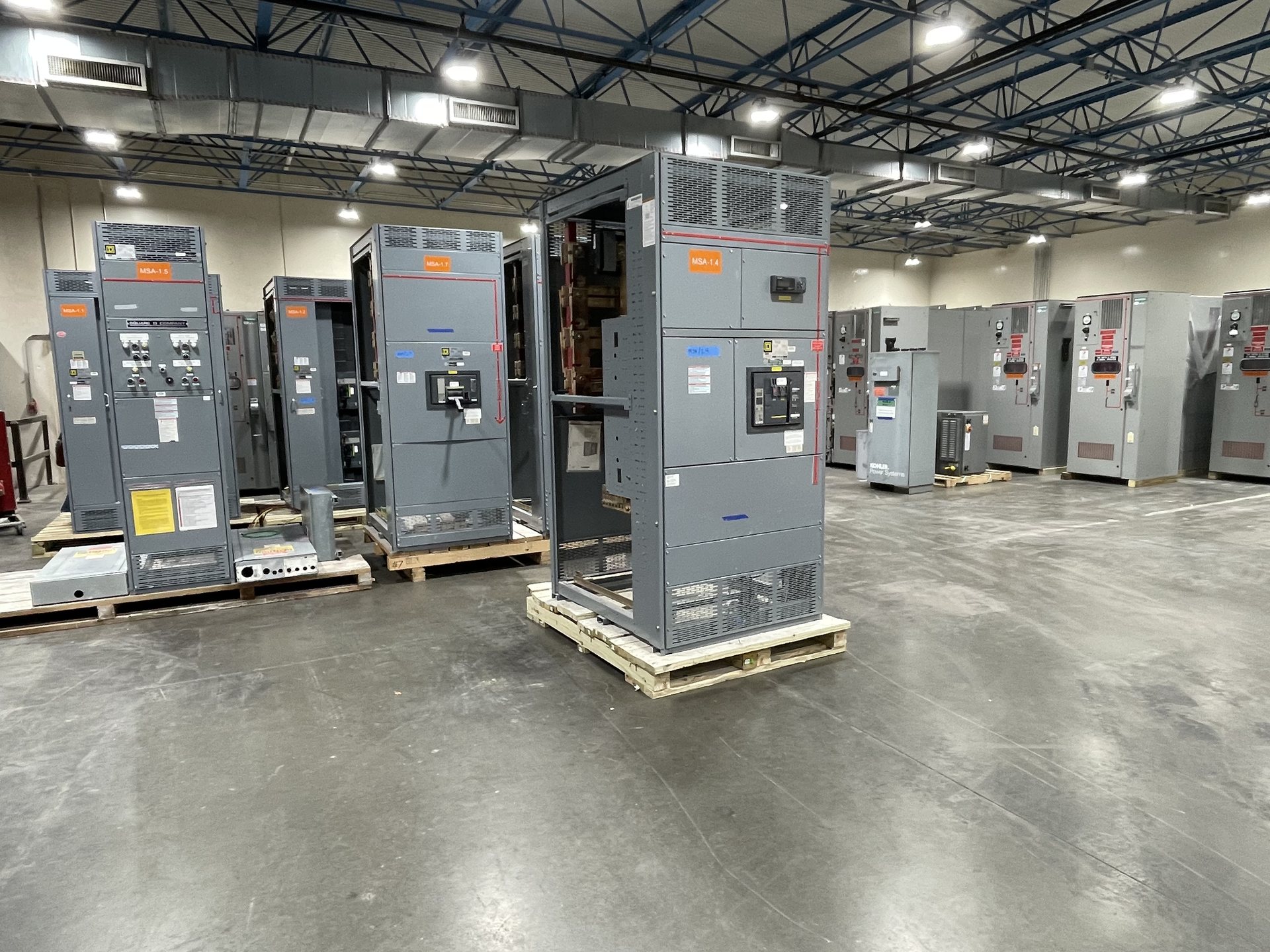
Choose a modernization scope that fits the asset
Modernization begins by defining what should change and what must continue operating. A complete switchboard replacement may be appropriate when the enclosure, bus arrangement, or overall configuration no longer fits the facility’s needs. In other projects, new sections or new retrofit components can address a targeted requirement while compatible existing equipment remains in place. We review the intended scope before recommending a configuration; suitability depends on verified equipment details, engineering review, and project requirements.
For an initial discussion, identify the equipment type, manufacturer and model if known, service function, and the reason for modernization. Explain whether the priority is capacity planning, maintainability, a changed distribution arrangement, or replacement of an obsolete component. Also note planned facility changes and operational limits on shutdowns. These details help distinguish a component-level request from a broader redesign and establish what information must be confirmed before a quotation.
Evaluate existing equipment before selecting a solution
An asset evaluation should describe the equipment as found, not assume that old drawings reflect its present condition. Useful records include nameplate information, one-line diagrams, switchboard elevations, wiring diagrams, breaker and device schedules, and available maintenance or modification history. Photographs can clarify compartment layouts and visible interface details, but they do not replace field verification. Missing, conflicting, or revised records should be identified so the project team can decide what must be surveyed.
The review should separate known facts from open questions. Confirm which sections or devices are in scope, what remains in service, and whether prior changes affect the original arrangement. Document the facility’s operating constraints and the responsible parties for field measurements and engineering approvals. Condition observations should be made by qualified personnel using approved procedures; inspection, testing, and any work on energized equipment require appropriate controls and are not a substitute for design verification.
Match mechanical interfaces deliberately
Physical fit is more than matching overall width and height. A new section or retrofit component may need to align with enclosure dimensions, mounting points, compartment boundaries, door and barrier clearances, cable entry, and access for installation and maintenance. Existing equipment may have undocumented modifications or construction details that affect fit. We use the drawings and field information provided for project review to identify interface questions before equipment is specified, rather than assuming a component is interchangeable based on appearance alone.
When preparing interface information, record the existing assembly’s manufacturer and catalog identifiers, dimensions, mounting arrangement, compartment details, and the location and direction of incoming and outgoing connections. Clarify access restrictions, handling paths, and any building or equipment clearances that constrain replacement. If measurements are preliminary, label them as such and identify who will verify them. Final configuration and fit depend on reviewed dimensions and applicable engineering requirements.
Coordinate electrical interfaces and protection
Electrical compatibility requires a review of the system arrangement and intended duty, not just nominal voltage. Provide the available one-line diagram and identify service characteristics, bus and feeder connections, grounding approach, protective-device functions, and the loads or downstream equipment affected by the change. Where existing protection settings or coordination studies are available, include them for review. The appropriate new equipment configuration depends on project-specific electrical data and engineering approval.
Discuss how the proposed modernization affects control power, metering, alarms, interlocks, communications, and connection points to existing systems. Identify which functions must be retained, changed, or added, and who will provide or approve related settings and wiring information. Do not assume legacy control schemes or device interfaces are supported without confirmation. Applicable standards and any listing requirements should be verified for the specific configuration; UL 891 applies to switchboard assemblies, not automatically to every switchgear assembly.
Specify new equipment and retrofit components clearly
A manufacturer quotation is easier to evaluate when the request defines the required deliverable: a complete new assembly, new sections, or new retrofit components for a documented application. Specify the intended service, project design parameters, interface constraints, required functions, and any owner or engineer-approved drawings. Identify whether the project expects engineering submittals, connection diagrams, bills of material, or other documentation, and ask what can be supplied for the proposed configuration.
Customers may specify American components, and that preference should be stated explicitly in the inquiry. Component origin, availability, and documentation must be reviewed for each quotation; a preference does not independently establish domestic-content compliance or certify Buy American or BAA requirements. Provide any project clauses or documentation criteria for review before procurement. Pricing, engineering scope, lead time, and applicable test documentation are confirmed for the specific project rather than presumed from a general capability.
Plan field cutovers around operating constraints
A cutover plan should connect the equipment scope to the facility’s operating sequence. Identify the affected loads, permitted outage windows, temporary operating arrangements, dependencies on other trades, and the party responsible for approving the switching plan. Establish what must be removed, retained, or reconnected, and confirm site access and handling constraints. These planning details help the project team coordinate new equipment delivery and field work without assuming a particular installation schedule or uninterrupted operation.
Before procurement is finalized, align the proposed configuration and submittals with the engineer, contractor, owner, and facility operations team. Confirm responsibility for field verification, installation, terminations, inspection, testing, and energization, including the procedures and approvals governing each activity. Those tasks require qualified personnel and approved procedures. Switchgear Builders Texas supplies new equipment and new retrofit components; project-specific interface review, availability, lead time, and documentation should be confirmed during quotation and engineering review.