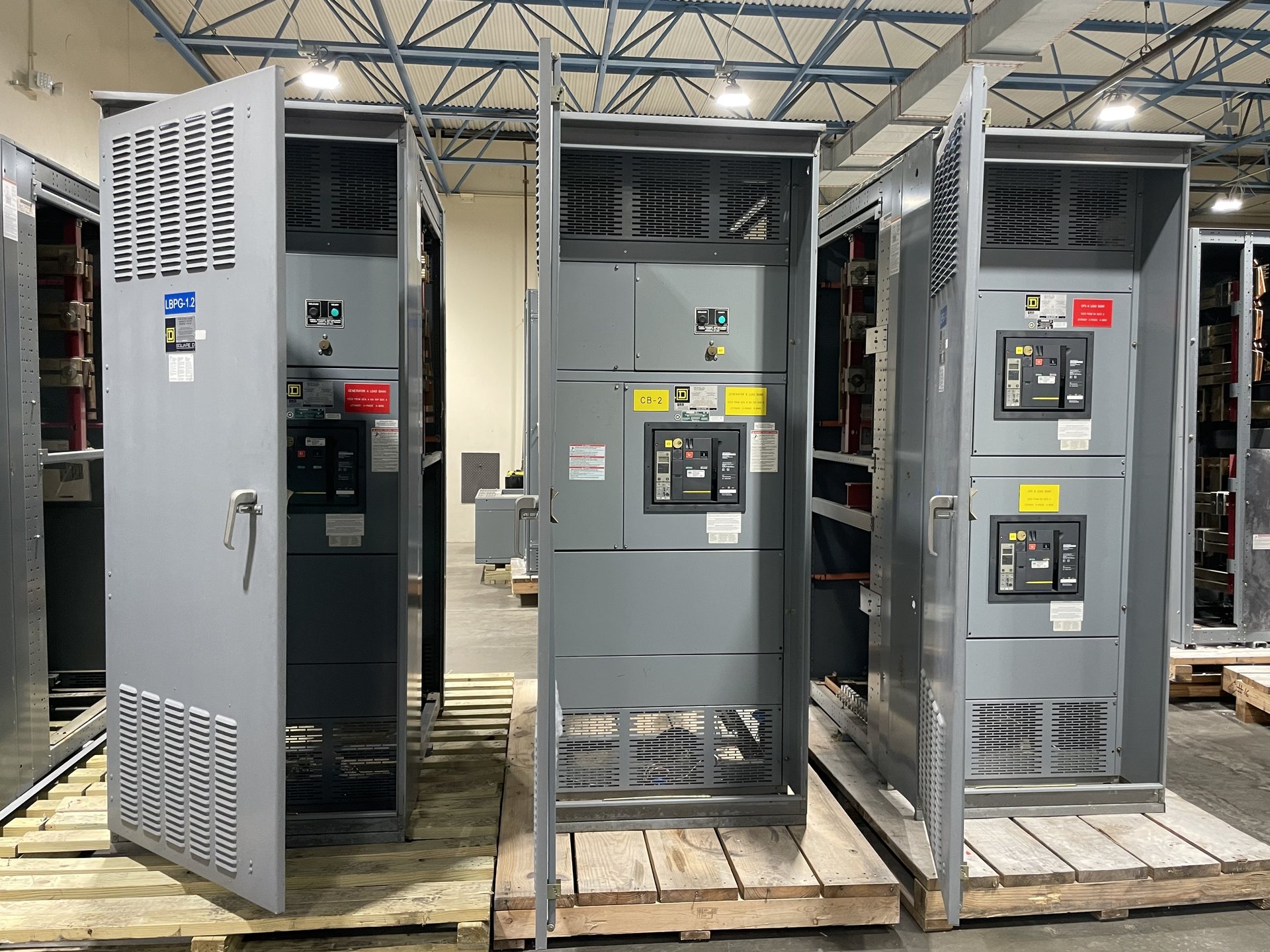
Custom distribution equipment for Odessa projects
An Odessa facility may need a new distribution assembly for a ground-up build, an expansion, or a change in electrical loads. The right equipment depends on the service arrangement, load characteristics, available fault current, environment, and the way the system must coordinate with upstream and downstream devices. We build new equipment to an agreed specification rather than asking a project team to fit its design around an assumed standard package.
At the planning stage, identify the equipment’s role in the one-line diagram, the intended supply and loads, the available installation space, and any requirements for future circuits. If the project replaces equipment in an operating facility, distinguish the new assembly from any new retrofit components intended for an existing system. Compatibility, configuration, and application must be reviewed before either is quoted.
Product categories and equipment boundaries
Depending on the application and project review, product categories may include UL 891 switchboard assemblies, low-voltage switchgear, panelboards, and associated distribution components. These categories are not interchangeable: the design documents should establish the required equipment type, system function, enclosure conditions, and interface points. A switchboard assembly designed to UL 891 is distinct from other switchgear, and that standard should not be assumed to cover every assembly or voltage class.
For an Odessa quote, tell us whether the scope is a complete new assembly, a lineup addition, or new retrofit components for an existing installation. Provide the existing manufacturer and model information when available, along with photographs or drawings that show relevant interfaces. We will review whether the proposed scope can be defined from the information provided; compatibility and any applicable listing or standards need confirmation for the specific configuration.
Project intake: documents that clarify scope
A useful intake package gives the manufacturer enough context to evaluate the intended build. Include the latest one-line diagram, load schedule, equipment schedule, and applicable specifications. Note the service characteristics and required ratings as project design parameters, not presumed product availability. Identify main and feeder arrangements, metering or control needs, enclosure requirements, and any coordination or short-circuit documentation the design team expects to review.
Also describe the Odessa site’s delivery constraints: access limitations, receiving hours, unloading arrangements, and restrictions on equipment dimensions can affect planning. Include the project phase, bid or submittal deadlines, and the decision date if known. Early clarification of missing information helps separate firm design requirements from open items that need resolution before a complete quotation can be prepared.
Design choices for the site and operating plan
The project team should decide which conditions affect equipment selection at the intended installation point. Discuss indoor or outdoor placement, enclosure needs, ambient and environmental conditions, available working space, cable entry direction, and how the assembly will connect to the facility distribution system. For retrofit work, document existing clearances and connection details rather than relying on a general description of the equipment being replaced.
Operational requirements matter as much as physical fit. Clarify how many circuits are required now, whether planned expansion should be accommodated, what monitoring or metering functions are specified, and which protection or coordination requirements govern the design. We can use these details to define a buildable scope for review. Installation, servicing, testing, and energization must be performed by qualified personnel under approved procedures.
American components and project documentation
Customers can specify American components for a new equipment build, and the requested component preferences should be stated in the inquiry and project documents. Component origin, availability, engineering suitability, and any domestic-content documentation must be confirmed for the particular quotation. A request for American components does not by itself establish compliance with Buy American, BAA, or another domestic-content requirement, so identify the exact contractual or funding provisions that apply.
Tell us which submittals and records are required for the Odessa project, such as drawings, equipment schedules, component information, or documentation of applicable standards. State the review process and required submission dates. UL 891 applies to switchboards, but applicability and listing must be verified for the proposed configuration; do not assume that every assembly or component carries the same status. Documentation expectations should be settled before purchasing.
Requesting a quotation for delivery to Odessa
Owners and contractors can request pricing by sending the project documents, requested equipment scope, quantities, design parameters, and target schedule for review. Identify whether the inquiry is for a complete new assembly or new retrofit components, and note any approved alternates or specified component preferences. If drawings are preliminary, label them accordingly and list unresolved selections so the quotation can make its assumptions clear.
We serve Odessa from the United States and ship nationwide. Lead time, engineering scope, component origin, shipping arrangements, and available test documentation are confirmed for each quotation after project review. Ask for pricing against the current document set and provide a contact for technical clarifications so open questions can be addressed before an order is finalized.