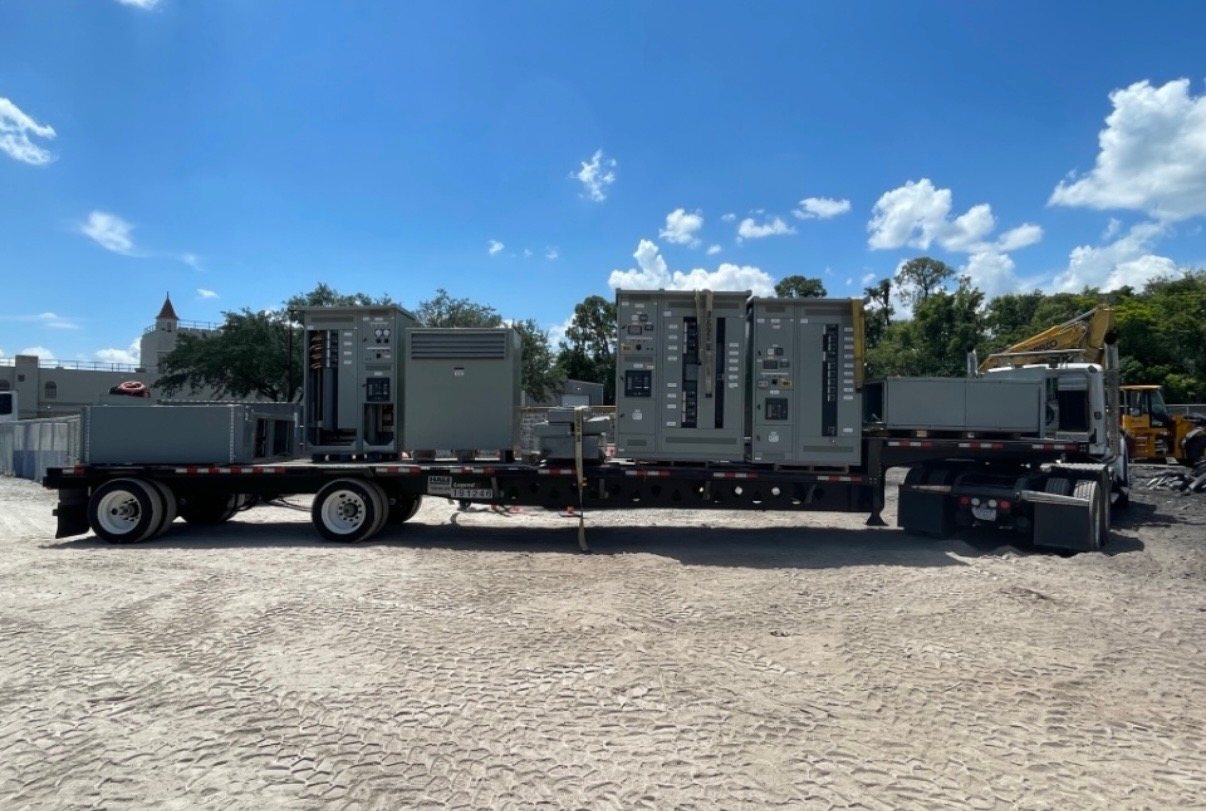
Plan the Modernization Around the Outage Window
Begin by mapping the outage sequence to the equipment that must be isolated, removed, replaced, inspected, and returned to service. Identify the required shutdown and restoration milestones, work-area access limits, lifting routes, and dependencies on adjacent systems. These details help determine whether the scope should be divided into equipment packages and which interface information must be resolved before fabrication. Schedule assumptions remain subject to engineering and project review.
Distinguish work that can be completed before the outage from tasks that require the equipment to be de-energized and accessible. Confirm who controls isolation, when the installation area will be released, and how acceptance decisions will be made. Provide the target outage dates, allowed installation duration, site coordination constraints, and decision deadlines when requesting pricing. These inputs help us evaluate the proposed scope without promising a specific lead time or delivery date.
Measure Existing Equipment and Its Installation Space
Field dimensions are essential when new equipment or retrofit components must connect with existing gear. Record enclosure width, height, and depth; mounting and anchoring points; bus and cable entry locations; conduit or cable-termination space; and clearances to walls, overhead structures, and neighboring equipment. Include photos with reference dimensions, nameplate information, and drawings that show the equipment in context. Do not rely on catalog dimensions alone to establish fit.
Document the existing electrical arrangement as well as its physical envelope. Useful records include one-line diagrams, schematics, bus details, grounding method, control voltage, protective-device information, and cable schedules. Note field changes that differ from drawings and identify any unknowns for survey or engineering review. Compatibility depends on the actual configuration, not simply a matching voltage or enclosure footprint, so unresolved dimensions and interfaces should be identified before quotation.
Define Temporary Power and Transition Interfaces
If temporary power is needed during the turnaround, define its role and boundaries before selecting permanent distribution equipment. Describe the loads to be maintained, expected operating conditions, connection locations, required transfer or isolation points, and the party responsible for temporary equipment. Share available one-line diagrams and site standards, and clarify whether temporary arrangements are part of the equipment purchase or a separate contractor scope.
Temporary interfaces must be coordinated with the permanent system so connection points, protective-device coordination, grounding, control signals, and cable routing are understood. Identify the source and destination equipment, available fault-duty information, and any restrictions on routing or access. The project’s qualified electrical professionals must determine safe operating procedures and approve temporary configurations. Our quotation can address specified new equipment and new components; it does not assume responsibility for site temporary-power design or field work.
Select Distribution Equipment From Project Data
To evaluate a compatible configuration, provide system voltage, phase and frequency, normal and emergency sources, load information, required feeder count, and anticipated expansion needs. Include available short-circuit and coordination information, grounding requirements, environmental conditions, and enclosure constraints. State whether the project calls for a switchboard assembly, specified retrofit components, or another defined distribution scope. Equipment ratings and features are determined from the submitted application and confirmed during project review.
Also identify required control and metering functions, communication interfaces, cable termination preferences, and any plant documentation or drawing conventions. Specify the project’s applicable standards and required compliance documentation rather than assuming a particular certification applies to every assembly. UL 891 is a switchboard standard; whether it applies, and the listing and standards appropriate to a particular configuration, should be verified for that project. Component origin and supporting documentation must be confirmed for each quotation.
Structure a Phased Commissioning Handoff
Plan commissioning as a sequence of defined handoffs, not a single final date. Establish when equipment documents, approved drawings, interface data, and installation records are needed, and identify who reviews each item. For phased cutovers, map which distribution sections serve which loads and what must be available before each phase begins. This helps the project team align equipment scope with contractor responsibilities and avoid leaving commissioning dependencies implicit.
Agree on the records expected for the supplied configuration, such as approved drawings, equipment schedules, and applicable test or inspection documentation when specified and available. Clarify the acceptance criteria, review process, and parties responsible for installation checks, system-level testing, and energization approval. We can confirm the documentation scope during quotation review; no test result or document package should be assumed without written confirmation. Qualified personnel must perform field work under approved procedures.
Prepare a Complete Turnaround Quotation Package
A focused request for pricing should combine the electrical basis of design, field survey, outage sequence, and interface scope. Attach current drawings and equipment schedules, mark revisions and known discrepancies, and identify the items to be replaced or retained. Include requested quantities, destination and delivery constraints, required submittal milestones, and the date by which the project needs a quotation. This gives our team a basis to review new equipment and new retrofit components against the stated application.
Before release, confirm assumptions and exclusions in writing, including installation, removal, temporary-power work, and commissioning services where these are outside the equipment scope. Ask us to identify open technical questions, documentation requirements, and any information needed to validate dimensions or interfaces. We manufacture to specification and serve Texas from the United States, with nationwide shipping. Availability, engineering, lead time, component origin, and test documentation are confirmed for each quotation rather than presumed.