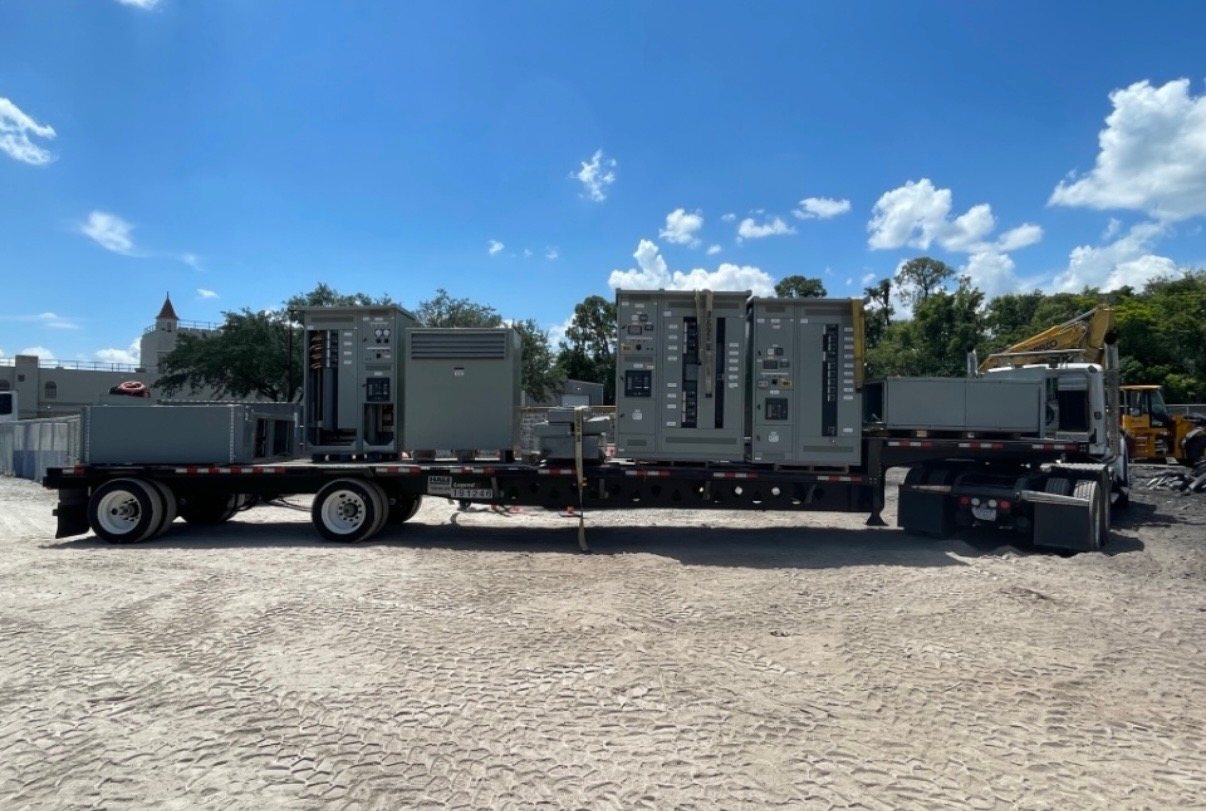
AC Interfaces Between Storage, Generation, and Loads
The first design decision is where the battery system connects on the AC side: at a shared point of interconnection, on a dedicated bus, or through a distribution arrangement that also serves facility loads or renewable generation. Identify the one-line diagram topology, nominal system voltage, phase and wire arrangement, grounding method, and the intended boundary between switchboard equipment and supplier-furnished power conversion equipment. These details determine the interface scope more reliably than a broad equipment label.
Clarify whether the battery inverter is grid-following or supports grid-forming functions, whether the project permits export, and how generation and storage are expected to operate together. Provide the utility interconnection requirements and the engineer’s design criteria, including any limits on parallel sources. We use those project inputs to evaluate bus arrangement, incoming and outgoing sections, metering provisions, and termination needs; final compatibility depends on coordinated review of the complete system.
Isolation and Safe Boundaries of Responsibility
An interface must make clear which devices isolate the storage equipment, renewable source, utility connection, and downstream loads. The project team should identify the required disconnect locations, number of sources, normal operating state, and any restrictions on simultaneous connections. State whether isolation is expected within the switchboard or provided by separate supplier equipment. This avoids leaving gaps or duplicating devices when the switchboard and battery system are procured from different manufacturers.
Document who supplies each breaker, disconnect, control-power source, enclosure, and field connection, along with the physical and electrical interface points. Confirm cable or busway entry direction, conductor information when available, access constraints, and space reserved for future work. New retrofit components may be considered for an existing installation, but only after reviewing the existing equipment identification, dimensions, ratings, condition information, and the intended modification. Retrofit suitability is configuration-specific.
Protection Coordination Across Multiple Sources
Battery inverters can contribute fault current differently from conventional rotating generators, and their behavior may depend on controls and operating mode. The equipment selection therefore needs the storage supplier’s available fault-current data and applicable contribution assumptions, as well as utility and generation-source information. Share the protection study criteria, proposed protective-device functions, coordination requirements, and any limits imposed by the interconnection review. Do not select devices from inverter power alone.
The engineer of record and system suppliers should coordinate breaker trip functions, settings responsibility, ground-fault approach, and the treatment of reverse power or other directional conditions where applicable. Identify which party produces and approves the short-circuit and coordination studies, and whether settings documentation is required with the equipment package. We can review project requirements for the proposed distribution assembly, but study conclusions and final protection settings must come from the responsible qualified project professionals.
Transfer, Bypass, and Operating Modes
Some projects need to transfer loads between utility service and a storage-supported source; others use the battery only in parallel with the grid. Describe the intended operating sequences for normal operation, loss of utility, return to service, maintenance, and any bypass condition. Explain whether transfer is open-transition, closed-transition, or not part of the switchboard scope. These decisions affect source arrangement, interlocking, control interfaces, and the division of responsibility between distribution equipment and the storage supplier.
Ask the storage supplier to define permissives, status points, trip signals, communication requirements, and control-power expectations at the switchboard boundary. Confirm whether transfer logic is furnished by the supplier, an external controller, or another project package, and specify the required interface drawings and terminal information. Avoid assuming that a controller or transfer function is included simply because the project uses batteries. Qualified personnel must install, service, test, and energize equipment under approved procedures.
Information to Confirm with the Storage Supplier
Request the supplier’s current electrical interface data: inverter and transformer configuration, rated operating voltage, maximum continuous current, fault contribution assumptions, grounding details, protective-device requirements, and connection drawings. Also obtain the approved operating modes and any constraints on parallel operation. These values are project inputs, not universal characteristics of battery equipment, and may change with the selected system configuration. Confirm that the documents match the exact supplier model and revision being purchased.
Coordinate communication and commissioning boundaries before equipment is quoted. Ask which party provides network or hardwired signals, who owns control logic, what data must be exchanged, and how alarms and trips are handled. Identify the required deliverables, such as approved drawings, equipment schedules, device data, and test documentation, without presuming that a particular document or test is included. Availability of engineering, components, lead time, and documentation is confirmed for each quotation.
Specification, Review, and Procurement
A useful request for pricing includes the one-line diagram, project voltage and current requirements, source and load schedules, fault-study assumptions, utility criteria, enclosure and installation conditions, and the proposed interface boundaries. Include applicable project standards, preferred device functions, control and metering needs, and the desired submittal package. Call out any existing equipment when considering new retrofit components. Clear inputs let the manufacturer review scope, identify open questions, and distinguish supplied equipment from field work or other packages.
Specify new equipment and new retrofit components only, and state whether American components are required for the project. Component origin and any requested documentation must be confirmed for the quoted configuration; a request does not itself establish independent verification or compliance with domestic-content rules. Switchboards are evaluated against the applicable requirements for their configuration, and any UL 891 applicability or listing status should be verified during review. Request pricing with the project documents so scope, engineering, and lead time can be assessed together.