Start with available fault current at the equipment
Identify the bus or connection point where the equipment will be installed, then provide the prospective short-circuit current at that point and the basis for the value. State whether it is a calculated maximum, a utility-provided value, or an estimate, and include the date and operating conditions it represents. A number without a location or calculation basis can be misleading because fault current changes with the source and system configuration.
If the value is not known, do not substitute a typical figure or assume the existing equipment rating establishes the available fault current. Ask the electrical engineer of record or utility for the applicable data. We can use supplied information to scope a quotation, but an unverified assumption is not an engineering determination. The responsible qualified engineer must confirm the design inputs and the proposed equipment’s suitability for the actual installation.
Document the source and upstream protective device
Describe the supply feeding the equipment: utility service, transformer, generator, or another source, including relevant transformer impedance and connection details when available. Identify the upstream breaker or fuse by manufacturer and catalog information if known, along with its frame or fuse size, trip or fuse data, and settings. Provide the one-line diagram and available coordination or short-circuit study; these documents help connect the stated current to the actual feeder arrangement.
For multiple sources, include each source and the conditions under which it can contribute, such as normal, emergency, or parallel operation. Note transfer switches, tie breakers, alternate feeds, and any operating modes that change which devices are in circuit. A quote based only on a single-source arrangement may not describe the worst applicable condition. Have the engineer identify the governing configuration rather than relying on a supplier to infer it from incomplete drawings.
Separate interrupting duty from equipment withstand
Short-circuit information affects more than one equipment decision. The interrupting capability of protective devices, the short-time withstand or rating of an assembly, and the clearing time of upstream protection are related but distinct considerations. Share the project specifications and the relevant rating requirements, and identify whether the design depends on a particular protective-device combination or coordination approach. Do not treat a single fault-current number as proof that every component or assembly is suitable.
Where a proposed design relies on a series combination, current-limiting device, or other specific protective arrangement, provide the documentation and device details that support that approach. Configuration matters, and substitutions can change the basis of an evaluation. We review requirements for the equipment being quoted, while the engineer responsible for the system must verify protection, coordination, and application. Listing and applicable standards should be confirmed for the specific configuration; UL 891 applies to switchboards, not universally to all switchgear.
Resolve gaps, conflicting values, and study limits
Drawings, labels, and old studies may show different values because they were prepared at different times or for different operating assumptions. Send the available revisions and point out known changes, including transformer replacements, utility upgrades, generator additions, conductor changes, or revised protective-device settings. Flag whether a study uses minimum or maximum source conditions and whether its calculation point matches the equipment being quoted.
When documents conflict or omit a required input, record the uncertainty rather than silently choosing the most convenient value. A qualified engineer should determine which source data and operating case govern, request clarification where needed, and issue revised calculations when the system has changed. We may identify information needed to complete quote review, but we do not convert missing data into a guaranteed rating or assume responsibility for the project’s electrical study.
Scope new assemblies and retrofit components precisely
For a new assembly, provide the equipment type, system voltage, phase and wire arrangement, bus configuration, incoming and outgoing feeder requirements, and the project specifications that control the design. Include the intended installation location and any enclosure or environmental constraints. These details help distinguish the short-circuit requirement for a switchboard from requirements for other equipment and help us evaluate the correct scope rather than quote from a fault-current figure alone.
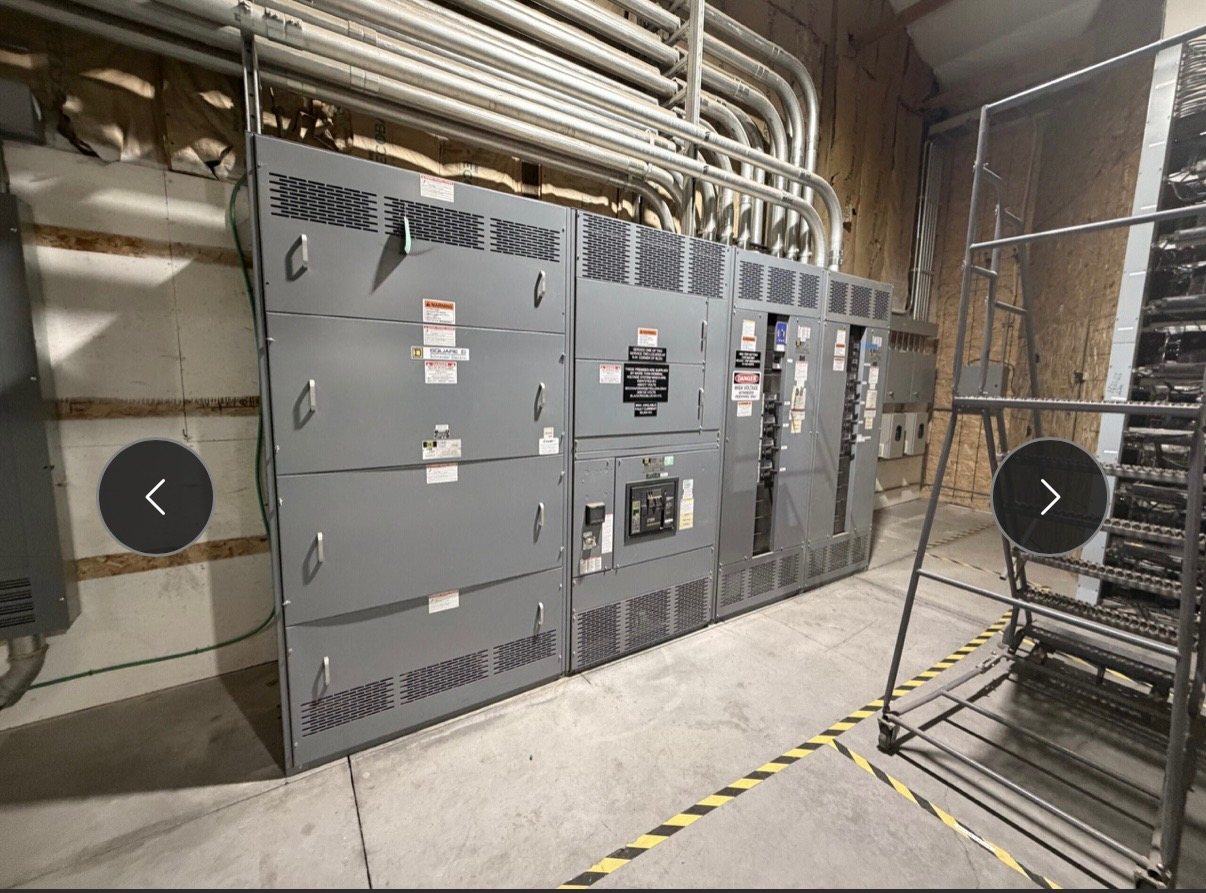
For a retrofit, request new retrofit components only and describe the existing equipment sufficiently to assess the interface: manufacturer, type, catalog or serial information if available, compartment dimensions, connection arrangement, and clear photographs or drawings. Include the existing assembly ratings and protective-device details, but do not assume its old rating proves the present system is adequate. Compatibility, engineering, and availability require project review before a quotation can be finalized.
Prepare a reviewable quote package
A concise package can include the latest one-line diagram, short-circuit study or utility data, upstream device schedule, equipment specifications, and the exact quote scope. Mark the equipment location and fault-current value on the drawing, identify document revisions, and list open questions. State whether the requested scope is a complete new assembly or new retrofit components, and distinguish firm project requirements from information still awaiting engineer confirmation.
We manufacture and supply new equipment to specification using American components when specified; component origin, configuration, lead time, and supporting documentation must be confirmed for each quotation. Request pricing with the project documents and the data available so the scope can be reviewed. We supply UL 891 switchboard assemblies, while applicable standards and any listing requirements should be verified for the proposed configuration. Installation, testing, and energization require qualified personnel following approved procedures.