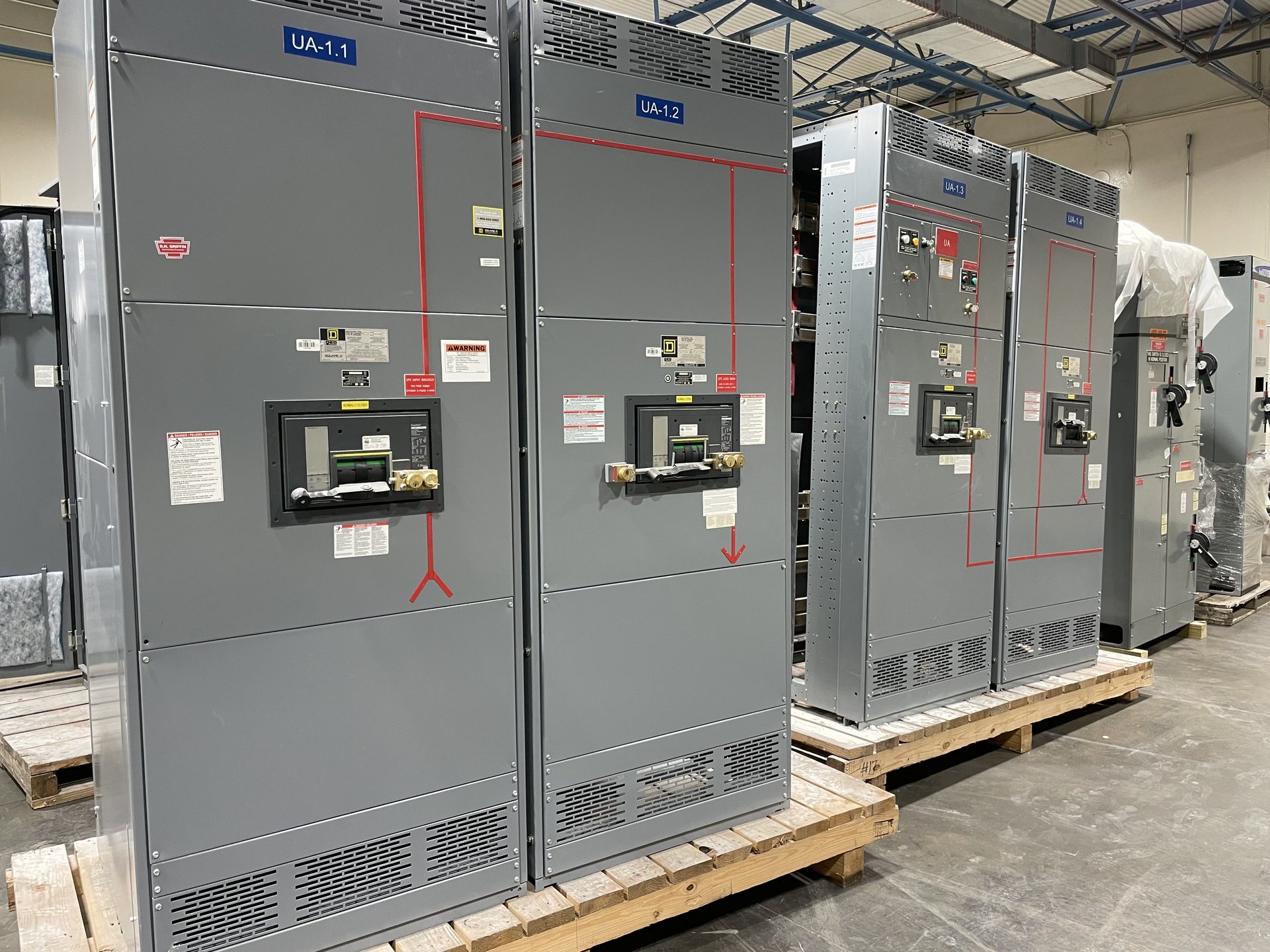
How a UL 891 Assembly Is Defined
The first step is to identify the assembly’s intended role in the distribution system. Provide the one-line diagram, system voltage, available fault-current information, required continuous-current capacity, service or feeder function, and the conditions where the switchboard will be installed. These parameters shape the proposed arrangement and help determine which construction details and evaluation criteria apply. A title or requested rating alone does not establish that a particular configuration is suitable or available.
UL 891 is a standard for switchboards; it is not a blanket listing for every type of low-, medium-, or high-voltage switchgear. An assembly’s listing status depends on the manufacturer, the specific construction, and the applicable program. We review the project requirements before confirming a proposed design. Buyers should distinguish a request for equipment designed to an applicable UL 891 program from a request that a particular completed assembly carry a verified listing.
Verify the Listing and Assembly Labels
Before purchase, ask which manufacturer is responsible for the assembly and whether the exact proposed configuration is within its applicable listing program. Request the relevant listing information and confirm what product identification or labels are expected on the delivered equipment. Check that the documentation corresponds to the quoted manufacturer and configuration, rather than relying on a general statement that a product family, component, or similar assembly is listed.
Do not assume that every switchboard we manufacture is UL listed or that a UL 891 reference guarantees a label on a specific assembly. Listing and applicable standards must be verified for the configuration being quoted. If a project specification requires a particular listing or labeling condition, provide that language with the inquiry. We can review it and clarify what can be confirmed for the proposed equipment before the order is finalized.
Scope Ratings and Distribution Requirements
Translate the electrical design into equipment requirements that can be reviewed together. Identify the system characteristics, main and feeder functions, protective-device requirements, metering needs, bus arrangement, and any required provisions for future circuits. State whether the switchboard is service equipment or downstream distribution equipment, and identify coordination, grounding, and connection requirements shown in the project documents. These details help prevent a rating or component choice from being interpreted without its system context.
Include the site and installation constraints that affect construction: available footprint, access and handling limits, cable entry and termination space, environmental conditions, and any specified enclosure requirements. Confirm whether the project requires special compartments, barriers, control wiring, or interface points to other equipment. If the drawings and specification appear to conflict, identify the discrepancy for review rather than assuming one document takes precedence. Final engineering and suitability depend on the reviewed project scope.
Choose New Equipment or Retrofit Components
We supply new switchboard equipment and new retrofit components only. For a new assembly, provide the intended distribution arrangement and project drawings so the proposed sections, devices, and interfaces can be scoped as a coordinated package. For a retrofit, describe the existing equipment manufacturer and identification, the function of the component being replaced, available dimensional information, connection details, and the reason for the change. Photographs and existing drawings can support the review but do not replace verified equipment data.
A retrofit component must be evaluated against the existing assembly and the project’s requirements; physical fit alone does not establish electrical or listing compatibility. Identify any changes to protective-device functions, bus connections, controls, or enclosure boundaries. State whether the existing switchboard must remain in service during project work, but do not treat that statement as an installation procedure. Qualified personnel must plan and perform installation, testing, and energization under approved procedures.
Specify Components and Documentation
If the project calls for American components, state that requirement in the inquiry and identify any specified device types, manufacturers, or approved alternatives. Component origin and availability are confirmed for each quotation. A request for American components does not by itself establish independent verification of domestic content or compliance with Buy American, BAA, or other procurement rules. Where a contract includes such requirements, provide the governing clauses and identify the documentation the owner or purchasing team needs to evaluate.
List the required submittals explicitly, such as arrangement drawings, equipment schedules, device data, wiring information, or other project-specific records. Ask which documents are available for the proposed configuration and at what stage they can be provided. Test records, standards references, and listing documentation must be confirmed for the actual assembly rather than assumed from a general product description. Clear document requirements help engineering, contracting, and purchasing teams review the same scope.
Plan the Quotation and Delivery Review
A useful pricing request includes the current specification, one-line diagram, schedules, required ratings, site constraints, requested component preferences, and the project’s submittal and delivery expectations. Identify the destination and any shipping or receiving restrictions, including access, unloading responsibility, and delivery-hour limits. Explain which requirements are mandatory and where an approved alternative may be considered. This gives us a basis to review scope and identify unanswered questions before a quotation is prepared.
Lead time is subject to review of the project, component availability, engineering requirements, and the agreed documentation and manufacturing scope; it is not a guaranteed interval until confirmed for the quotation. Buyers should compare quotations by configuration, inclusions, listing evidence, component assumptions, submittals, and delivery terms rather than by a title alone. We serve Texas from the United States and ship nationwide. Final availability and project fit are confirmed before order acceptance.