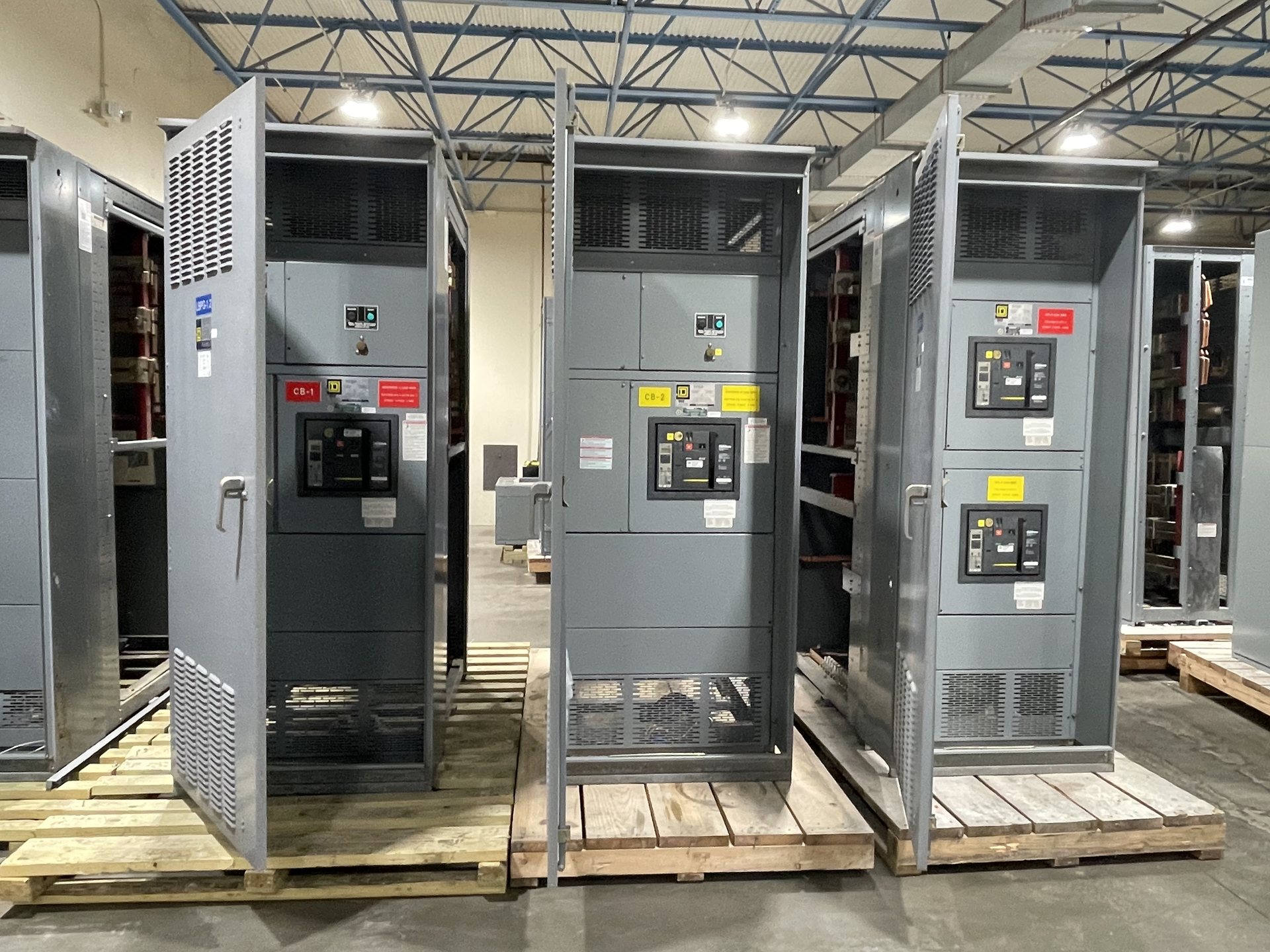
Define the voltage class and system duty
For a Waco project, begin with the nominal system voltage and the maximum equipment voltage required by the electrical design. These values establish the appropriate equipment class, but they do not by themselves define a suitable lineup. Confirm grounding method, frequency, source configuration, and whether the application is utility service, a facility distribution system, or another arrangement. Provide the one-line diagram and identify any planned operating modes that affect the design.
The quotation review also needs the available short-circuit current at the switchgear location, the expected clearing time, and the system’s grounding and protection assumptions. Ask the engineer of record to confirm those inputs rather than relying on a general facility value. Changes in transformer size, utility contribution, or source configuration can alter duty requirements. We review the information supplied for the proposed configuration; engineering and availability are confirmed for each quotation.
Choose a breaker or switch arrangement
Select the switching arrangement to match how the Waco facility will isolate, protect, and operate its circuits. A circuit-breaker lineup may be appropriate where protective interruption and coordinated relay functions are required. A switch arrangement may fit a different operating and protection scheme, but its application depends on the specified equipment and system duty. Identify incoming sources, feeder functions, bus sections, and any tie breaker so the lineup can be scoped around actual operating needs.
Clarify whether the design calls for a single-ended or sectionalized bus, the intended normal position of each device, and which loads must remain supplied during maintenance or source transfer. Describe required mechanical or electrical interlocks and the operator’s access expectations. These decisions influence compartment layout, controls, and the information needed for engineering review. Do not assume a breaker, switch, or bus configuration is available in a particular rating until the complete project requirements have been reviewed.
Coordinate relay interfaces and controls
Relay integration should be described in terms of protection functions, signals, and ownership boundaries. Provide the project relay schedule or functional requirements, including trip and close commands, status indications, alarms, and any required communications interface. Identify which functions are performed by customer-furnished devices and which are expected as part of the new equipment scope. Clear interface definitions help prevent gaps between switchgear controls, upstream protection, downstream equipment, and the facility control system.
Include available control power, required terminal points, wiring conventions, and applicable communications protocols in the request for pricing. If the project has preferred relay models or settings responsibilities, state those requirements without assuming a specific device can be supplied. Settings and coordination remain project-specific and should be developed and approved by qualified personnel. Ask which drawings, connection diagrams, and interface details can be provided with the quoted configuration, and verify the documentation scope before purchase.
Specify cable terminations and access
Cable entry and termination requirements can shape the physical arrangement of medium-voltage equipment. For each incoming and outgoing circuit, provide conductor material, size and quantity, cable type, termination method, and any required stress-control or shielding details. Confirm whether cables enter from above or below and identify the space available for bending and termination. These details help determine whether the proposed compartments and connection points can accommodate the specified cables.
Also clarify the site’s conduit or trench approach, phase arrangement, grounding connections, and whether equipment access must support front-only or additional-side access. Supply enclosure and room constraints, including door clearance and service access, for engineering review. Do not treat a preliminary outline as confirmation of fit: final dimensions and termination details must be reviewed against the installation drawings. Installation and cable work require qualified personnel using approved project procedures.
Match insulation and fault-duty requirements
Insulation requirements depend on the equipment class, system conditions, installation environment, and the specified design. Provide the applicable project specification and identify environmental concerns such as altitude, contamination, humidity, temperature range, or unusual exposure. State any required insulation approach or material restrictions, then ask that the proposed configuration be reviewed against them. The suitability of an insulation system cannot be established from nominal voltage alone.
Fault-duty review should distinguish the system’s available fault current from the equipment ratings required by the design. Include the required interrupting, short-time withstand, and bus or assembly duty criteria where specified, along with protective-device clearing assumptions. Confirm that the proposed arrangement and its components are evaluated for the complete application. Ratings, insulation details, and supporting test documentation must be confirmed for the configuration quoted; do not infer them from another lineup or product family.
Request new equipment with a complete submittal scope
We supply new medium-voltage equipment and new retrofit components only. For a Waco project, send the one-line diagram, equipment schedule, technical specification, site constraints, and desired delivery location with the pricing request. Identify whether the need is a complete lineup or new components intended for an existing installation, and provide the existing equipment information needed to assess compatibility. Retrofit suitability requires project-specific review, not a general assumption of interchangeability.
Ask the quotation to identify the proposed scope, exclusions, required customer inputs, engineering deliverables, and documentation available for the selected configuration. Confirm component origin requirements explicitly; American components can be specified, but origin and any applicable domestic-content requirements must be reviewed for the quoted equipment and are not independently certified by this statement. We serve Waco from the United States, and lead time, availability, standards applicability, and documentation are confirmed during project review. Installation, servicing, testing, and energization require qualified personnel under approved procedures.