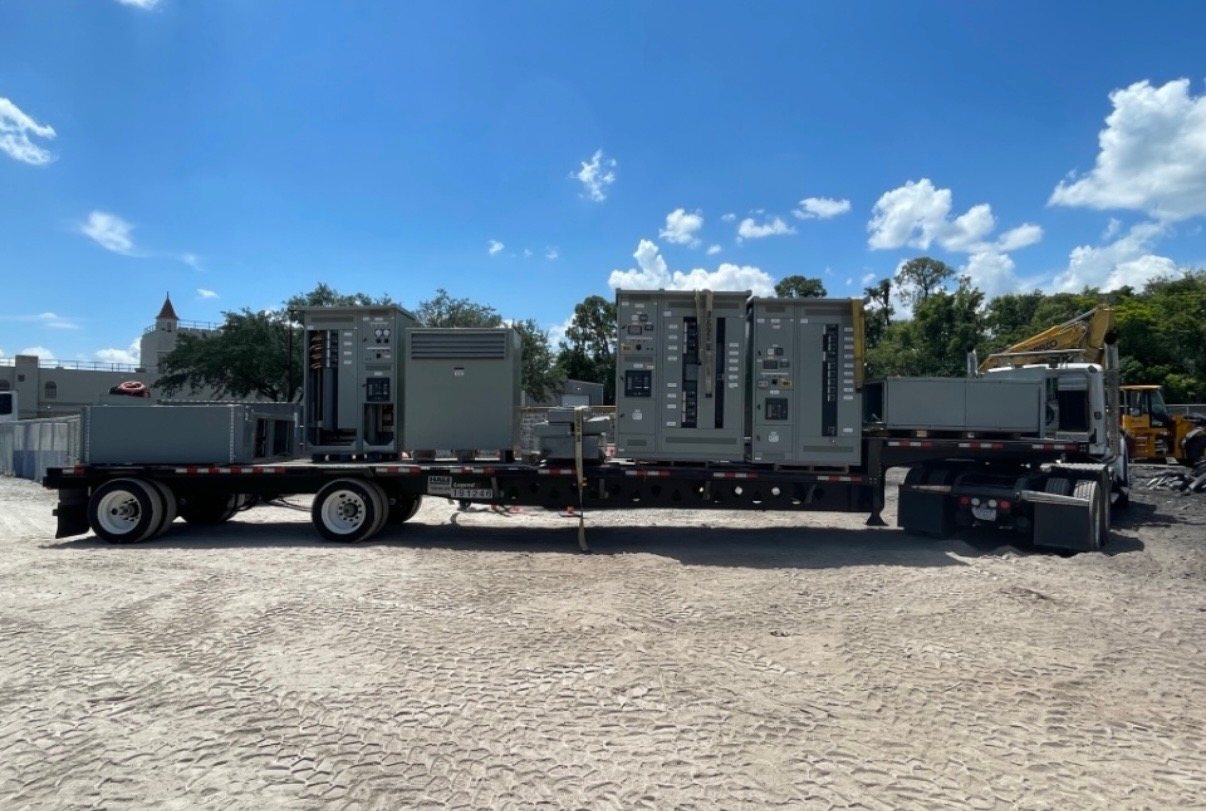
Switchgear for Water and Wastewater Facilities
A water or wastewater distribution package must fit the facility’s one-line diagram and operating priorities—not just its total connected load. Identify which equipment serves raw-water intake, high-service pumping, aeration, disinfection, solids handling, building loads, and control systems. Ask whether a failure should interrupt the entire plant, a process train, or only a nonessential load. Those answers inform bus arrangement, feeder count, protective devices, and space for future circuits.
Document the service voltage and frequency, calculated demand, largest motor loads, available fault-current information, and the desired switching arrangement before requesting pricing. Clarify whether the scope is a new lineup or new retrofit components for an existing assembly. For retrofit work, provide enclosure dimensions, bus details, device types, drawings, and photographs where available; compatibility must be reviewed rather than assumed.
Pump and Process Loads Shape the Design
Pumps, blowers, mixers, and dewatering equipment can create operating patterns that differ from a steady building load. Provide motor horsepower and electrical data, starting method, expected starts per hour, simultaneous operating combinations, and any variable-frequency-drive or soft-starter interfaces. Explain which motors are duty and standby, whether controls sequence starts, and how a change in process demand affects the number of motors operating together.
The switchgear scope should distinguish incoming distribution and motor-feeder requirements from motor control, drive, and process-control equipment that may be furnished separately. Confirm who supplies each interface, how equipment is coordinated with upstream and downstream devices, and what control-power source is required. These boundaries help prevent gaps between the switchgear quotation, motor-control package, automation design, and electrical contractor’s installation scope.
Utility, Generator, and Alternate Sources
Clarify every intended source, including utility services, on-site generation, and any alternate feeder, and show them on the one-line diagram. Identify normal and emergency operating modes, transfer equipment responsibilities, electrical and mechanical interlocking requirements, and whether sources may operate in parallel. The source arrangement affects bus configuration and protective-device coordination; it should be settled with the engineer and utility requirements before the equipment configuration is finalized.
For standby operation, define the loads to be supported, generator capacity and ratings, load-shedding sequence, and restart priorities for pumps and treatment processes. Ask whether emergency circuits are segregated, how transfer status reaches plant controls, and what happens when the preferred source returns. Confirm available fault-current and grounding information for each operating condition. Engineering review is needed to determine how source changes affect equipment ratings and protection.
Enclosures and Site Conditions
Water and wastewater sites may have indoor electrical rooms, outdoor installations, washdown areas, corrosive atmospheres, high humidity, or locations exposed to dust and temperature swings. Describe the actual installation location rather than relying on a general facility description. Specify enclosure requirements, room dimensions, access and working clearances, cable entry direction, conduit routes, ventilation constraints, and any environmental exposure that could affect materials or equipment arrangement.
Ask the project team to identify whether the equipment is near chemical storage, salt air, process tanks, or other sources of corrosive vapor or moisture. State any project-required enclosure classification, finish, space-heating provision, or environmental protection, and have the requirements reviewed against applicable codes and the installation conditions. Confirm shipping access, unloading method, final placement, and whether the lineup must be divided for transport; configuration and shipping feasibility depend on the project.
Protection, Coordination, and Documentation
Protection should reflect the system study and process consequences, not an assumed standard setting. Provide the engineer’s short-circuit and coordination requirements, grounding method, transformer data where applicable, and the operating cases to be evaluated. Identify critical process feeders and any required selective coordination or arc-flash study inputs. Protective-device selection and adjustment should be established by qualified engineering personnel using project data and approved procedures.
At quotation, define the requested submittal package: arrangement drawings, one-line information, device schedules, wiring or control details, and applicable test or compliance documentation. Identify the governing specifications, approved deviations process, and required review milestones. Switchboards are associated with UL 891, but that standard is not a blanket listing for every switchgear configuration; verify the applicable standards and listing status for the proposed assembly. Availability, component origin, and documentation are confirmed for each quotation.
Maintenance Access and Procurement Planning
Plan for operation and maintenance while the lineup is being specified. Ask which devices need front access, whether rear access is practical, how equipment will be isolated for service, and whether spare feeder spaces or future process circuits are important. Confirm space for cable bending, safe working clearances, door swing, lifting and replacement paths, and how plant staff can identify circuits. Installation, servicing, testing, and energization require qualified personnel following approved procedures.
For purchasing, submit the latest one-line diagram, load and source information, written scope, site conditions, required submittals, schedule milestones, and any approved manufacturer or component requirements. Specify American components if required by the project, while recognizing that component origin and any applicable domestic-content obligations must be confirmed for the quoted configuration; no independent compliance certification is implied. Switchgear Builders Texas supplies new equipment and new retrofit components only. Request pricing with the project documents so engineering, availability, and lead time can be reviewed.