Choose the assembly around its distribution role
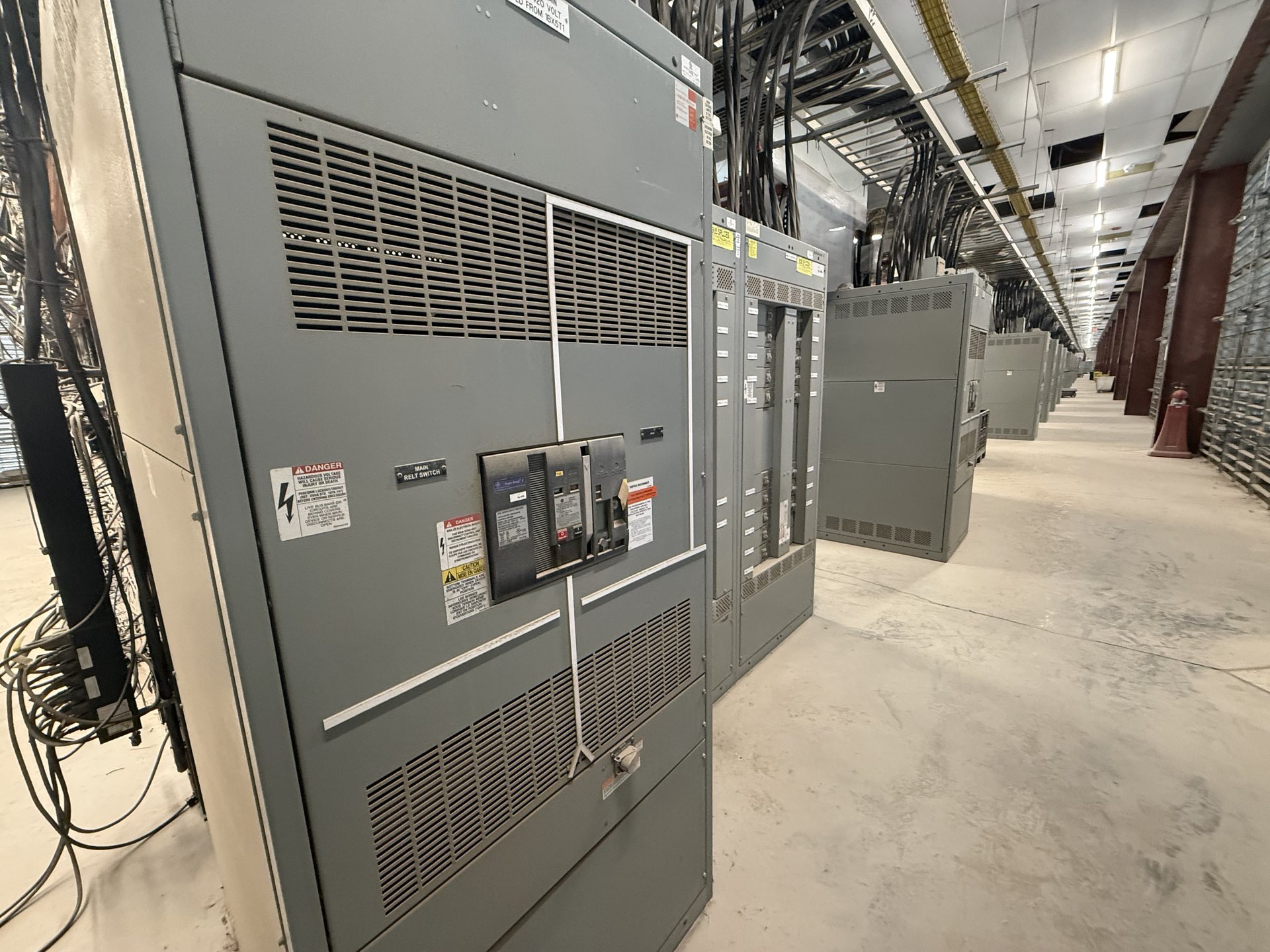
A 120/208 V switchboard is often considered when a project needs a centralized distribution assembly with a defined incoming service or feeder arrangement and multiple outgoing circuits. A panelboard may better fit a localized group of branch circuits, such as loads serving one area or tenant. Switchgear may be appropriate when the project’s protective-device, operational, or maintainability requirements call for that equipment class. These terms are not interchangeable; specify the intended function and arrangement before requesting pricing.
Describe the source, number of downstream distribution points, expected load types, and whether the equipment serves a service entrance, feeder, or branch-circuit role. Identify metering, main-device, and feeder-device needs, as applicable, and explain how operators must isolate or access circuits. We review those requirements against the requested configuration. A title voltage alone does not establish that a particular assembly or device arrangement is suitable or available.
Match protective-device class to the application
The protective-device class affects how equipment operates, how circuits are coordinated, and what maintenance access may be needed. Depending on the project and configuration, requirements may call for molded-case circuit breakers, insulated-case or power circuit breakers, or fusible devices. Selection should account for device function and settings, not just frame size or nominal system voltage. Provide the required trip functions, adjustable ranges, accessories, and any stated coordination or selectivity objectives for review.
Clarify which devices protect the incoming source, distribution feeders, and downstream branch circuits, and whether the design requires a main device or a particular means of isolation. If replacements or additions must interface with existing equipment, provide the manufacturer and model information, device details, and clear photographs or drawings when available. We supply new equipment and new retrofit components only; compatibility, engineering scope, and component availability must be confirmed during quotation review.
Establish the short-circuit duty before specifying equipment
The available fault current at the equipment location is central to selecting adequate short-circuit ratings. Obtain the project’s calculated value and identify where it applies, including whether it reflects the source and feeder impedance for the proposed arrangement. Do not assume that a familiar 120/208 V system has a particular fault level. The equipment rating, protective devices, and upstream conditions must be reviewed together for the actual installation.
Include the required short-circuit rating and the design basis in the request for pricing, along with any available fault-current study, one-line diagram, and source information. Where series ratings or other protective-device combinations are proposed, provide the specific design documentation for engineering review rather than assuming compatibility. Applicable ratings and documentation depend on the final configuration. Any required listing, standard, or test documentation should be identified and verified for that configuration.
Compare equipment footprint with required working space
A compact panelboard can suit a constrained distribution point, while a switchboard or switchgear lineup may need more floor length, depth, clearance, or access area. Compare proposed dimensions with the available room and the project’s required electrical working space. Consider door or cover movement, access to operating handles, cable routing, conductor bending space, and the route for moving the equipment into the building. Room fit cannot be determined from voltage and circuit count alone.
Provide room plans, equipment-location drawings, access-path constraints, and the intended conductor-entry direction when available. Identify whether the assembly must align with existing gear or fit beneath overhead services, within an electrical room, or at a designated service area. The design team must confirm working-space and installation requirements under applicable codes and approved project documents. Installation and energization require qualified personnel following approved procedures; equipment dimensions should be resolved before the room layout is finalized.
Plan maintainability and future circuit changes
Maintainability is shaped by device access, compartment arrangement, labeling, spare capacity, and the ability to service a circuit without unnecessary disruption to other loads. Ask which devices need routine inspection or adjustment, whether front access is required, and how operators will identify and isolate the affected section. A larger assembly is not automatically easier to maintain; the specified layout should reflect the actual service task, operating practices, and available working space.
If future loads are anticipated, state the expected type of additions and whether the design should reserve physical space, spare device positions, or capacity for later engineering. These are different provisions and should be documented separately rather than described only as “expandable.” Include preferences for circuit identification, schedules, and drawings needed for handoff. New retrofit components are evaluated against the existing equipment details; the project should not presume that a replacement device will fit or function without verification.
Prepare a complete 120/208 V quotation package
A useful request for pricing identifies the system as three-phase, four-wire wye when that is the intended design, and states the source and distribution function. Include a one-line diagram, load or feeder schedule, available fault-current information, protective-device requirements, physical dimensions, conductor-entry needs, and project standards. Note whether the request is for a new assembly or new retrofit components, and identify any existing equipment that constrains the design.
Also state the project location in Texas, required submittal documents, schedule expectations, and any specified American-component requirements. Component origin, engineering, availability, lead time, and test documentation are confirmed for each quotation; no domestic-content certification should be assumed. Switchgear Builders Texas manufactures new equipment to specification and serves Texas from the United States. We review the project information before confirming a suitable configuration, pricing, and any applicable standards or listing requirements.