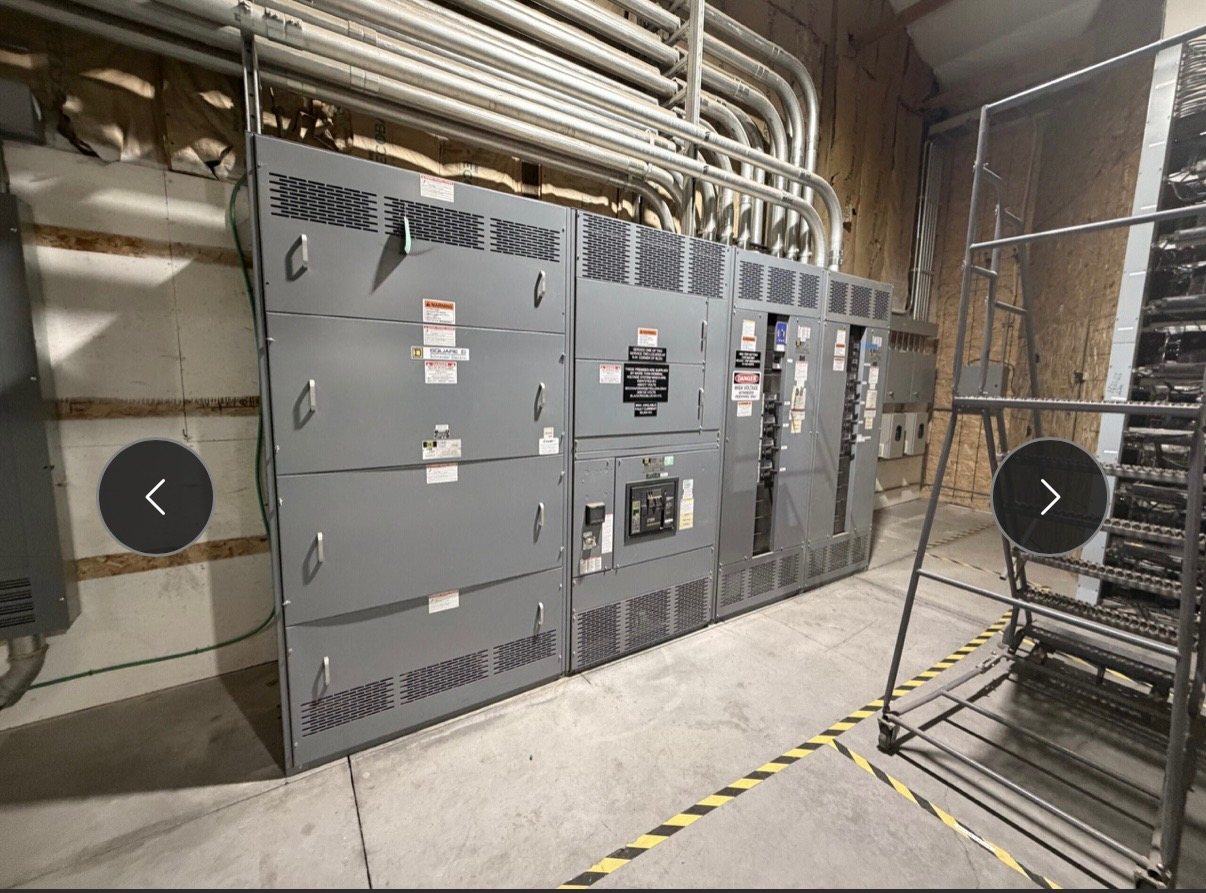
Define What the 1200-Amp Rating Applies To
First establish whether 1200 amps refers to the switchboard main bus, an incoming main device, a particular feeder, or another assembly rating. These values describe different parts of the design. A 1200-amp bus does not, by itself, mean that every breaker is rated 1200 amps or that the connected load should operate continuously at that value. State each required rating separately in the equipment schedule and request for pricing.
Clarify whether the intended rating is continuous current under the specified application and conditions, and identify any applicable derating or environmental assumptions for engineering review. Provide the expected operating profile, including sustained loading, load variation, and planned growth. If drawings use “1200 A” without identifying the rated component or basis, resolve that ambiguity before procurement; otherwise, competing interpretations may result in mismatched bus, main-device, and feeder requirements.
Specify Voltage, Phase, and System Configuration
A 1200-amp rating does not identify the system voltage or configuration. Include nominal voltage, phase, frequency, number of wires, and grounding arrangement in the inquiry, using the project’s electrical documents as the reference. Also identify whether the equipment is intended for a service entrance, distribution point, or a downstream application. These details guide component selection and determine which assembly configurations are suitable for engineering review.
Describe the source and distribution arrangement, including the number and type of incoming supplies and whether transfer, tie, or other switching functions are required. Identify downstream panelboards, transformers, motors, or other major loads where they affect the equipment layout. For a Texas project, provide the project location and applicable specifications, but do not assume a particular local configuration or code interpretation; the design basis and governing requirements must be confirmed for that project.
Match Main Bus and Devices to the Load
Develop a load schedule that distinguishes connected load from expected demand and identifies loads that may operate for extended periods. List major motors, HVAC equipment, process loads, electronic loads, and any planned additions, with starting or operating characteristics where relevant. This helps the engineering review assess the relationship among the 1200-amp main bus, main protective device, feeder devices, and the actual distribution plan rather than treating the headline rating as a complete design.
Specify the number of outgoing circuits, their required ratings and functions, and any spare or future provisions. A main device and a bus serve different roles: the device provides switching and protective functions according to its selected characteristics, while the bus carries current within the assembly’s design limits. Identify desired device type, trip or adjustment requirements, and coordination criteria from the project documents; do not assume these can be inferred from a 1200-amp label.
Set Enclosure and Installation Requirements
Describe the installation environment and enclosure needs, including indoor or outdoor placement, exposure to dust or moisture, ambient conditions, access constraints, and available space. Provide the room layout, cable-entry direction, conduit or busway approach, and required working clearances from the project design. These inputs affect the physical arrangement and enclosure selection. Do not rely on a generic equipment footprint when the final lineup and cable compartments have not been reviewed against site conditions.
For replacement or expansion work, send the existing equipment information and installation drawings when available, along with photographs and measured dimensions. Identify the equipment being retained, the interfaces that must align, and any constraints on removing or installing the assembly. We supply new equipment and new retrofit components only. A retrofit component must be evaluated against the specific existing equipment and application; visual similarity or a nominal 1200-amp rating does not establish compatibility.
Document Fault Duty, Protection, and Standards
Provide the available fault-current information at the equipment location and identify the source data and calculation basis. Fault duty is distinct from continuous-current rating: a 1200-amp bus rating does not establish the assembly’s ability to withstand or interrupt a fault. Include the required interrupting and withstand criteria, protective-device information, and any system coordination or arc-flash study requirements that form part of the project specification.
Send the one-line diagram, schedules, technical specification, and relevant coordination documentation with the inquiry. Identify applicable codes and standards, and request confirmation of the standards and listing status applicable to the proposed configuration. UL 891 is a standard for switchboard assemblies; it is not a blanket listing for all switchgear. Do not assume a specific assembly is listed or carries a particular label until its configuration and applicable documentation have been reviewed.
Plan Procurement, Retrofit Scope, and Submittals
A useful request for pricing identifies the 1200-amp component rating, system voltage and phase, load profile, enclosure conditions, fault duty, device schedule, and required delivery location. Include drawing revision, project schedule, approval milestones, and any required submittal format. We manufacture new equipment to specification and serve Texas from the United States, with shipping available nationwide. Engineering scope, component origin, documentation, availability, and lead time are subject to project review and confirmation with the quotation.
If the scope is a retrofit, identify the existing equipment make and model, serial or catalog information where available, and the precise components to be replaced. State whether the request covers components alone or a new assembly, and provide interface and protection requirements. Customers may specify American components, but origin and any domestic-content requirements must be addressed and confirmed for the quoted scope; a component preference alone does not establish independent verification or compliance. Installation, servicing, testing, and energization must be performed by qualified personnel under approved procedures.