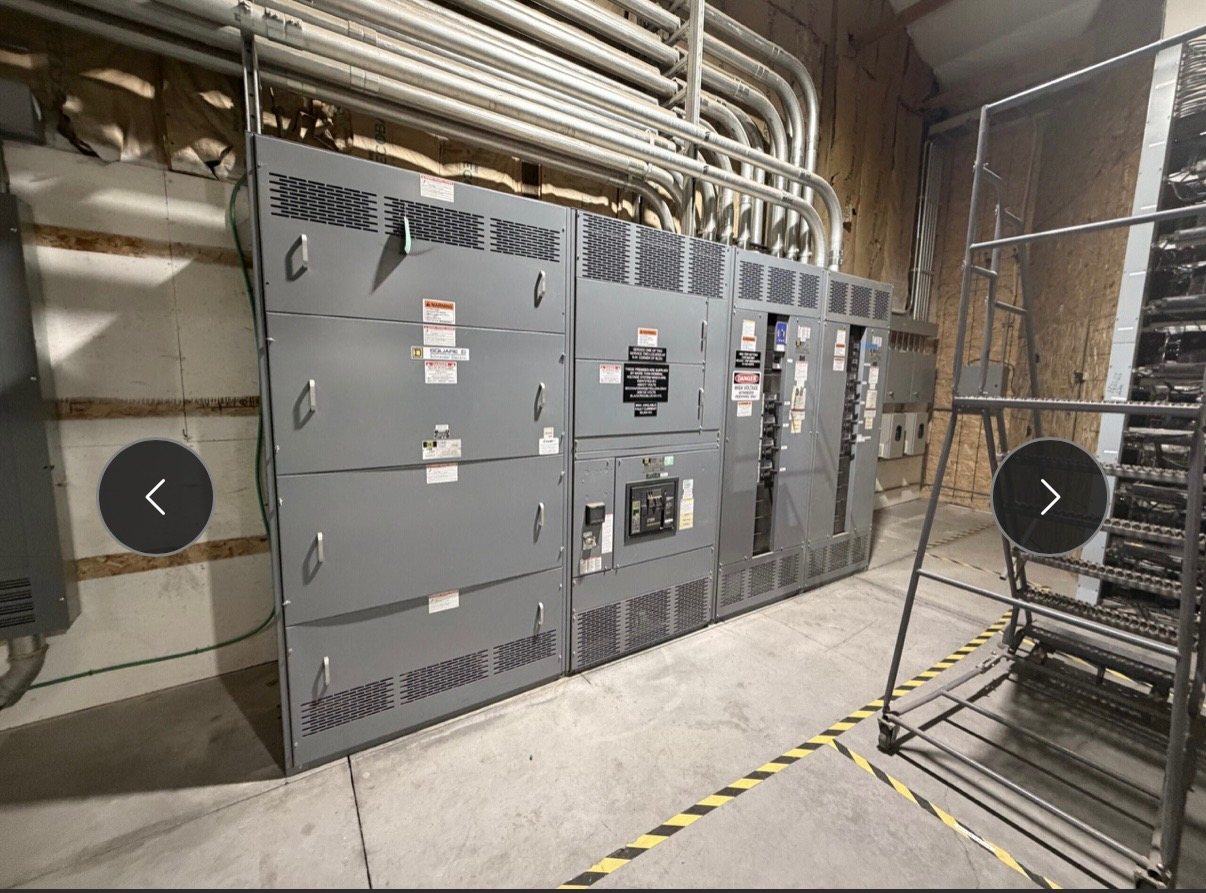
Understand the 277/480 V system at the point of connection
In a typical 277/480 V wye system, three phase conductors and a neutral provide two nominal voltage levels. Loads connected phase-to-neutral may use 277 V, while loads connected phase-to-phase may use 480 V. The neutral’s presence and intended use must be established from the system design; do not infer the configuration solely from a panel label, a previous equipment schedule, or the voltage requested on a purchase inquiry.
For a new assembly or retrofit component quotation, identify where the equipment connects and provide the one-line diagram, service or feeder description, and stated nominal voltages. Confirm whether the connection is service entrance or downstream distribution, and whether the project includes separately derived sources, generators, transformers, or transfer equipment. Those details affect the required arrangement and what information must be resolved before equipment selection.
Verify the actual supply and system grounding
A 277/480 V designation does not establish the grounding method or confirm that a neutral is available at the equipment. Ask the electrical engineer or serving utility to document the source configuration, grounding method, neutral treatment, and any grounding-electrode or bonding requirements relevant to the assembly. Where multiple sources are involved, clarify how each source is grounded and how the system is intended to operate when sources change.
Supply us with the project’s grounding notes and connection requirements rather than relying on assumptions carried over from another facility. Identify the neutral and equipment-grounding conductor arrangements shown on the drawings, and note any isolation or bonding provisions specified by the design. Final installation, servicing, testing, and energization must be performed by qualified personnel under approved procedures and applicable project requirements.
Establish available fault current and protective-device requirements
Available fault current at the equipment location is essential to evaluating a 480 V distribution assembly and its protective devices. Request the calculated value and study basis at the connection point, including the source and transformer information used, and identify any upstream protective device that affects the result. If the project includes alternate sources or operating configurations, ask the engineer to address the applicable conditions rather than supplying an unexplained single value.
The project team should also coordinate the specified short-circuit and interrupting requirements, protective-device types, and selective-coordination or arc-energy study criteria where applicable. Provide the relevant study excerpts, device schedules, and design notes with the request for pricing. We review the proposed configuration against the information furnished; the project engineer remains responsible for confirming system studies, protection coordination, and compliance with the design basis.
Match equipment voltage ratings to the complete application
Specify the nominal system voltage and the actual equipment connection, not just the highest voltage appearing in the title. The quotation review needs to account for line-to-line and line-to-neutral use, conductor count, neutral requirements, and the connected load arrangement. Identify loads that require 277 V and those requiring 480 V, along with any other source or load voltage that changes the assembly’s function.
Provide the required bus and feeder arrangement, device functions, available spaces, and project-stated ratings so the proposed equipment can be evaluated as a complete configuration. Do not assume that a voltage designation establishes every applicable rating or that a component is suitable for a particular location. Listing status and applicable standards must be verified for the specific configuration; UL 891 applies to switchboards and is not a blanket listing for all switchgear.
Define new equipment and retrofit-component scope
We supply new equipment and new retrofit components only. For a new 277/480 V assembly, describe the intended role, connection point, incoming and outgoing circuits, and project constraints such as available footprint or interface requirements. For a retrofit component, provide the existing equipment manufacturer and model information when available, clear nameplate details, photographs, drawings, and the intended replacement function.
A retrofit inquiry should explain which interfaces must be maintained and which parts of the existing assembly are changing. Include bus, mounting, conductor, control, and protective-device details that the project documents identify as relevant. Compatibility cannot be established from voltage alone, and an older assembly’s markings do not confirm the suitability of a proposed new component. We review the supplied records and confirm scope and availability during quotation.
Prepare a complete quotation and delivery package
A useful request for pricing includes the current one-line diagram, equipment schedule, load and feeder information, fault-current data, grounding requirements, and applicable specifications. Add project location, required delivery destination, submittal expectations, and any stated approval or procurement milestones. Call out unanswered design decisions explicitly so they can be identified during review instead of being treated as settled requirements.
We build to specification using American components as directed by the customer; component origin, engineering, availability, lead time, and test documentation must be confirmed for each quotation. A request for domestic components does not by itself establish compliance with Buy American or other domestic-content rules. We serve Texas from the United States and ship nationwide; delivery timing and the documentation available for a particular assembly are subject to project review.