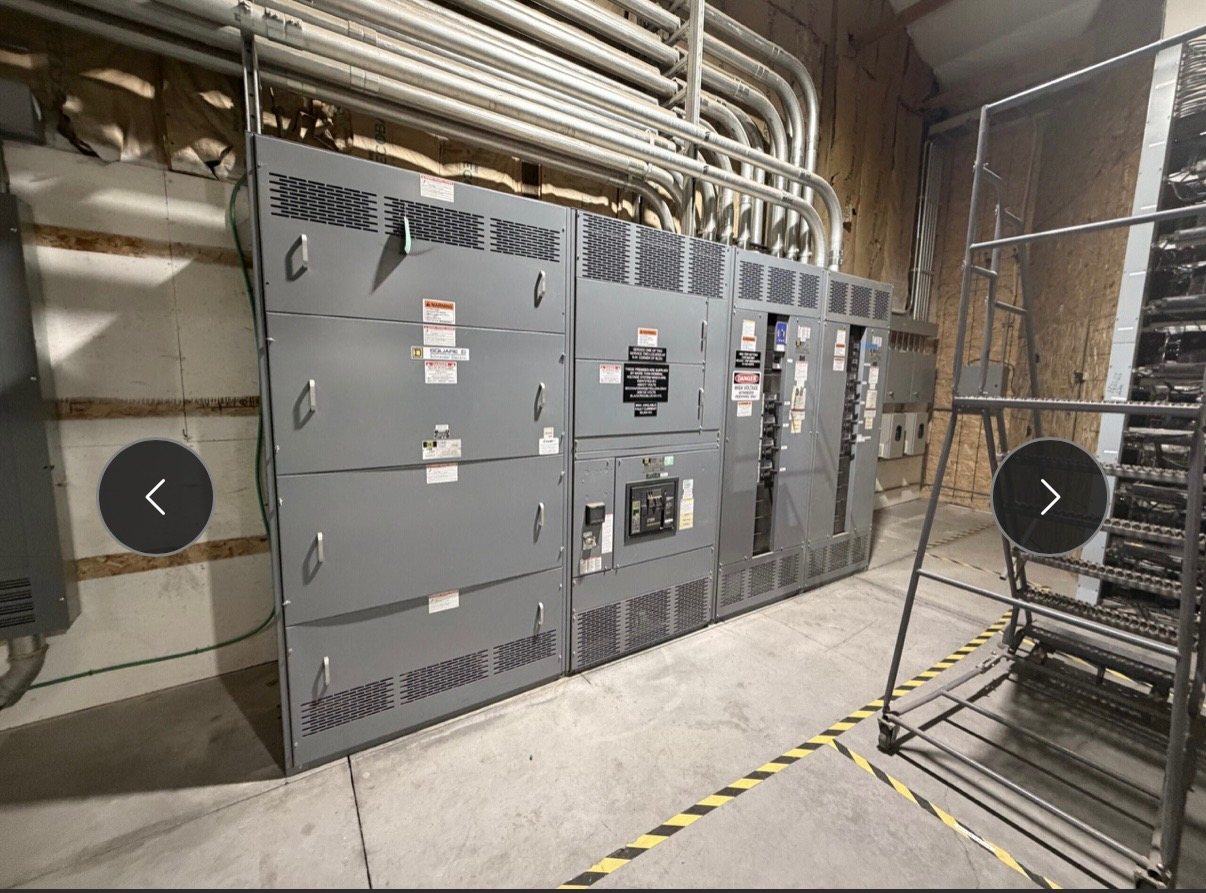
Define what the 4000-amp rating applies to
Start by stating whether 4000 amps is the required continuous rating of the main bus, the service entrance, an incoming circuit breaker, or another part of the distribution lineup. These ratings are related but not interchangeable. An assembly may have a bus designed for one current level while its main device or individual feeder devices have different ratings. The project specification should identify each required rating and how it applies to the proposed configuration.
Clarify the operating basis for the rating, including whether the equipment is expected to carry the stated current continuously and what ambient and installation conditions apply. Ask the design team to identify any required temperature-rise criteria, conductor arrangements, or limitations that affect the rating. We review these details before quoting; a page designation alone does not establish that a particular arrangement, device combination, or component is suitable.
Match the main bus to the distribution plan
A 4000-amp main bus must be considered alongside the number, size, and expected use of outgoing circuits. Provide the one-line diagram and identify the main, tie, and feeder functions, including any normal-open or normally closed ties. The bus layout and connection points should support the intended operating arrangement without assuming that every feeder will carry its maximum rating at the same time.
Describe future expansion as well as the initial circuit schedule. Spare spaces, provisions for additional devices, and the physical path for future connections can influence section arrangement and project cost. If the design includes parallel sources or alternate feeds, explain the intended transfer and isolation scheme. These inputs help us evaluate a buildable lineup rather than treating 4000 amps as a standalone product size.
Specify voltage, phase, and source conditions
State the system voltage and phase explicitly, along with frequency and the grounding arrangement where applicable. A 4000-amp current designation does not define voltage class or establish compatibility with a particular source. Include the nominal system configuration, service type, and any utility or facility requirements that constrain the incoming section. Confirm these details against the current electrical documents before requesting pricing.
Identify the source equipment and how the distribution assembly connects to it. Relevant information can include transformer or generator characteristics, upstream protective devices, and whether multiple sources can operate in parallel. For retrofit components, provide the existing equipment manufacturer, model or catalog information, drawings, and clear photographs of nameplates and connection interfaces when available. Compatibility must be reviewed for the specific equipment; a current rating alone does not establish interchangeability.
Describe the load profile and protection needs
A useful load schedule distinguishes connected load from expected operating demand. Identify major loads, starting or inrush behavior, duty cycles, anticipated growth, and any significant nonlinear loads. Note whether loads are continuous, intermittent, or critical to facility operation. This context helps the project team assess feeder sizing and protection coordination without assuming that a 4000-amp bus will be loaded uniformly or that every operating condition is identical.
Provide the protective-device functions and coordination requirements defined by the engineer, including any required trip features or communications. Share available short-circuit and coordination studies when they exist, and identify any required monitoring or metering interfaces. Device selection should follow the system study and applicable project criteria. Our quotation review can address the specified equipment configuration, while final protection settings and system coordination remain subject to engineering review.
Establish enclosure, installation, and fault-duty requirements
Describe where the 4000-amp assembly will be installed: indoors or outdoors, in a conditioned electrical room, or in another environment. State the required enclosure type, access orientation, cable entry direction, available floor space, and any restrictions on lineup dimensions or section placement. Environmental exposure, ventilation, working clearances, and the route for incoming and outgoing conductors are practical selection inputs, not details to leave until shipment planning.
Provide the available fault current at the equipment location and the required short-circuit or withstand performance established by the project design. These values must be evaluated with the protective devices and system configuration; the 4000-amp continuous-current designation does not state fault-duty capability. Include applicable project standards and submittal requirements. Listing and applicable standards should be verified for the exact configuration; UL 891 is a switchboard standard, not a blanket designation for all switchgear.
Scope new builds and new retrofit components
For a new 4000-amp build, assemble the one-line diagram, panel or feeder schedule, system study information, specification, and installation constraints before requesting pricing. Identify required submittals, drawing review stages, approved deviations, and document formats. We manufacture new equipment to specification using American components as specified by the customer. Component origin and any required supporting documentation must be confirmed for the quoted configuration; we do not certify that every part meets a domestic-content rule.
For a retrofit, define the exact scope as new replacement or retrofit components and provide enough existing-equipment information to assess fit and function. Clarify which sections, devices, bus interfaces, and connection points are in scope, and identify dimensions or field measurements that have been verified by qualified personnel. Availability, engineering, lead time, and test documentation are confirmed during quotation and project review. Installation, servicing, testing, and energization require qualified personnel working under approved procedures.