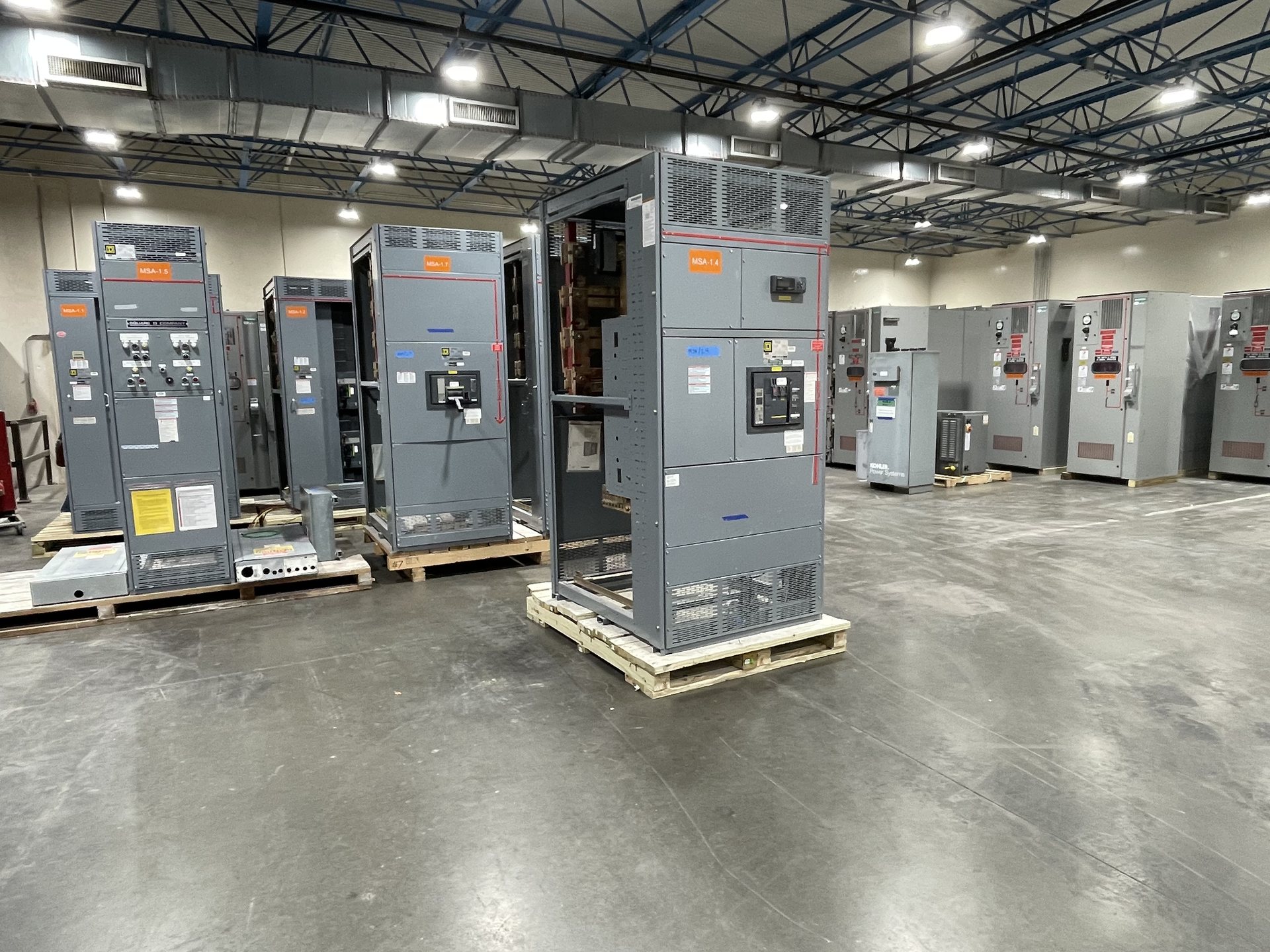
Define exactly what the 600-amp rating covers
Start by stating whether 600 amps is the required continuous rating of the main bus, the main overcurrent device, a feeder device, or another component. These ratings are related but not interchangeable. An assembly with a 600-amp bus does not, by that fact alone, establish the rating or protection of every breaker or feeder. Provide the one-line diagram and equipment schedule, and mark each component whose rating is fixed by the design.
Also clarify whether 600 amps describes an existing installation, a calculated design requirement, or a requested nominal equipment rating. The engineer should establish the applicable continuous-load and protection requirements for the system. If future expansion, spare feeders, or a replacement main device is anticipated, document those conditions rather than assuming they are covered by the bus designation. This lets us review the requested configuration before pricing.
Specify voltage, phase, and system arrangement
A 600-amp request must identify the system voltage and phase, along with the number of wires and grounding arrangement where relevant. State whether the equipment serves a three-phase or single-phase system and describe the source and distribution configuration. These details affect compatible devices, bus arrangement, and connection requirements; the ampere rating alone cannot establish them.
Send the nominal system voltage, available system information, and a current one-line diagram with the inquiry. If the project includes multiple sources, transfer equipment, or separate distribution sections, show how they relate to the requested assembly. Confirm any design assumptions with the responsible engineer. We use the project information to review the specified equipment rather than treating a 600-amp label as a complete electrical design.
Match the equipment to the actual load profile
Describe the loads served by the 600-amp distribution equipment, including major motor loads, non-linear loads, and loads with significant starting or cycling behavior. Include available load calculations or measured operating data when they are part of the project record. The purpose is to give the design and quotation review enough context to distinguish a steady distribution requirement from one shaped by peaks, operating schedules, or planned additions.
Identify the expected load mix, demand assumptions, and any known future circuits or capacity changes. Do not use the 600-amp figure as a substitute for an engineered load assessment or a decision about protective-device settings. The responsible design professional should verify the system requirements and protection scheme. Clear load information helps define feeder positions and device requirements while reducing the risk of selecting equipment around an incomplete description.
Choose an enclosure for the installation conditions
State where the equipment will be installed and describe the conditions that affect enclosure selection: indoor or outdoor placement, exposure to weather or moisture, dust, corrosive conditions, and available working space. Identify mounting and access constraints, cable entry direction, and any dimensional limits known to the project. A 600-amp rating does not determine enclosure type, construction, or the space needed for terminations and maintenance access.
For replacement or retrofit work, provide photographs, nameplate information, available dimensions, and details of the existing connection points. Note whether the equipment must fit a defined footprint or coordinate with adjacent gear. We manufacture new equipment and new retrofit components only; proposed replacement scope must be reviewed against the existing installation. Final enclosure and interface requirements should be coordinated by qualified project personnel before fabrication.
Document available fault duty and protection needs
Provide the available fault-current information at the equipment location and identify the source or study from which it comes. Fault duty is distinct from the 600-amp continuous-current rating: the former concerns the conditions equipment must address during a fault, while the latter describes a current rating. The protective-device type, interrupting requirements, and assembly configuration must be evaluated against the project’s system data.
Include the protection scheme, upstream and downstream device information, and coordination or arc-flash study requirements when applicable to the scope. Do not infer a fault rating from the ampere designation, a similar installation, or an existing device label without engineering review. Applicable ratings, standards, and documentation must be confirmed for the proposed configuration. Installation, servicing, testing, and energization require qualified personnel working under approved procedures.
Prepare a complete 600-amp quotation package
For a useful quotation review, submit the one-line diagram, equipment schedule, voltage and phase, bus and device ratings, load information, available fault-current data, enclosure conditions, and project delivery requirements. Identify whether the request is for a complete new assembly or new retrofit components, and provide interface details for retrofit scope. Mark required documentation and any project specifications that govern the design or procurement.
We build to specification using American components when requested, but component origin and domestic-content requirements must be addressed and confirmed for each quotation; no blanket compliance should be assumed. We supply UL 891 switchboard assemblies, while applicable listing and standards must be verified for the exact configuration. Availability, engineering, lead time, and test documentation are subject to project review. Request pricing with the project package so scope and assumptions can be evaluated.