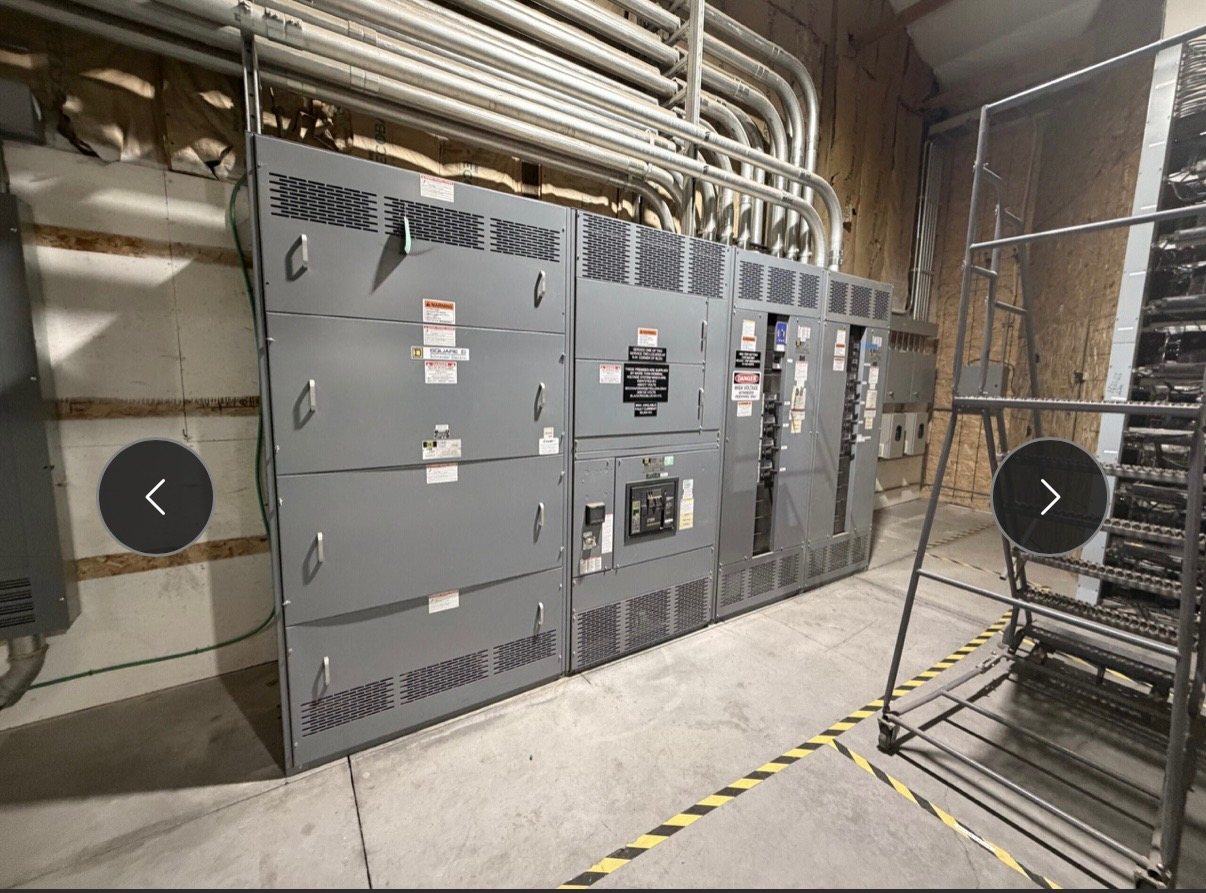
Plan the Beaumont Service Entrance Around Utility Requirements
Begin with the serving utility’s current service manual and project-specific direction, rather than assuming that a familiar switchboard arrangement will be accepted. Confirm the service voltage, number of phases and wires, point of delivery, service conductors’ termination method, metering location, and any required utility-accessible compartments. Ask who is responsible for furnishing and installing service conductors, meter equipment, and service connections, and identify any utility review or approval required before equipment release.
For a Beaumont project, the design team should provide utility correspondence or the applicable service requirements alongside the one-line diagram. Include the service location, building use, proposed service capacity, and relevant site constraints so the entrance arrangement can be reviewed early. Utility acceptance is separate from the manufacturer’s equipment design; the utility retains authority over its service and metering requirements. Resolve open utility comments before finalizing the switchboard configuration.
Define Service Disconnects and the Distribution Layout
The service disconnect arrangement determines how the installation is divided into disconnecting means and how downstream distribution is organized. Show the number and function of service disconnects, their ampere ratings, overcurrent protection, and the loads or distribution sections each one serves. Confirm whether the project calls for a main device, multiple service disconnects, or another arrangement permitted by the applicable design and codes. The available space, bus arrangement, and equipment sequence depend on these choices.
Provide the electrical one-line, panel and feeder schedules, anticipated load information, and any specified selective-coordination or short-circuit study criteria for review. Identify spare provisions, future sections, and whether the switchboard must interface with downstream distribution equipment. The engineer of record establishes system requirements and code compliance; our review helps translate those requirements into a manufacturable new assembly. Do not treat a conceptual layout as approval to install or energize.
Coordinate Metering Compartments and Access
Metering compartments may be governed by utility rules as well as the project’s equipment layout. Clarify whether the utility requires a particular meter location, compartment arrangement, sealing provision, instrument transformer space, or access from a specific side. The design team should confirm who supplies meter sockets, current transformers, potential transformers, and associated wiring or provisions. Do not assume these items are included simply because a metering compartment appears on a preliminary drawing.
Send the utility’s metering diagrams and written requirements with the quotation request, and indicate whether the switchboard is indoors or outdoors and how personnel will approach it. Confirm door swing, working-space constraints, adjacent walls, conduit entry zones, and the route to the service disconnects. These details help prevent conflicts between utility access, maintenance access, and incoming conductor space. Final metering details and responsibility boundaries should be documented before approved drawings are released.
Specify Incoming Conductors and Termination Space
Incoming conductor selection affects lug requirements, wiring space, bend paths, and the position of the service section. Provide conductor material, quantity per phase, size, insulation type, and whether conductors enter from above or below, when those details are established by the design. Also identify the raceway count and size, entry locations, and any restrictions on conductor routing. If these inputs remain undecided, list the assumptions explicitly so they can be checked before the final configuration is approved.
Ask the project engineer and utility to confirm the service conductors’ ownership boundary and termination point. The switchboard quotation should identify the proposed incoming section, connection provisions, and any relevant dimensional assumptions for review. A layout that accommodates the selected lugs may still need coordination with field raceways and available bending space. Installation and termination must be performed by qualified personnel under approved procedures; equipment drawings are not a substitute for field verification or installation instructions.
Resolve Grounding and Bonding at the Service
Service entrance grounding and bonding must be coordinated with the electrical design, the adopted code, and the project’s grounding-electrode system. Provide the one-line and grounding details showing the service neutral, bonding points, equipment grounding conductors, grounding electrode conductors, and downstream separation of neutral and equipment grounding paths as applicable. Identify any separately derived systems or other conditions that affect the overall design. The engineer of record determines the required arrangement for the actual installation.
For equipment configuration review, state the intended grounding and bonding provisions and note any project-specific instructions for neutral treatment or ground bars. Confirm that conductor entry locations and termination provisions align with the drawings, rather than leaving the issue to field interpretation. Grounding details should be reviewed alongside service disconnect and metering layouts because they can affect compartment space and connections. Final compliance depends on the complete installed system, not on a switchboard description alone.
Prepare a Complete Quotation and Submittal Package
A useful request for pricing includes the one-line diagram, load and feeder schedules, utility requirements, metering diagrams, fault-current information, grounding details, site access constraints, and requested submittal documents. State required standards, the intended indoor or outdoor application, project milestones, and the desired component-origin requirements. We manufacture new equipment and can quote new retrofit components when specified. Component origin, availability, engineering, lead time, and documentation require confirmation for the particular quotation.
Before release, review the proposed drawings for service sequence, disconnect identification, metering boundaries, conductor entry, terminations, grounding provisions, dimensions, and interfaces with adjacent equipment. Specify any needed wiring diagrams, component data, or test documentation in the procurement documents so their scope can be confirmed. Switchboards are evaluated against the requirements applicable to their configuration; UL 891 is a switchboard standard, not a blanket listing claim. Verify applicable standards and listing status for the quoted assembly, and have qualified personnel handle installation, testing, and energization under approved procedures.