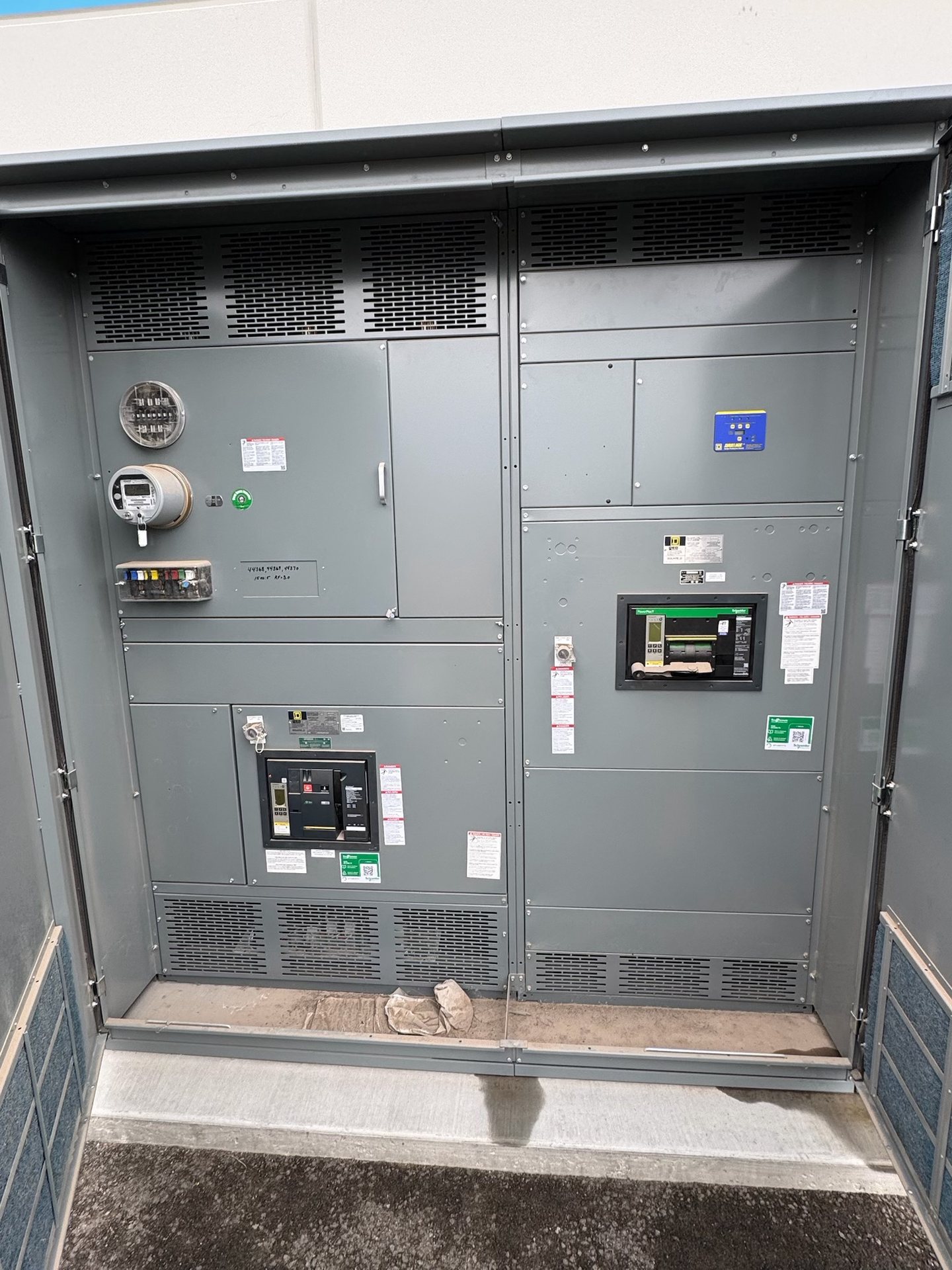
Purchase newly manufactured equipment
A purchase through Switchgear Builders Texas is for newly manufactured equipment or new retrofit components. We are the manufacturer and supplier. When requesting pricing, state whether the project needs a complete low- or medium-voltage assembly, replacement sections, or new components intended to fit an existing lineup. That distinction affects both the scope of review and the information needed to quote.
For retrofit components, provide the existing equipment manufacturer, model or identification details, photographs, drawings, and dimensions where available. Do not assume a new component will interchange based on appearance alone. The existing lineup’s construction, interfaces, ratings, and condition must be reviewed before compatibility can be determined. For a new assembly, identify the intended application and whether it replaces existing equipment or serves a new installation.
Define the source and electrical system
Start with the electrical source feeding the equipment: utility service, transformer, generator, or another upstream source. Include available one-line diagrams and transformer information when available, along with the intended arrangement of incoming and outgoing circuits. Clarify whether the requested equipment is a service entrance, distribution lineup, transfer arrangement, or another defined application. These details help establish what the assembly must connect to and what functions it must perform.
State the system voltage and phase, grounding arrangement, and frequency where relevant. For medium-voltage projects, identify the nominal system voltage and the equipment’s intended role in the distribution system. Do not rely on a broad description such as “standard voltage” or on an existing panel label alone. If project drawings are preliminary, say so and identify which electrical design values remain subject to confirmation.
Specify current and fault duty
Give the required continuous current for the bus and for each incoming or outgoing circuit, rather than supplying only one overall number. Explain expected loading, future capacity needs, and any known load schedule or diversity assumptions. Identify whether the design must accommodate particular motor, transformer, or other load characteristics. The manufacturer needs the intended operating conditions to review the proposed arrangement; do not treat an assumed rating as confirmed until it is reviewed for the complete configuration.
Provide the available short-circuit current at the equipment location, the source information used to calculate it, and the required interrupting or withstand duty where the design documents state it. Fault duty is not interchangeable with continuous current. If the available fault-current study is not final, flag that clearly and share the best current project data. The applicable ratings and configuration must be reviewed together, with final values confirmed during quotation and engineering.
List the devices and functions you need
Describe the required breakers, switches, fuses, metering, protective relays, control power, and other devices by circuit and function. Include desired trip or protection features only when they are established by the project design, and identify any required interlocks, automatic transfer functions, or remote-control interfaces. A device list tied to the one-line diagram is more useful than a general request for a fully equipped lineup because it makes omissions and design questions easier to identify.
Also note enclosure and installation conditions, cable entry and termination preferences, access direction, indoor or outdoor use, and any space or interface constraints. Share specifications for communications, alarms, metering outputs, or coordination with building controls when applicable. These requirements can affect component selection and compartment layout. If an item is optional, label it as an option rather than allowing it to be mistaken for a mandatory part of the quoted scope.
Send a quote package that supports review
To request pricing, submit the project location, target schedule, one-line diagram, equipment specification, load information, and available fault-current data. Add relevant physical drawings, site constraints, and the required scope of supply. For retrofit components, include clear identification and interface information for the existing assembly. Tell us which documents are approved, which are preliminary, and who will resolve open design questions. A complete package reduces ambiguity but does not replace engineering review.
We review the requested configuration and clarify gaps that could affect scope, ratings, components, or schedule before finalizing a quotation. Pricing, availability, engineering requirements, and lead time are project-specific; none should be inferred from a general product description. Ask the quotation to identify included equipment, stated assumptions, exclusions, and required customer information. Review those details against the project documents so the purchase order reflects the intended new equipment and responsibilities.
Confirm standards, documentation, and delivery scope
Identify the standards and project specifications that apply, and ask which requirements can be addressed for the proposed configuration. UL 891 applies to switchboards; it is not a blanket standard for every type of low- or medium-voltage switchgear. Listing status and applicable standards must be verified for the specific assembly. If the project requires particular drawings, data sheets, test documentation, or component-origin information, state the requested documents before quotation so their availability can be reviewed.
Customers may specify American components, but component origin and any domestic-content requirement need to be confirmed for the quoted configuration. Do not assume a general statement establishes compliance with Buy American, BAA, or another procurement rule. Before ordering, align the approved drawings, device schedule, ratings, delivery destination, and documentation expectations with the quotation. Installation, servicing, testing, and energization must be performed by qualified personnel under approved procedures.