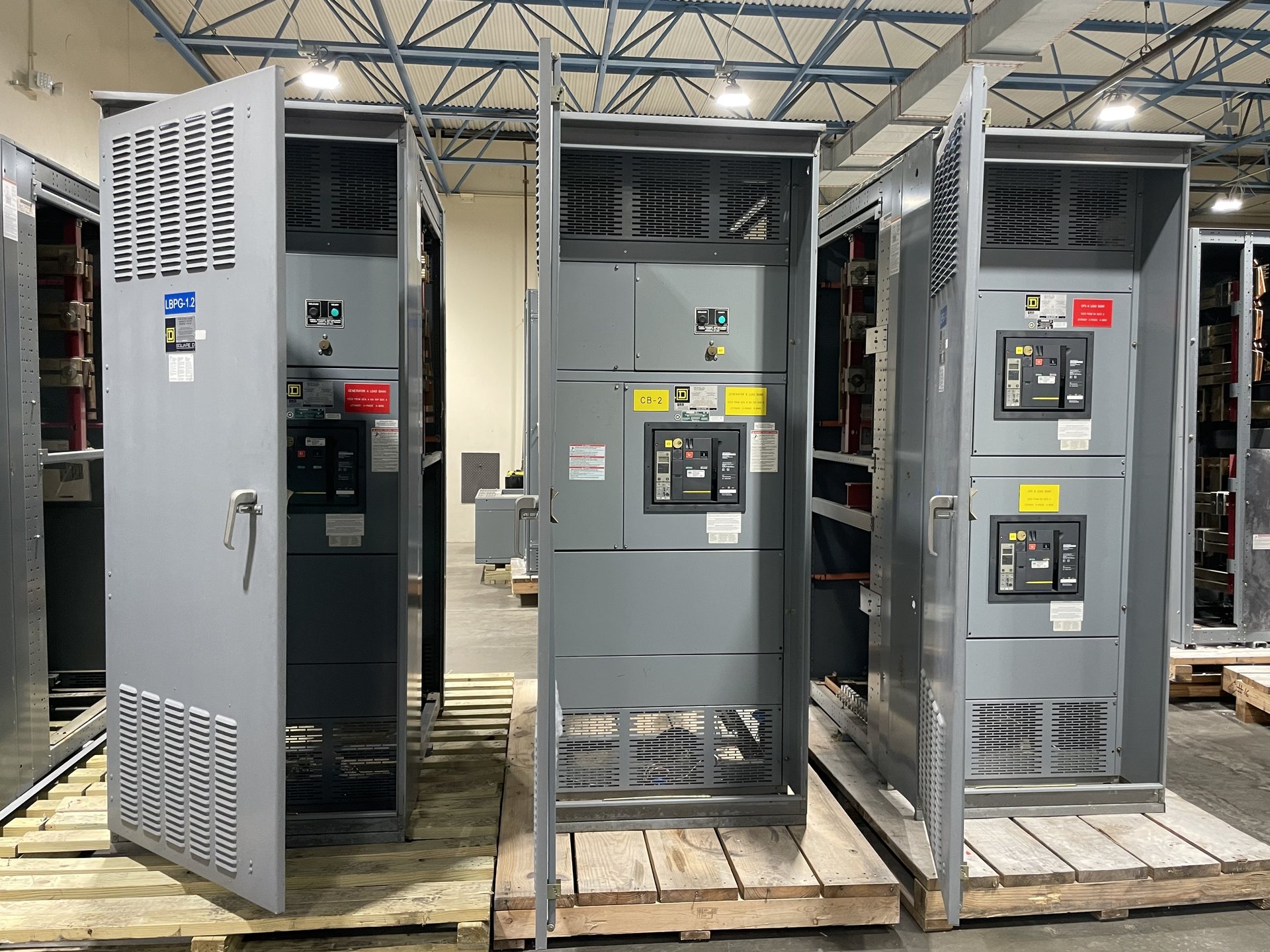
Allocate feeders around real load profiles
Start equipment selection with a current one-line diagram and feeder schedule that identify each source, distribution section, downstream panel or load, and intended operating arrangement. Show normal and alternate feeds separately, and distinguish installed loads from planned capacity. For high-density racks, provide the expected load by deployment phase and note whether the figures represent measured demand, design estimates, or reserved capacity. This prevents a single aggregate load figure from obscuring feeder-level constraints.
Clarify which loads must remain supplied during maintenance or a source transfer, and describe how redundancy is implemented in the electrical design. Identify shared or independently routed paths, any load-shedding sequence, and the protection coordination assumptions that affect feeder selection. The equipment configuration must fit the approved system design; it should not presume that duplicated feeds are independent or that every feeder carries the same demand.
Evaluate continuous loading by operating condition
Data center loads can operate for extended periods near their normal demand, so provide the expected continuous load for each feeder and distribution section, along with anticipated peaks and diversity assumptions. State the applicable design criteria and identify any loads that cycle, ramp rapidly, or change materially as IT equipment is added. Selection should account for the intended operating profile and the complete assembly configuration rather than treating a short-duration peak as the only sizing input.
Document the source characteristics and relevant design limits, including system voltage, phase, frequency, available fault current, grounding method, and protective-device requirements. Confirm which loads may operate concurrently and whether future equipment will change the demand or fault-current assumptions. These inputs allow the proposed arrangement to be reviewed against the project’s electrical basis of design. Final ratings and compatibility are subject to project engineering and quotation review.
Match bus capacity to present and future demand
Bus capacity must align with the actual distribution topology, feeder positions, protective devices, and the space available for the equipment. Provide the required bus configuration, incoming and outgoing connections, section arrangement, and any provisions for ties or alternate sources. Identify the intended loading by section, not just the total facility demand. Where future capacity is reserved, specify whether that means additional feeder spaces, a planned section extension, or a later equipment replacement.
Expansion provisions need to be defined as physical and electrical requirements, not assumed from an empty space or a general statement that the system is expandable. Confirm which sections may be extended, how new sources or feeders would connect, and what shutdown or phasing constraints apply. Submit drawings and connection details for interfaces with existing equipment. For new retrofit components, provide the existing assembly manufacturer, catalog or identification details, dimensions, ratings, and relevant photographs; compatibility must be reviewed before pricing.
Plan heat removal for the installed arrangement
High-density distribution equipment adds heat to an electrical room, and its actual thermal conditions depend on loading, enclosure arrangement, ventilation, and adjacent equipment. Provide the room layout, equipment clearances, ambient conditions, and available cooling or ventilation information. Identify whether the assembly will be installed near other heat-producing equipment or in a constrained room. These details help determine whether the proposed physical configuration is suitable for the stated environment.
Do not rely on a room-level cooling assumption without confirming how heat is managed around the switchboard or other specified distribution equipment. Ask the project team to establish applicable ambient limits, airflow direction, ventilation openings, and any enclosure restrictions. Provide the required enclosure type and environmental conditions for review. Installation, servicing, testing, and energization must be performed by qualified personnel under approved procedures; equipment selection does not replace site-specific thermal or safety review.
Coordinate protection, interfaces, and documentation
A usable equipment package depends on coordinated interfaces. Provide the latest one-line, load and feeder schedules, control schematics where applicable, protective-device settings or coordination criteria, cable or bus connection requirements, and the project’s naming conventions. Identify metering, alarms, communications, and auxiliary power needs, including the intended points of connection. State any governing project specifications and required submittal format so the proposed arrangement can be evaluated against the actual installation.
Request confirmation of the applicable standards and listing status for the specific configuration rather than assuming a standard applies uniformly to every assembly. UL 891 applies to switchboards; it is not a blanket listing for all switchgear. Any listing and applicable standards should be verified for the quoted configuration. Provide the documentation required for procurement and review, such as drawings, component data, and available test documentation; availability and scope are confirmed for each quotation.
Phase procurement around commissioning and growth
Procurement planning should connect equipment delivery requirements to the data center’s construction sequence, outage windows, commissioning plan, and phased load additions. Identify required-on-site dates, submittal and approval milestones, shipping destination, receiving restrictions, and any limits on staged storage. Short lead times may be available subject to project review, but timing is not guaranteed until the configuration and quotation are confirmed. Coordinate dates with the responsible contractor and project manager.
For pricing, submit the project specification, current drawings, quantity, requested configuration, and any approved deviations or alternates. State whether the request is for new equipment or new retrofit components and include the existing-equipment information needed to assess retrofit compatibility. Also identify required component origin and documentation expectations. We build to specification using American components as directed; component origin, availability, lead time, and documentation are confirmed for the quoted scope, and no independent domestic-content certification is implied.