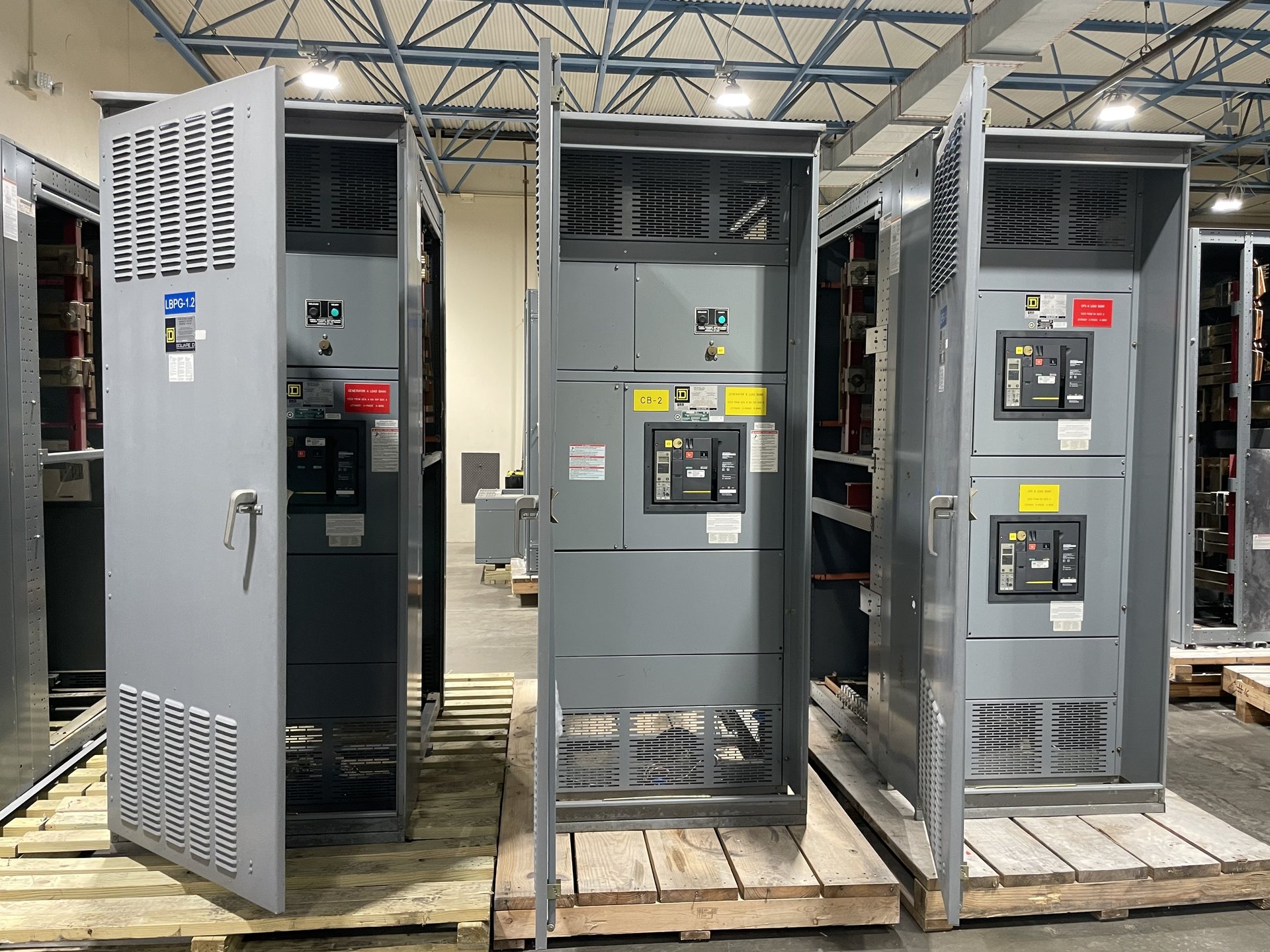
What available fault current means
A short circuit creates an unintended low-impedance path, allowing current to rise far above normal load current. Available fault current describes the prospective magnitude at a defined point in the system under specified conditions. It is not the load current shown on a panel schedule, and it is not one universal value for an entire facility. The result depends on the electrical source, transformers, conductors, connections, and other elements between the source and the point being evaluated.
For a switchgear quotation, identify the exact equipment location and provide the latest study value applicable there, along with the study date and assumptions. Ask whether the value is expressed as symmetrical RMS current and whether the study also reports peak or asymmetrical conditions relevant to the selected equipment. If the source configuration or utility contribution has changed since the study, confirm that its inputs still represent the system being served.
Interrupting capability and device selection
An overcurrent protective device must be able to interrupt the fault current available at its line-side location under its rated conditions. Its interrupting rating is different from its continuous current rating: one concerns the ability to clear a fault, while the other concerns normal current carrying. A device with an inadequate interrupting rating can be unsuitable even when its ampere rating appears appropriate for the connected load.
When specifying new equipment or new retrofit components, compare the study results with the applicable interrupting ratings and conditions for the proposed protective devices. Provide voltage, system configuration, device type, and any relevant upstream protective-device information. Do not infer suitability from a familiar device family or a rating shown on an old drawing. The proposed configuration, applicable standards, and supporting documentation should be reviewed and confirmed for the project.
Assembly withstand is not the same as interruption
A switchgear or switchboard assembly also has to withstand the mechanical and thermal stresses associated with a fault for the applicable duration and arrangement. Assembly short-circuit withstand capability is not interchangeable with an individual breaker’s interrupting rating. The protective device may be able to interrupt a fault while the assembled equipment still requires a separate assessment of its withstand capability and the conditions under which that capability applies.
For a new assembly, the engineer and manufacturer should review the study’s fault levels, protective-device clearing information, equipment configuration, and relevant assembly documentation together. For a new retrofit component, confirm the exact existing equipment and the proposed component’s application; compatibility cannot be established from a photograph or a nominal rating alone. Listing and applicable standards should be verified for the specific configuration. UL 891 applies to switchboards, not as a blanket listing for all switchgear.
Why a current system study matters
Fault current changes when system conditions change. Utility source data, transformer replacement, a different transformer impedance, conductor modifications, generator or other source additions, and changes in system tie arrangements can all affect the prospective current at equipment terminals. An older study may omit modifications or use assumptions that no longer match the one-line diagram, leaving procurement decisions based on outdated conditions.
Before requesting pricing, ask the responsible electrical engineer whether the study reflects the present and proposed configuration, including normal and alternate operating arrangements where applicable. Share the study and current one-line diagram, and identify known changes not yet shown. If a usable study is unavailable or its assumptions are uncertain, resolve that engineering question before treating a particular equipment rating as established. The manufacturer can use confirmed project information to review the requested configuration.
Information to provide for a useful quotation
A well-scoped request identifies the equipment location in the system, nominal voltage, phase and wire arrangement, service or feeder role, and the available fault-current result with its basis. Include the current one-line diagram, relevant schedules, protective-device information, and the study sections that document fault levels and clearing assumptions. State whether the request is for a new assembly or new retrofit components, and identify the existing equipment involved in a retrofit.
Also identify the project’s required standards, listing expectations, submittal needs, and any specified American-component requirement. Component origin and documentation must be confirmed for each quotation; a request for American components does not by itself establish independent verification or compliance with domestic-content rules. Provide the needed review and approval milestones so engineering scope, documentation, and lead time can be evaluated for the specific project rather than assumed.
Review, documentation, and safe project decisions
A fault-current value is useful only when its location, units, study date, and operating assumptions are clear. During submittal review, compare the proposed equipment details with the study and project drawings, and resolve discrepancies before release or installation. Ask what configuration-specific rating information and test documentation are available, and verify that any required listing and applicable standards are addressed for the quoted assembly or component.
Fault-current analysis and equipment selection belong within the project’s engineering process. Installation, servicing, testing, and energization require qualified personnel working under approved procedures; this page is not a field method for evaluating energized equipment. Switchgear Builders Texas can review project information for new equipment and new retrofit components, subject to engineering review. Availability, component origin, documentation, and lead time are confirmed individually; requests for pricing should include the relevant study and configuration details.