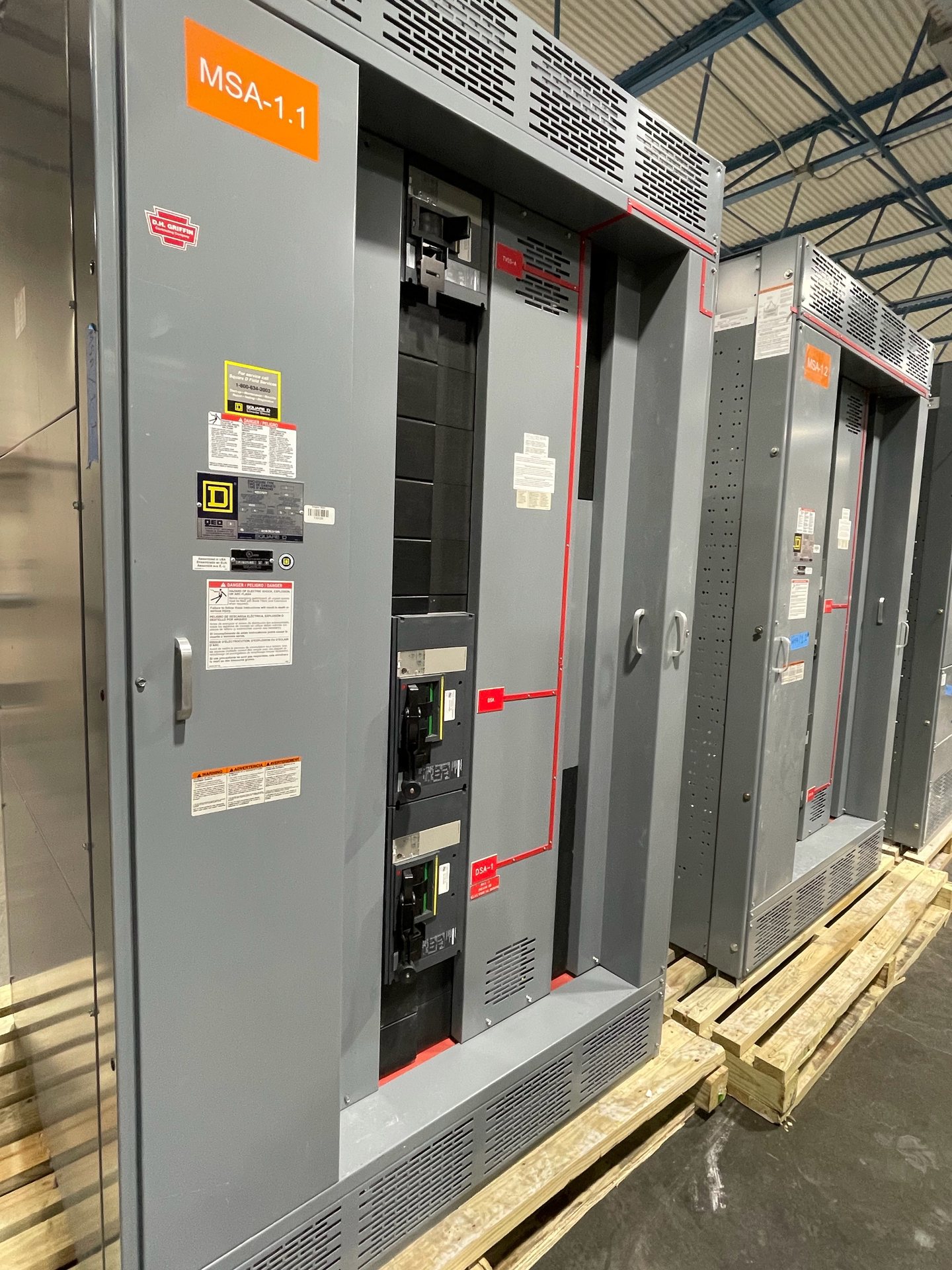
What a feeder means in a distribution system
A feeder carries power away from an upstream supply, such as a service, transformer, generator, or distribution assembly, and delivers it to downstream distribution equipment or a group of loads. For example, a circuit leaving a switchboard to supply another panel may be called a feeder. The term describes a function in the electrical system; it does not, by itself, identify a particular enclosure, protective device, conductor arrangement, or voltage.
The exact definition of a feeder varies with the application and the applicable electrical code provisions. Drawings, specifications, and code context may use the term differently for services, branch circuits, feeders to equipment, or other arrangements. When scope depends on the distinction, confirm the governing code, the circuit’s origin and destination, and the designer’s intended use of the term. That avoids treating a glossary definition as a substitute for project-specific engineering.
Trace the upstream source and downstream destination
To describe a feeder clearly, identify what supplies it and what it supplies. Record the upstream source equipment and the downstream destination, including relevant switchboard, switchgear, panel, transformer, or load identifiers. A one-line diagram should make the power path understandable, while equipment schedules and circuit labels should use consistent names. If a feeder branches or passes through intermediate equipment, show those points instead of describing the circuit as a single, uninterrupted connection.
For a new assembly or retrofit component, clarify whether the requested scope is the feeder overcurrent device, a feeder section within an assembly, connection provisions, or the downstream equipment itself. These are different procurement boundaries. Confirm which party furnishes conductors, terminations, lugs, transition sections, and associated protection, and identify exclusions in the specification. Clear boundaries help the manufacturer review the requested configuration and help the contractor coordinate the rest of the distribution path.
Document electrical and protective-device requirements
A feeder description should be supported by project design data, not just a destination label. Useful information can include system voltage and phase, source characteristics, feeder load or calculated demand, conductor details, and the protective-device type and rating selected by the engineer. Where applicable, provide available fault-current information and coordination requirements. These values are project parameters, not assumptions that can be established from the word feeder or from the name of the downstream equipment.
Protection and coordination decisions belong to the responsible electrical design team. A manufacturer reviewing a quotation request needs the applicable project requirements, equipment interface information, and any constraints that affect the assembly. Identify whether the feeder device must coordinate with upstream protection or downstream devices, and provide the studies or criteria called for by the project. Confirm that the proposed equipment configuration can meet those requirements during engineering review; do not infer suitability from a generic feeder description.
Coordinate the feeder with the assembly
Where a feeder is supplied from a switchboard or switchgear assembly, its arrangement affects how the complete equipment package is specified. Describe the intended incoming and outgoing connections, physical entry direction, conductor approach, required adjacent sections, and any interface with field-installed equipment. Note site constraints such as available installation space and routing limitations in the project documents. These details give the equipment team a basis for reviewing layout and connection provisions without assuming a standard arrangement.
When requesting a UL 891 switchboard assembly, identify the applicable project standards and the precise assembly scope. UL 891 applies to switchboards; it is not a blanket listing for every type of low-, medium-, or high-voltage switchgear. Listing and applicable standards must be verified for the proposed configuration. Provide the required drawings, ratings, protection details, and interfaces for review, and confirm what documentation can be supplied with the quoted equipment.
Scope new equipment and retrofit components
Switchgear Builders Texas manufactures and supplies new equipment and new retrofit components to specification. We serve projects in Texas from the United States and ship nationwide. For a retrofit request, describe the existing assembly and the specific new component sought, and provide available nameplate data, drawings, dimensions, connection details, and photographs. These records support a feasibility review but do not establish compatibility on their own.
Do not treat a retrofit component as interchangeable solely because it is described as a feeder breaker or feeder section. Differences in assembly design, bus arrangement, mounting, connections, protective functions, and project requirements can affect fit and suitability. State whether the request is for a replacement component within an existing assembly or for a new assembly serving an existing feeder path. Availability, engineering, component origin, lead time, and documentation are confirmed for each quotation.
Prepare a useful quotation and document package
A focused pricing request should include the project location, one-line diagram, equipment schedule, applicable specification sections, requested scope, and the design parameters established by the engineer. Include drawing revisions and identify unresolved items rather than leaving them implicit. For a retrofit, add the existing equipment identification and the records needed to assess its interfaces. If American components are specified, state that requirement in the request so it can be reviewed for the proposed configuration.
Ask what submittal drawings, component information, standards documentation, and test records are available for the quoted assembly, and confirm the format and timing during quotation review. Do not assume domestic-content compliance or a particular test record without written confirmation for the specific scope. Compare the quotation against the project documents for circuit endpoints, protective-device requirements, connections, and exclusions. Installation, servicing, testing, and energization must be performed by qualified personnel under approved procedures.