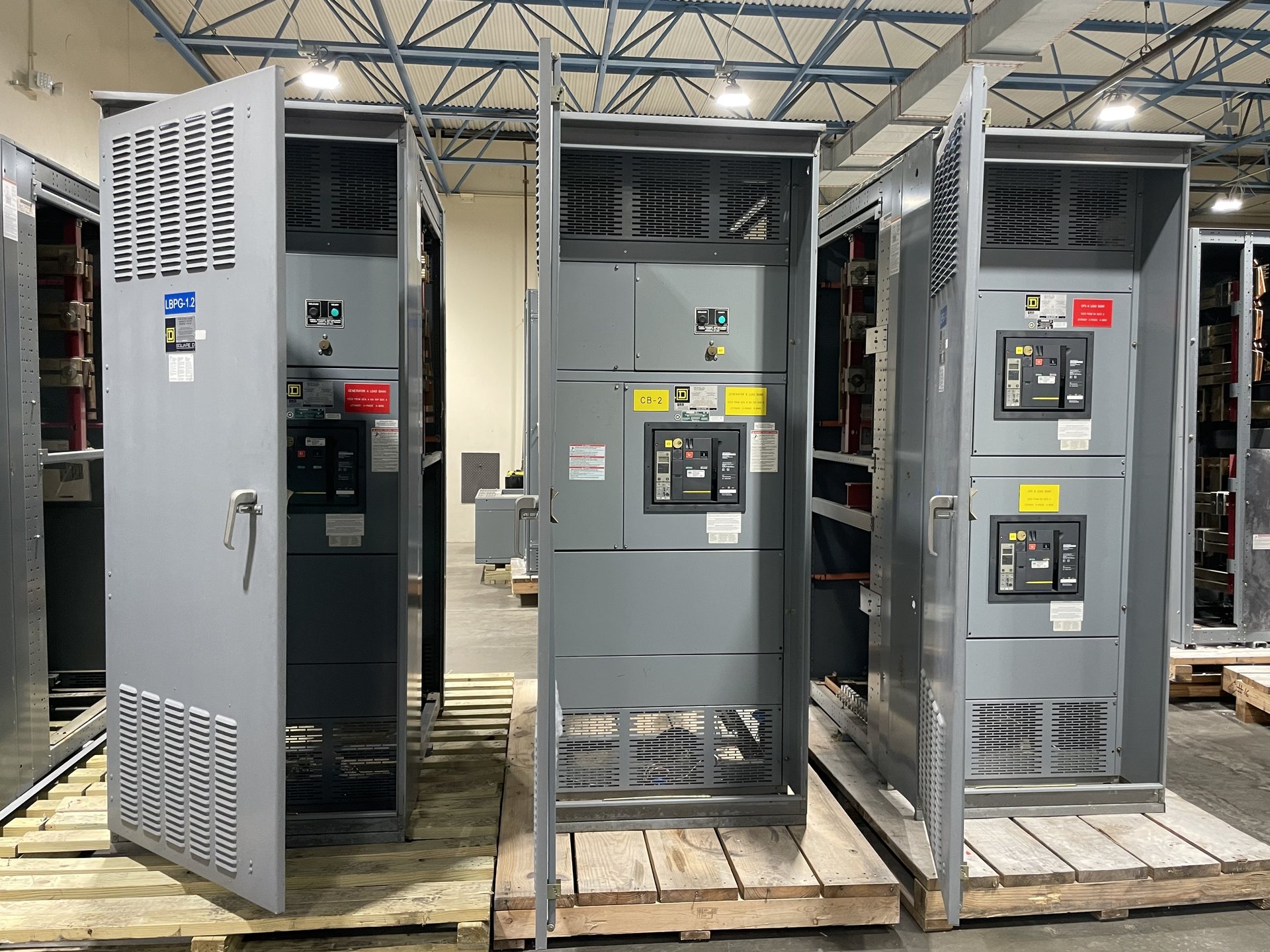
What SCCR Means for an Assembly
SCCR describes the short-circuit withstand capability assigned to an electrical assembly when it is applied under its specified conditions. Depending on the equipment and applicable product standard, the rating may be established through evaluation of the assembly design, component ratings, protective-device combinations, and other construction details. It is therefore a system-level characteristic, not a rating that can be inferred from one component alone.
When specifying new switchboards or related distribution equipment, identify the available fault current at the point of installation and the required assembly rating. Also provide the system voltage, source information, grounding arrangement, and intended protective devices when available. These details let the manufacturer evaluate a proposed configuration rather than assume that an assembly rating follows automatically from a breaker selected for the project.
SCCR Is Not a Breaker Interrupting Rating
A circuit breaker’s interrupting rating states the maximum fault current the breaker is designed to interrupt at a stated voltage and under specified conditions. SCCR, by contrast, applies to the assembled equipment and addresses its ability to withstand the short-circuit event as a complete configuration. The two ratings relate to the same fault-current environment, but they describe different performance attributes and should not be used interchangeably.
A breaker with an interrupting rating adequate for the calculated fault current does not, by itself, establish that the complete switchboard has an adequate SCCR. Buswork, connections, other protective devices, and the evaluated assembly arrangement can affect the result. During design review, compare the installation’s available fault current with the assembly SCCR and separately verify the breaker’s interrupting rating at the applicable voltage.
Coordinate Fault-Current Data Before Quotation
The available short-circuit current depends on the electrical system feeding the equipment and the equipment’s location within that system. Useful project inputs may include the utility or generator source data, transformer kVA and impedance, conductor information, system configuration, and any relevant operating modes. If the fault-current study is incomplete, identify that status explicitly so the design basis and any open assumptions can be documented for review.
For a pricing request, provide the one-line diagram, equipment schedule, specified voltage, main and feeder device requirements, and the project’s SCCR requirement or fault-current study when available. Ask whether the proposed assembly rating is based on the supplied data and configuration. A later change in source, transformer, protective-device selection, or equipment arrangement may require a fresh engineering review; do not treat an early estimate as a final rating determination.
Protective-Device Combinations and Configuration
Some assembly evaluations depend on a particular protective-device combination or other defined configuration. A change in breaker type, fuse arrangement, trip characteristics, or upstream protection can affect whether the documented SCCR applies. Coordination and short-circuit studies address related but distinct questions: coordination concerns device operation relative to one another, while SCCR concerns the assembly’s rated short-circuit capability.
When reviewing a proposed design, check that the component types and arrangement match the basis of the rating documentation. Confirm which upstream or integral protective devices are part of the evaluated configuration, and identify any required limitations or conditions. If the project specification names particular devices or requires a specific protection scheme, submit those requirements before the assembly is finalized so compatibility can be reviewed.
SCCR in New Equipment and Retrofit Scopes
This manufacturer supplies new equipment and new retrofit components only. For a retrofit scope, provide the existing equipment identification, drawings, ratings, available fault-current information, and a clear description of which components are being replaced or added. Existing enclosures, bus structures, barriers, and connections may affect the suitability of a proposed component or assembly rating; compatibility cannot be assumed from a breaker frame size or a similar catalog description.
A retrofit component’s rating does not automatically become the SCCR of the existing equipment. The complete configuration and its documented evaluation must support the application. Before requesting pricing, distinguish between a component replacement and a scope that changes the assembly’s protective scheme or construction. The manufacturer can review the supplied project information for a new component or equipment proposal, with availability, engineering, and applicable documentation confirmed for each quotation.
Verify Documentation, Standards, and Application
Ask for the documentation applicable to the quoted configuration, including the stated SCCR, the conditions or component arrangement on which it depends, and the relevant product-standard basis. Confirm the equipment voltage and intended application against the rating information. For switchboards, UL 891 is a relevant standard, but it is not a blanket listing for all switchgear; listing status and applicable standards must be verified for the specific configuration rather than presumed.
Before purchase, reconcile the submittal with the project drawings, fault-current study, protection requirements, and installation constraints. Resolve discrepancies between the specified SCCR and the documented assembly rating before release. Installation, servicing, testing, and energization require qualified personnel working under approved procedures. This page is a glossary explanation, not a substitute for project-specific engineering review or the equipment’s applicable instructions.