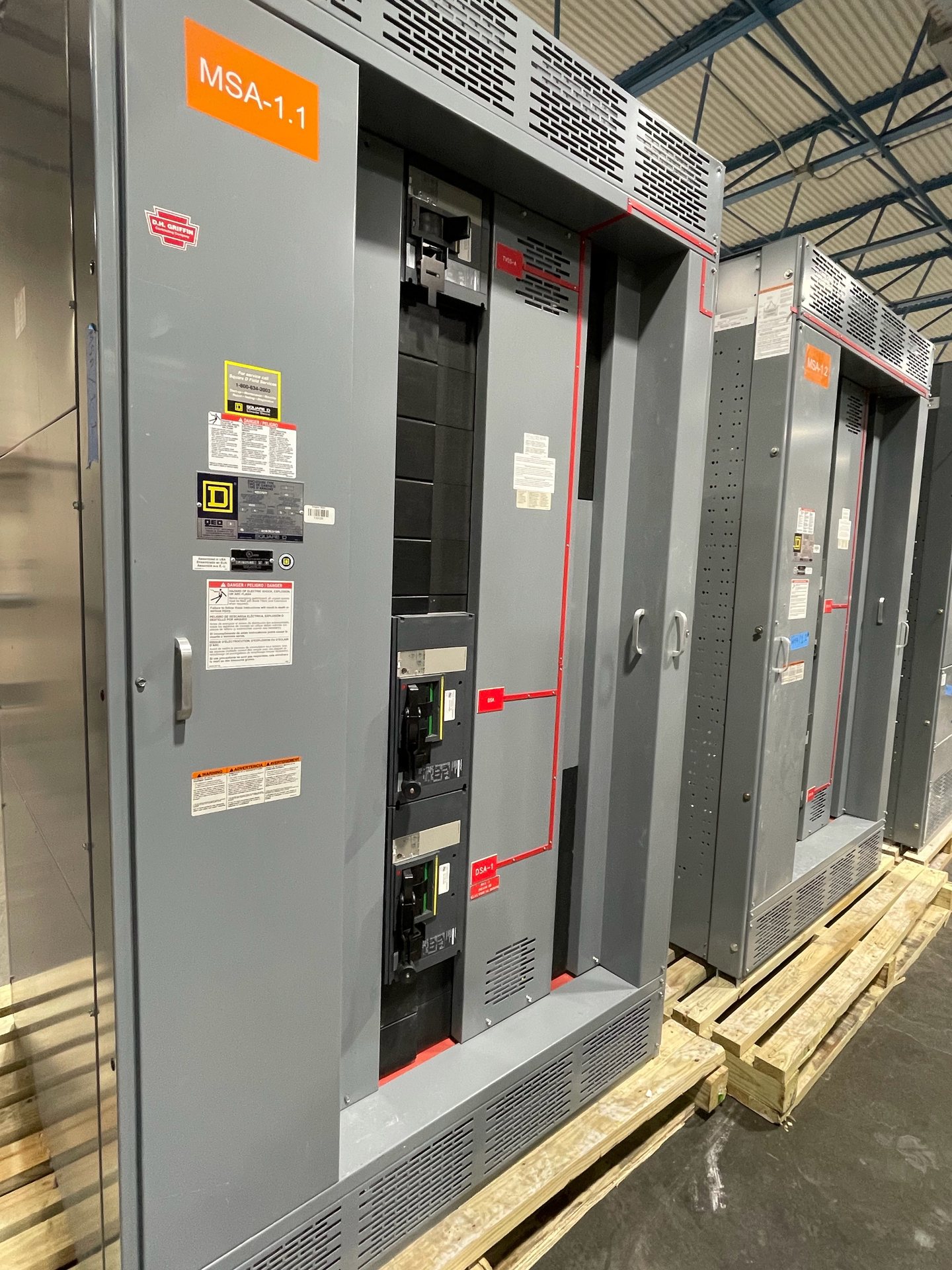
Scope Switchgear Around Healthcare Loads
Healthcare distribution may serve patient-care areas, diagnostic and treatment equipment, laboratories, pharmacies, kitchens, elevators, ventilation, and information systems. These loads do not all behave alike: some operate continuously, some cycle, and others may start with significant inrush. Before requesting pricing, identify the loads served by each distribution point, their operating schedules, expected additions, and any equipment manufacturers’ electrical requirements.
A useful project scope distinguishes normal operating demand from connected load and documents known motor starting, nonlinear loads, and sensitive electronic equipment. Ask the design team to provide the one-line diagram, load schedules, available fault-current information, and planned spare capacity. These inputs help us evaluate a build-to-specification arrangement without assuming that a generic switchboard configuration will fit the facility.
Define Normal and Alternate Sources
Healthcare projects can involve utility service, on-site generation, or other alternate-source arrangements, but the required configuration depends on the facility design and applicable codes. Clarify which sources feed the proposed equipment, where transfer functions occur, and which loads are intended to receive alternate power. The one-line should show source relationships and the intended boundaries between distribution sections.
For a quotation, identify whether the scope includes service equipment, distribution sections, transfer-related interfaces, or connections to separately specified systems. Confirm source characteristics, grounding approach, neutral switching requirements where applicable, and the sequence of operation with the electrical engineer. These decisions affect bus arrangement, protective-device coordination, space planning, and interfaces; they cannot be settled reliably from a facility type alone.
Match Equipment to the Installation Environment
Switchgear rooms in healthcare facilities may be adjacent to mechanical spaces, service areas, basements, or other locations with distinct access and environmental conditions. Document the intended indoor or outdoor setting, ambient conditions, available working clearances, access route, floor and wall constraints, and any exposure to moisture, dust, corrosive agents, or vibration. Room conditions and access can influence enclosure selection and equipment arrangement.
Provide room plans and elevation details early, including door dimensions, equipment path, ceiling obstructions, and the location of conduits or cable entry. Also identify whether equipment must be assembled in sections to reach its final position. We can review the specified requirements when preparing a configuration, but installation dimensions and handling plans should be checked against the final approved drawings and site conditions.
Coordinate Protection and Selectivity
Protective-device selection for healthcare distribution should follow the engineered system study, not a presumed standard package. Relevant inputs include available fault current, conductor and equipment ratings, grounding details, expected operating modes, and the required coordination between upstream and downstream devices. Where alternate sources change fault-current levels, evaluate each applicable operating condition rather than relying on utility-only assumptions.
Share the protection study criteria, device schedules, and coordination objectives with the quotation package. Specify required device functions, trip or control interfaces, metering, and any communications points that must be accommodated. We can build to the documented specification, while the responsible design professionals determine settings and system coordination. Verify that the proposed configuration, interrupting capabilities, and applicable standards align before release for manufacture.
Plan New Equipment and Retrofit Scope
For new construction, define the switchgear boundary and identify what is supplied by other packages, such as transformers, generators, transfer equipment, controls, or field-installed conductors. List required sections, incoming and outgoing connections, metering, future provisions, and drawing submittals. Clear scope boundaries reduce uncertainty about interfaces and help the project team compare quotations on equivalent technical requirements.
For an existing healthcare facility, we supply new retrofit components only. Provide the existing equipment manufacturer and identifiers, photographs or drawings, bus and compartment details, device information, and the intended replacement scope. Compatibility must be evaluated from documented configuration details; do not assume a new component will fit or function with an existing assembly without engineering review.
Prepare Documentation and Maintenance Plans
Healthcare projects benefit from clear handover information that supports safe operation and future planning. Specify the required submittals, final drawings, equipment identification, device data, and any requested test or inspection documentation. Confirm the applicable standards and whether a particular assembly is required to be listed for its configuration. UL 891 applies to switchboard assemblies; it is not a blanket listing for every type of switchgear.
Maintenance planning should account for equipment access, operating responsibilities, inspection intervals established by the facility’s procedures, and coordination with clinical operations. Ask which components are expected to be serviceable or replaceable and what records the facility needs to retain. Installation, servicing, testing, and energization require qualified personnel following approved procedures. Request pricing with the project documents so availability, engineering, lead time, component origin, and documentation can be reviewed for the specific scope.