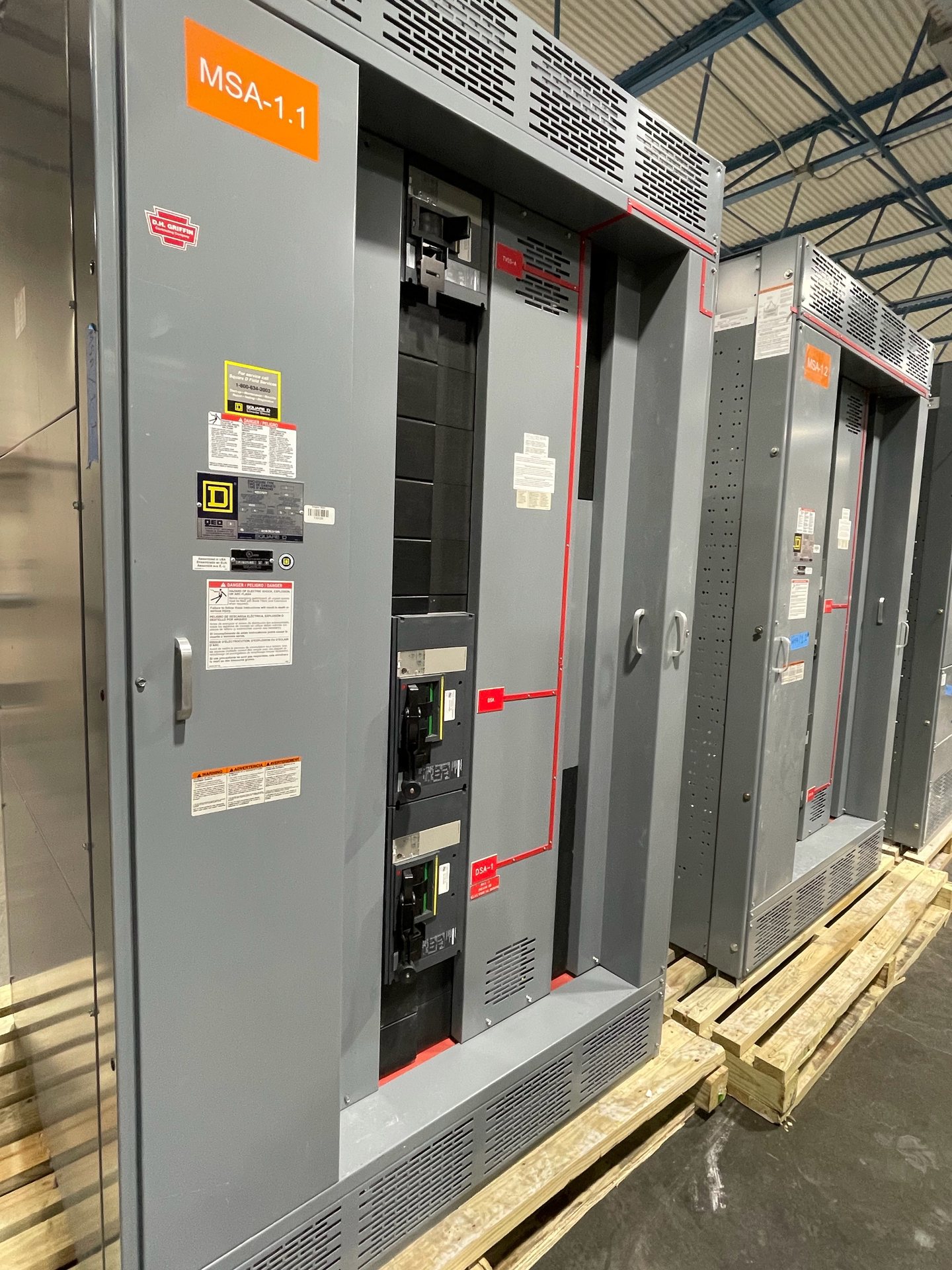
Define Essential and Normal Loads Before Selecting Equipment
Start with the facility’s approved load classification and one-line diagram, not an assumed division based on room names or equipment type. Identify which loads are assigned to the essential electrical system, which remain on normal power, and how the project organizes essential loads into required branches. The governing design documents and applicable healthcare requirements should establish these assignments; the equipment manufacturer should not infer clinical priorities from a generic facility description.
For each distribution section, provide the load schedule, connected and calculated demand, voltage and phase, available source information, and planned spare capacity. Note major motors, imaging equipment, life-safety loads, and other equipment with starting, harmonic, or continuity considerations where applicable. These details help determine bus and feeder arrangements, device frame and trip requirements, and space needs without treating a typical configuration as suitable for every healthcare project.
Coordinate Source Transfer With the Distribution Architecture
Describe each normal and alternate source and show how the project intends to transfer essential loads between them. Identify the transfer equipment locations, affected distribution sections, intended transfer sequence, and any loads that have distinct source or transfer requirements. Confirm whether transfer devices are furnished separately or form part of a coordinated equipment scope. Source ratings, fault characteristics, grounding arrangements, and control interfaces must be available for engineering review.
The one-line diagram should make the relationship among service equipment, transfer equipment, essential-system distribution, and downstream panels clear. Flag whether the project calls for open or closed transition, bypass-isolation capability, delayed transition, or other transfer functions; these are design choices to be confirmed by the electrical engineer and project requirements. Also document control power, indication, communication, and interlocking interfaces so equipment boundaries and responsibilities are understood before quotation.
Coordinate Protection Across Sources and Operating Modes
Protection settings and device selection depend on more than a nominal system voltage. Provide available fault-current data for each source and operating configuration, including any generator contribution and relevant utility information, along with the coordination study criteria and device schedules when available. Identify selective-coordination requirements and the downstream devices included in the study. The engineer of record must establish and approve protection design; equipment selection should reflect that documented design rather than substitute for it.
Ask how the proposed arrangement will accommodate the specified breakers, trip functions, sensor ranges, accessories, and communication needs. Confirm whether protective settings differ by source or operating mode and who will supply, configure, and document devices. For retrofits, provide existing equipment identification, dimensions, bus and connection details, drawings, and photos where permitted. Compatibility must be reviewed against the actual equipment and approved design; a component that appears similar is not necessarily interchangeable.
Confirm Applicable Healthcare Requirements and Listing Scope
Healthcare electrical requirements depend on the facility type, project scope, adopted codes, authority having jurisdiction, and the design professional’s interpretation. Identify the applicable code editions and project specifications, and note any requirements for essential-system arrangement, branch separation, transfer, maintainability, or documentation. Confirm these requirements with the engineer of record and relevant authorities rather than assuming one healthcare configuration or compliance pathway applies to every building.
UL 891 applies to switchboard assemblies, not universally to all switchgear or every healthcare distribution configuration. For a proposed assembly, verify the applicable standards and listing scope for the specific configuration during quotation and submittal review. Do not treat a general equipment description as confirmation of a particular listing, label, or healthcare certification. Provide the project’s required documentation and acceptance criteria so they can be checked against the equipment being proposed.
Specify New Equipment and Retrofit Component Boundaries
For new construction or a full distribution replacement, identify the intended equipment lineup, service and feeder interfaces, room constraints, cable entry direction, access clearances, and future expansion provisions. Supply architectural and electrical drawings, equipment schedules, and the latest one-line diagram. Confirm shipping and site constraints with the project team, including handling limitations and sequencing, so the proposed arrangement can be evaluated against the actual installation plan.
For existing healthcare facilities, this manufacturer-only scope is limited to new equipment and new retrofit components. Send the existing manufacturer and model, nameplate details, compartment and connection dimensions, bus information, device data, and clear photographs or drawings for review. Explain the outage window and operational constraints without assuming that a replacement component will fit or preserve the original assembly’s characteristics. Compatibility, engineering scope, and documentation must be confirmed for each project.
Build a Quotable Submittal Package and Delivery Plan
A useful request for pricing includes the project location, requested equipment scope, voltage and current parameters, system diagram, source and fault data, load schedules, specifications, device schedules, and required submittals. Identify the equipment that others will furnish, installation responsibilities, delivery destination, and any phasing or site access constraints. The more complete the package, the easier it is to identify open technical items and avoid pricing an arrangement that does not match the project design.
We manufacture new equipment to specification using American components as requested; component origin and project requirements are reviewed for each quotation, and no blanket domestic-content or Buy American compliance should be assumed. Availability, engineering, lead time, and test documentation depend on the configuration and are confirmed during project review. Installation, servicing, testing, and energization must be performed by qualified personnel under approved procedures. Request pricing with the current project documents and revision status.