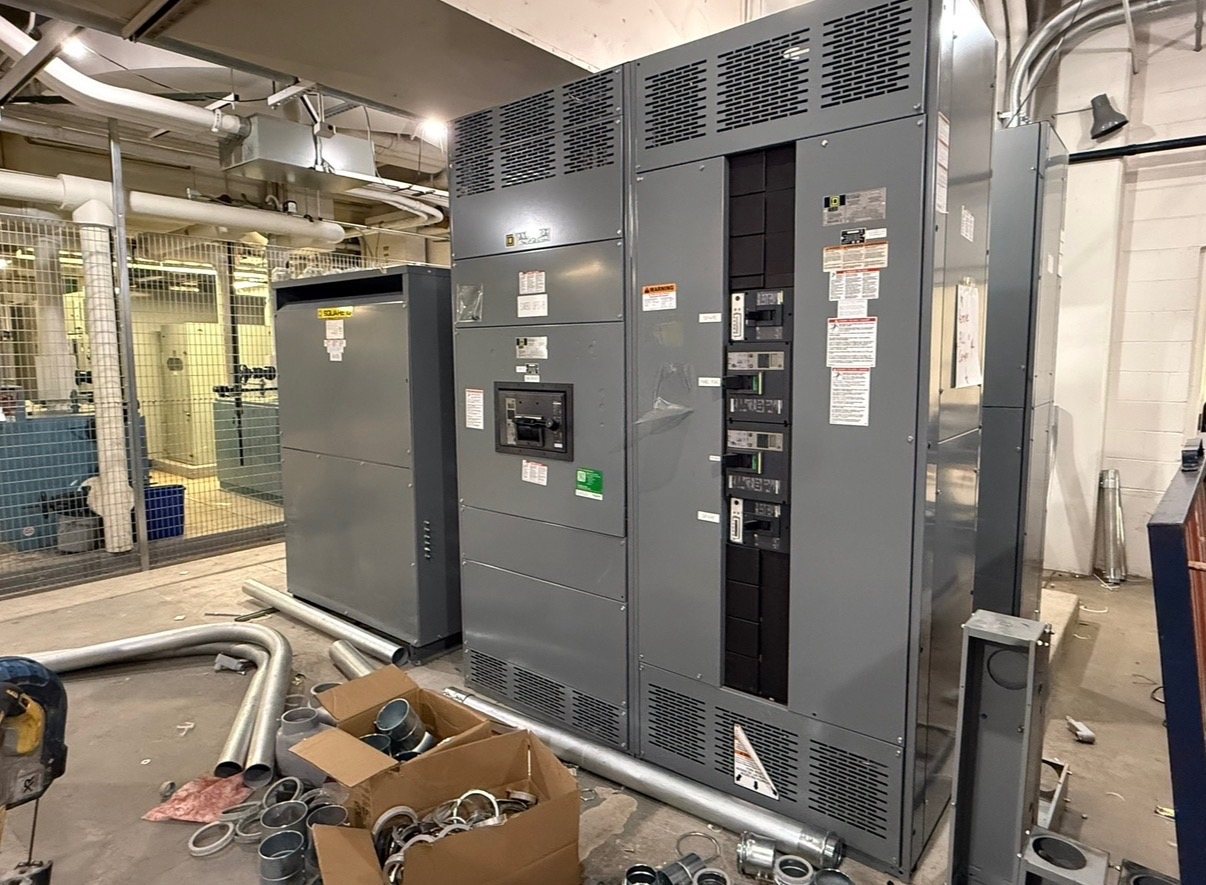
Define the requested voltage and equipment class
“High voltage” is used differently across utility, industrial, and commercial specifications. A nominal system voltage describes the network the equipment will serve; the equipment class and its maximum rated voltage describe the limits against which the assembly is selected. Those values are related, but they are not synonyms. A request that lists only nominal voltage may not establish the insulation level, switching duty, or equipment class needed for engineering review.
For a useful scope check, provide nominal system voltage, maximum system voltage if known, frequency, grounding method, and the specification’s required equipment class. Identify whether the requirement is for metal-enclosed switchgear, a switchboard, or another assembly. Our product scope must be confirmed for the particular voltage and configuration; a page description is not confirmation that a given high-voltage class is offered.
Establish what the equipment must do
The application determines more than the voltage label. Explain whether the equipment is intended for incoming service, feeder distribution, generator or transformer connection, motor switching, or another duty. Include the number and purpose of circuits, expected load characteristics, available fault information, and any operating sequence the design must accommodate. These details help distinguish equipment that is merely at the requested voltage from equipment suitable for the specified service.
Where project documents state interrupting or withstand requirements, share the source and revision rather than relying on assumptions. Clarify whether the design must support selective coordination, metering, protection, remote operation, or interlocking. Such features depend on the application and configuration. They should be reviewed against the project requirements by qualified engineering personnel, not inferred from a generic product category.
Resolve interface and layout constraints
High-voltage equipment has to fit the electrical and physical system it connects to. Provide the latest one-line diagram, site or room layout, connection approach, cable or bus interface details, and any project-defined access or clearance constraints. Identify environmental conditions such as indoor or outdoor placement and relevant ambient or altitude requirements when they are part of the specification. These inputs help reveal conflicts before a quotation is prepared.
For replacement work, document the existing equipment manufacturer and model if known, nameplate information, compartment arrangement, connection locations, and the exact device or components to be replaced. Photographs can supplement drawings but do not replace dimensions or verified electrical data. Do not assume that a new assembly will match an existing footprint or interfaces without a documented comparison and project review.
Separate new equipment from retrofit scope
We supply new equipment and new retrofit components. A retrofit request should identify the installed equipment and specify whether the need concerns a replacement breaker, mechanism, control component, or another defined item. Compatibility is model- and configuration-dependent. Provide existing catalog or part numbers, drawings, nameplate data, and the reason for replacement so the requested component can be checked against the actual assembly.
A retrofit component is not automatically a complete modernization or a fit for every unit in a product family. Confirm physical interfaces, electrical ratings, control voltage, accessories, and the applicable revision of the existing equipment. If those details are unavailable, state what can be verified and what remains uncertain. The quotation review should explicitly define the supplied scope and identify any customer-furnished information needed to resolve fit.
Document standards, ratings, and evidence
Send the governing specification and identify the standards and project-specific clauses that apply to the requested equipment. Ask which ratings, construction details, protection functions, and documentation are included in the proposed configuration. Applicable standards and any listing must be verified for that configuration. UL 891 applies to switchboard assemblies; it is not a blanket listing for all high-voltage switchgear, and it should not be used as a substitute for identifying the required equipment standard.
If the project requires drawings, component schedules, operating instructions, test documentation, or other submittals, list them at quotation stage and specify required formats and review milestones. Availability of engineering, documentation, and testing evidence depends on the confirmed scope. Request confirmation rather than assuming a particular report, test result, approval, or label applies to an assembly that has not yet been configured and reviewed.
Confirm commercial scope before requesting pricing
A complete pricing request should include the voltage and equipment class, circuit schedule, application, quantity, required options, delivery destination, requested schedule, and the project documents used to define the scope. Note any approved-equal process, submittal deadline, or bid alternates. We serve Texas customers from the United States and ship nationwide; the destination and delivery requirements should be stated so they can be reviewed with the requested equipment.
Component origin, engineering scope, lead time, and test documentation are confirmed for each quotation. Customers may specify American components, but component origin and any domestic-content requirement must be addressed explicitly; no blanket Buy American or BAA compliance should be assumed. Installation, servicing, testing, and energization must be performed by qualified personnel under approved procedures. Ask us to review your documents and confirm whether the particular high-voltage scope can be offered.