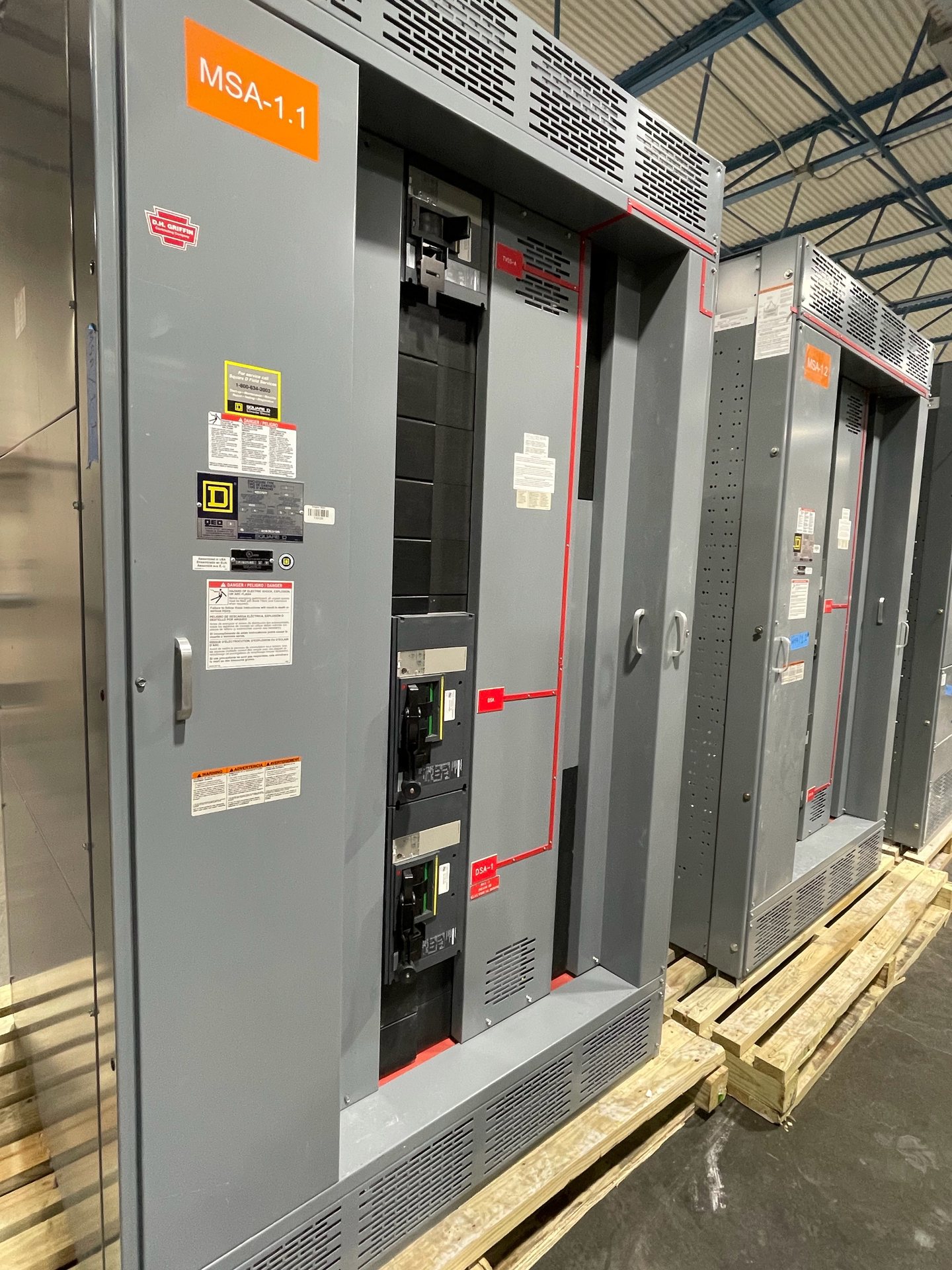
Survey Existing Equipment Before Defining the Retrofit
A useful retrofit scope starts with an accurate record of the existing lineup, not an assumption based on a panel name or an old drawing. Gather equipment manufacturer and model information, nameplate data, one-line diagrams, elementary schematics, general-arrangement drawings, and records of prior modifications. Note enclosure dimensions, section sequence, cable-entry locations, bus arrangement, and the condition of accessible interfaces. Photographs can help clarify details, but should supplement—not replace—legible ratings and drawings.
Identify what must remain in service and what is being replaced: the complete switchboard, selected sections, protective devices, control components, or connection hardware. Record site access limitations, working clearances, floor and anchorage conditions, cable slack, and the route from unloading point to equipment location. These findings help distinguish a practical equipment replacement from a wider redesign and give the manufacturer concrete information for reviewing interfaces and preparing a project-specific scope.
Check Replacement Compatibility at the Interfaces
Physical fit is only one part of replacement compatibility. Compare section width and depth, mounting and support points, bus orientation, phase arrangement, neutral and grounding provisions, termination space, and incoming and outgoing conductor paths. Existing wiring diagrams and control-voltage information matter where new equipment must connect to retained control circuits or supervisory systems. A mismatch in a single interface can affect field labor, cable reuse, sequencing, or whether adjacent equipment must also be modified.
Specify the intended boundary of work and identify interfaces that must be preserved. Provide clearances, conduit or cable schedules, device functions, and any required metering, communications, or interlocking points. Do not assume a replacement component will fit or function in another manufacturer's assembly solely because its nominal dimensions appear similar. We review the supplied configuration and project requirements; compatibility and any required engineering changes must be confirmed before equipment is released for manufacture.
Coordinate Bus Capacity and Fault-Rating Requirements
Bus requirements need to be established from the system design and the equipment being retained. Document the required continuous current rating, bus material preference, neutral requirements, and any applicable temperature or enclosure constraints specified by the project. Also identify the available fault-current information and the short-circuit withstand or interrupting ratings required at the installation point. These are related but distinct design considerations; a nominal current rating alone does not establish that the assembly is suitable for the available fault duty.
Ask the engineer of record to confirm the current system study, protective-device coordination assumptions, and any changes to sources or transformers that could affect fault current. Identify whether the retrofit changes feeder sizes, protective devices, or the distribution arrangement. We use the confirmed design inputs to assess the proposed new equipment configuration. Applicable ratings, standards, and listing requirements must be verified for the specific assembly; UL 891 applies to switchboards and is not a blanket designation for all switchgear.
Build an Outage Sequence Around Operating Constraints
For a Houston facility, outage planning should reflect the actual loads and operational priorities at that site rather than a generic replacement schedule. List critical processes, life-safety and emergency-power interfaces, loads that can be transferred, and functions that cannot be interrupted. Determine whether the work can be divided into phases, whether temporary distribution is part of the project, and what approvals govern shutdowns and restoration. The owner and project team should establish the outage window and acceptance criteria before equipment procurement.
Map each phase to the equipment boundary, required isolation, planned removal, new-equipment placement, reconnection, and return-to-service checks. Confirm who authorizes outages, coordinates affected occupants or operations, and approves changes to the sequence. Equipment availability and lead time depend on the reviewed configuration and project requirements, so request pricing with a realistic need date and required submittal milestones. Do not treat an estimated shipment date as confirmation that a site outage or installation can be completed on that date.
Coordinate Field Installation and Site Responsibilities
New equipment must be coordinated with the conditions encountered in the electrical room. Confirm door and corridor dimensions, lifting and rigging access, floor loading, ventilation, housekeeping-pad details, and the space needed to position and join sections. Check whether existing cables can reach their new termination points and whether conduit changes, adapters, structural work, or temporary barriers are expected. Resolve these questions with the electrical contractor and engineer before the equipment layout and connection details are finalized.
Define responsibilities for demolition, disposal, anchoring, bus joining, conductor terminations, control wiring, grounding, and any modifications to retained equipment. Identify who supplies field measurements, approves submittals, verifies existing conditions, and documents deviations. We manufacture and supply new equipment and new retrofit components; the project team coordinates their field integration. Installation, servicing, testing, and energization require qualified personnel following approved procedures and applicable site requirements.
Prepare a Complete Houston Project Quotation Package
A focused request for pricing should include the one-line diagram, equipment schedule, available drawings, existing nameplate information, requested ratings, scope boundary, and delivery destination in Houston or the surrounding project area. State the preferred equipment arrangement, required accessories, control and metering functions, and any constraints on dimensions or connection points. Include the desired submittal and shipment milestones, while distinguishing firm project deadlines from planning targets that remain subject to review.
Identify documentation needs in the inquiry, including drawings, bills of material, rating information, and any requested test or standards documentation. Specify American components as a project requirement when applicable, and ask that component origin and supporting documentation be confirmed for the quoted configuration; domestic-content compliance is not implied and must be evaluated against the applicable project rules. We serve Texas from the United States, and confirm engineering, availability, lead time, and documentation for each quotation.