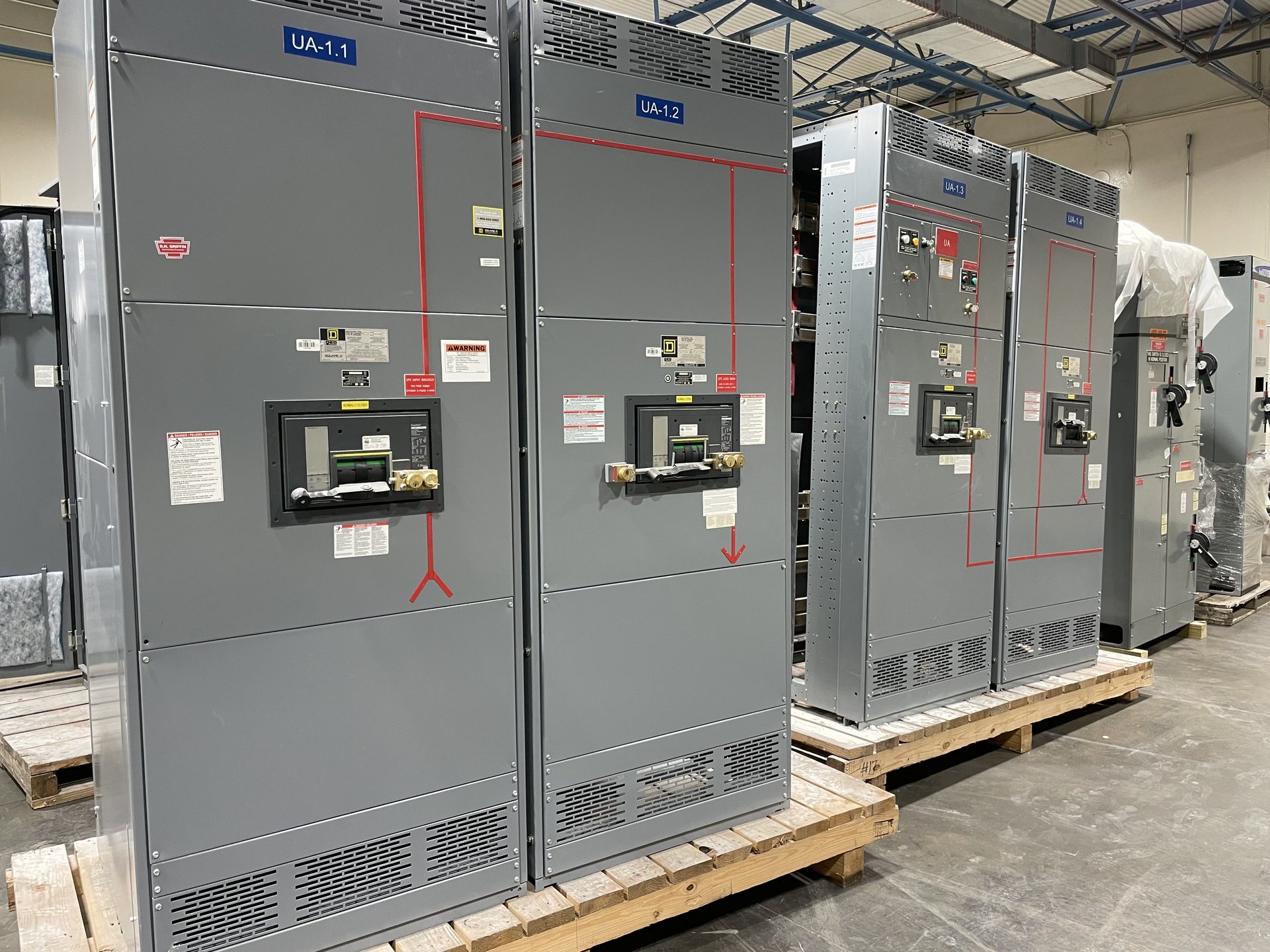
Interrupting Rating Is Not Short-Time Withstand
An interrupting rating describes the maximum fault current a circuit breaker or other interrupting device is designed and tested to interrupt under stated conditions. It is a device capability, not a statement that every part of the complete assembly can carry that current for an extended period. The rating must be evaluated at the applicable system voltage and against the available fault current at the device’s installation point.
Short-time withstand describes an assembly’s ability to carry specified fault current for a stated duration without unacceptable damage, while the protective scheme allows a delay before clearing. That capability supports coordination choices that may preserve selectivity, but it does not replace the breaker’s interrupting duty. Confirm both values and their bases in the equipment documentation; do not treat an interrupting rating and a short-time withstand rating as interchangeable.
Establish the System Duty at the Installation Point
A useful rating review starts with the system configuration, not a preferred product rating. Identify nominal voltage, source and transformer data, conductor information, utility contribution where available, and operating arrangements that can change fault current. Ask whether alternate feeds, tie breakers, generators, or parallel sources may operate together. The engineer’s short-circuit study should identify the available fault current at the equipment location and the assumptions behind that result.
Provide the one-line diagram and the latest available fault-current or coordination study with the request for pricing. Note study date, source conditions, and any planned system changes that could affect duty. If the final configuration is still under development, identify the open assumptions rather than relying on an unverified estimate. We review the supplied design basis and confirm equipment suitability, component availability, and any engineering questions for the quoted configuration.
Match Device Capability to Voltage and Fault Current
For each interrupting device, verify that its interrupting capability is adequate for the calculated fault current at the applicable voltage and operating conditions. A rating stated at one voltage or under one set of conditions should not be assumed to apply unchanged elsewhere. Also distinguish the breaker’s interrupting capability from its continuous-current rating and from the assembly’s short-time withstand capability; these values answer different design questions.
The protection schedule and one-line should make device location and function clear, including main, feeder, and tie positions. Ask the design engineer to identify the governing fault case for each device and whether a rating basis depends on a specific upstream protective device or configuration. For new equipment or new retrofit components, the quotation review should capture those dependencies and confirm that the proposed device and assembly are suitable together.
Specify Withstand Current and Duration Together
A short-time withstand value is meaningful only with its associated duration and test basis. State the required current and time interval from the project study or design criteria, and identify which assembly section or bus system must meet that requirement. A current value without duration leaves a key part of the duty unresolved. Similarly, a duration without a current value is not enough to define the assembly’s short-time performance.
Explain the protection and operating intent behind the requirement. For example, indicate whether a delay is needed to coordinate downstream devices, whether a bus tie may be closed during the relevant operating condition, and which device is expected to clear the fault. The equipment configuration, protective devices, and intended sequence must be reviewed as a system. Do not infer a withstand duration from a breaker’s interrupting rating or from a different assembly design.
Use the Applicable Standard and Verify the Configuration
Identify the applicable product and test standard in the project specification, including the edition or governing authority when known. The relevant basis depends on equipment type and configuration; UL 891 applies to switchboard assemblies and is not a blanket standard for all switchgear. Listing status, applicable standards, and any required test documentation must be verified for the specific proposed configuration rather than assumed from a component name or a general product description.
Ask for documentation that states the tested or rated capability, voltage, duration where applicable, and the assembly or device scope covered. Clarify whether the project requires design evidence, test reports, or other submittal records, and at what approval stage they are needed. We review these requirements during quotation and engineering review. Availability of documentation and the applicable rating basis are confirmed for each configuration; no general rating statement substitutes for project-specific verification.
Scope New Equipment and Retrofit Components Carefully
For a new assembly, define the main and feeder device arrangement, bus configuration, source connections, and any tie or alternate-source operation that affects calculated duty. Include the required interrupting capability for each device and the assembly withstand current and duration. Provide the enclosure and connection constraints that affect the design, along with the relevant drawings and study documents, so the proposed build can be reviewed against the intended system.
For retrofit work, specify new replacement components only and identify the existing equipment by manufacturer, model, catalog information, ratings, and available nameplate or drawing data. Describe the existing bus and connection arrangement, the intended protective-device function, and any known system changes. Compatibility and rating suitability require engineering review; physical fit alone does not establish electrical adequacy. Installation, testing, and energization must be performed by qualified personnel under approved procedures.