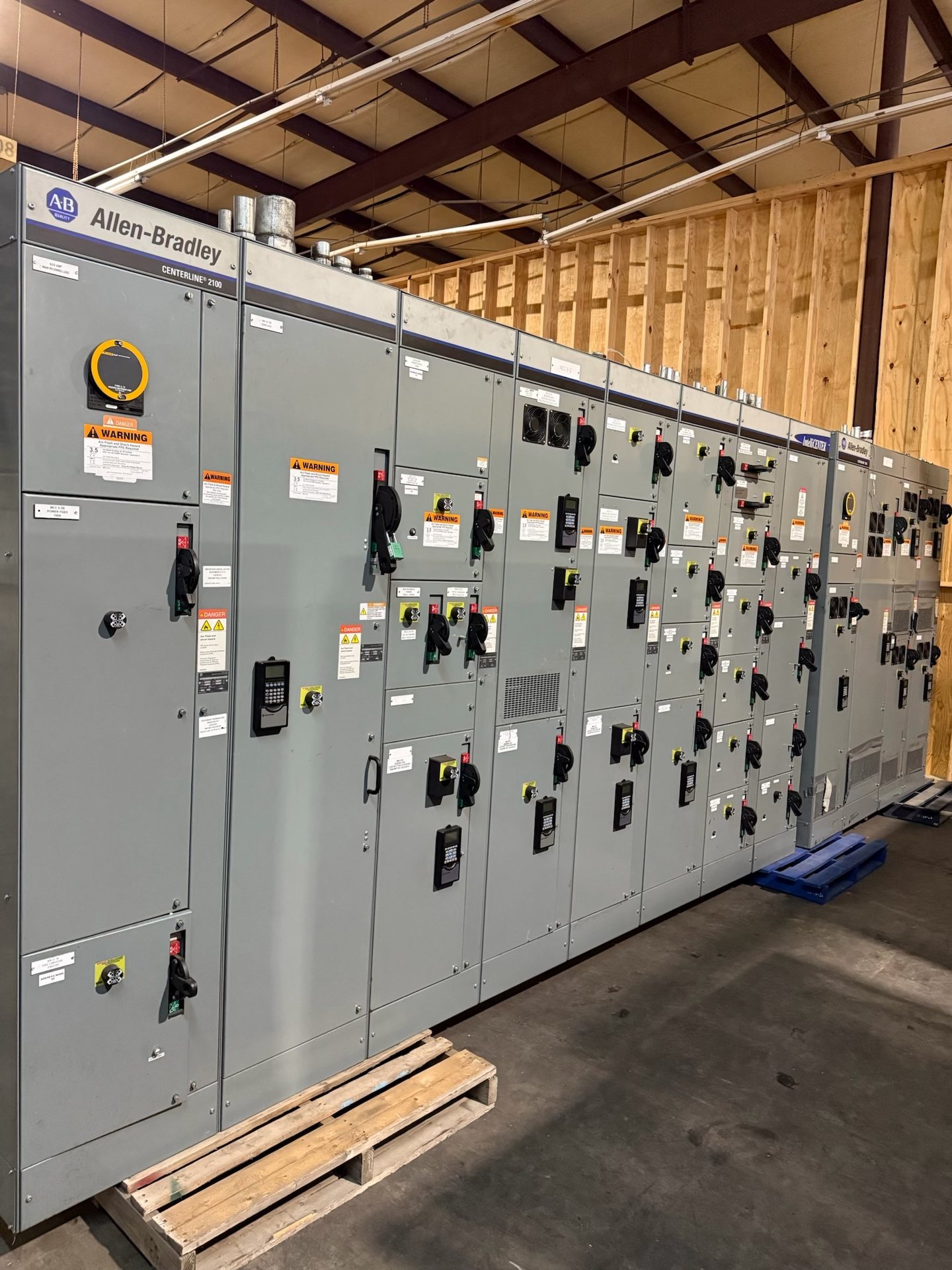
What an Assembly SCCR Means
An assembly SCCR is a rating for the complete equipment configuration, not simply a number taken from its largest breaker. It describes the assembly’s ability to withstand the effects of a short circuit when installed and applied under the conditions associated with that rating. Those effects can include mechanical forces, thermal stress, and the behavior of conductors, bus, supports, enclosures, and protective devices during fault clearing.
When requesting a new switchboard or other assembly, identify the equipment type, system voltage, intended use, and the required SCCR at the point of installation. Also provide the one-line diagram and specify any special configuration requirements. We review these inputs against the proposed design; the rating and the documentation available for the final assembly are subject to configuration-specific engineering review.
Establishing Available Fault Current
Available fault current is the prospective short-circuit current that the electrical system can deliver at a particular point. It depends on the source and distribution system, including transformer characteristics, upstream conductors, and other relevant impedances. Because it can differ between locations in the same facility, a rating selected for one installation point should not be assumed adequate at another.
For a useful SCCR review, provide the available fault-current value and its source, such as a current engineering study or utility information, along with the equipment location and system details. Confirm that the study reflects the design being purchased and the intended point of connection. If the value is unknown or may change, resolve that uncertainty with the project engineer before equipment selection; do not substitute an individual breaker rating for a system study.
Assembly Rating Versus Device Rating
A circuit breaker or fuse may have an interrupting rating that states the fault current it can interrupt under specified conditions. That is a protective-device rating, not automatically the SCCR of the switchboard or other assembly containing it. The assembly’s rating also depends on the interaction and suitability of its components and on how the equipment is arranged and evaluated.
A higher-rated protective device does not, by itself, raise an assembly SCCR. In some designs, a specific upstream protective device and a documented combination may be part of the basis for an assembly rating, but that relationship must be established for the actual components and configuration. For quotation review, distinguish the requested assembly SCCR from individual device interrupting ratings and provide required device types or coordination constraints.
Reading Assembly Labels and Records
The equipment marking and supporting records should identify the applicable rating and the conditions needed to interpret it. Review the marking on the supplied assembly rather than relying on a component nameplate, an old schedule, or a rating from a similar product. Confirm that the equipment description, system application, and configuration represented by the records match what is being ordered and installed.
For submittal coordination, specify the documents your project requires, such as equipment drawings, component schedules, and rating information. Ask how the SCCR is represented for the quoted configuration and whether any stated conditions or protective-device pairings apply. Applicable standards and any listing status should be verified for the particular assembly; UL 891 applies to switchboards, not universally to all switchgear or every assembly.
Design Choices That Affect SCCR
SCCR review can influence bus design, component selection, protective-device arrangements, and the overall equipment layout. The rating must be considered alongside system voltage, feeder and branch-circuit requirements, enclosure and environmental needs, and the project’s coordination approach. Changing a device, bus arrangement, or other material detail during design can affect whether the reviewed rating and supporting documentation still apply.
When developing a specification, state the required SCCR, the available fault current at the connection point, and the project’s basis for those values. Identify any required upstream protection, device families or characteristics, and coordination constraints without assuming those choices are interchangeable. We build new equipment to specification using American components as requested; component origin and suitability, engineering, and documentation are confirmed for each quotation.
Purchasing, Retrofit Scope, and Field Verification
A quote can be reviewed more accurately when the request includes the one-line diagram, fault-current information, equipment schedule, system voltage, and required assembly SCCR. For a retrofit, provide the existing equipment identification and relevant drawings, plus the proposed change and the condition of the intended connection points. We supply new retrofit components only; existing equipment details are needed to evaluate fit and application, not to establish an assumed rating.
Before release for manufacture, align the approved submittal with the project’s current fault study, protection design, and installation location. If upstream equipment or the electrical source changes, the available fault current may change as well, so the engineer should reassess the required rating. Installation, inspection, testing, and energization must be performed by qualified personnel under approved procedures. Lead time and any test documentation are reviewed and confirmed with the project quotation.