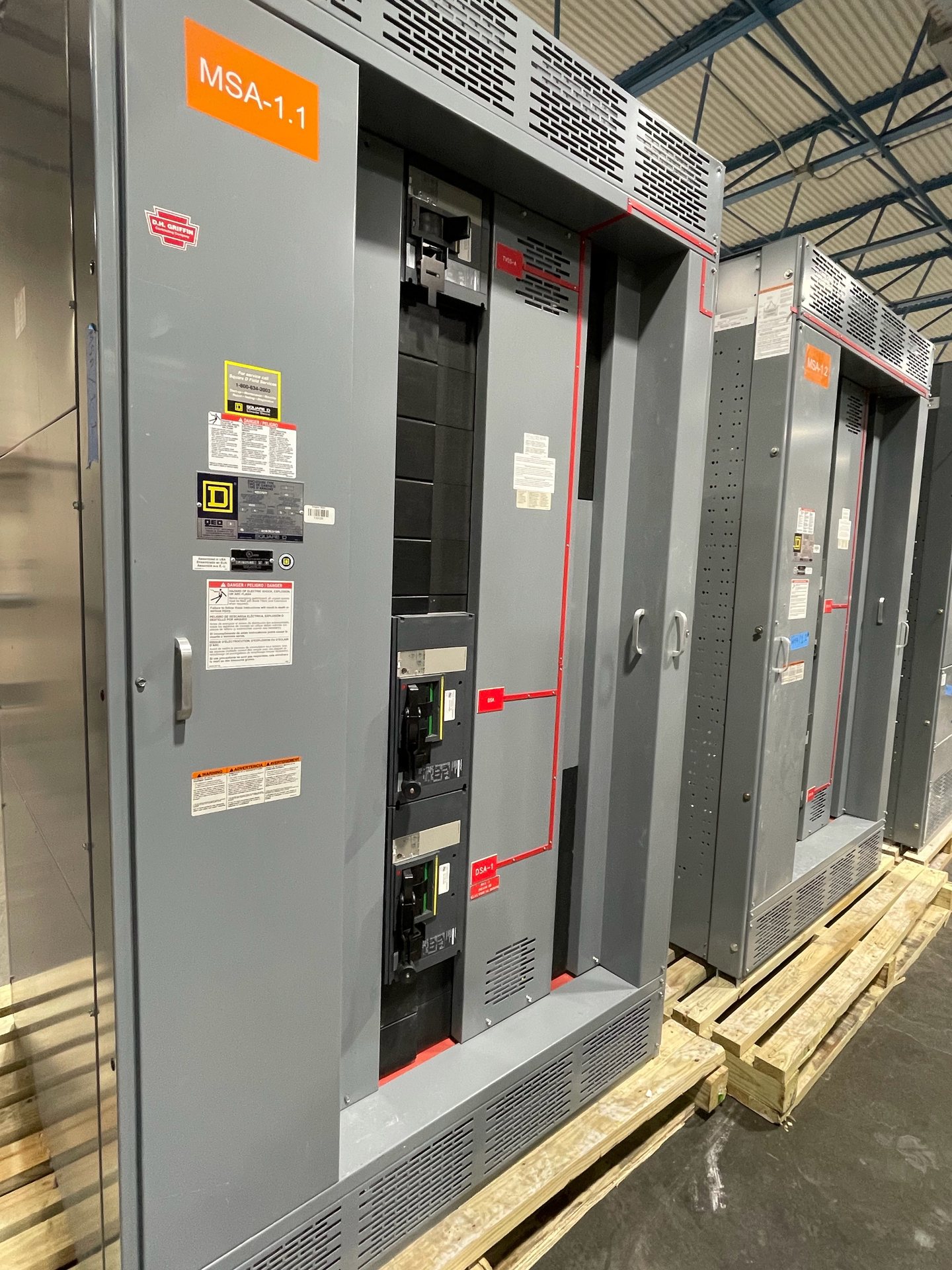
Select bus and breakers as a coordinated system
For a Laredo low-voltage project, start by defining the switchgear’s role in the distribution system rather than choosing a bus or breaker in isolation. Provide the one-line diagram, system voltage and phase, main-device arrangement, feeder count, and anticipated load information. Clarify whether the design calls for a main breaker, main lugs, tie breaker, or another lineup arrangement, and identify which equipment is upstream and downstream.
Bus material, bus arrangement, ampacity, and connection details should follow the project’s electrical design and applicable requirements. Breaker selection also depends on the intended function, frame and trip characteristics, available accessories, and coordination with connected conductors and loads. Tell us which values and device functions are specified, which remain open to engineering review, and whether future feeder positions or spare capacity must be accommodated.
Establish available fault current before specifying protection
Available fault current at the switchgear location is essential to evaluating the assembly and its protective devices. Request the value and assumptions from the project engineer or serving utility, including the point of calculation and system conditions used. If the value is preliminary, label it as such. Changes in transformer data, source configuration, or conductor impedance can affect the calculated fault current and the equipment requirements.
Provide the required short-circuit ratings and any project-specific withstand or interrupting criteria shown in the design documents. Do not infer that a breaker rating alone establishes suitability for the complete assembly; the selected devices and switchgear configuration must be reviewed together. Before quotation, confirm that the one-line diagram, fault-current information, and equipment schedule are consistent, and identify any study or coordination documentation expected with the submittal.
Match the enclosure to the installation environment
Describe the actual installation conditions for the Laredo site instead of relying on a city name to determine the enclosure. State whether equipment will be indoors or outdoors, identify the room or mounting location, and explain exposure to moisture, dust, corrosive agents, washdown, or other environmental conditions. Include ambient conditions and any ventilation, access, or clearance constraints that could affect enclosure selection or lineup dimensions.
The required enclosure type and construction should be defined by the project documents and verified for the intended location. Share the applicable environmental criteria, available floor space, cable entry direction, and preferred access arrangement. If the equipment must interface with an existing room or structure, provide relevant dimensions and constraints early. Enclosure suitability, ventilation provisions, and any special construction require confirmation for the quoted configuration.
Coordinate equipment with installation drawings
Installation drawings help prevent mismatches between the switchgear lineup and the field layout. Submit current floor plans, equipment elevations, one-line diagrams, cable schedules, and connection details when available. Mark the equipment location, working clearances, conduit or cable entry zones, and the direction of incoming and outgoing connections. Identify drawing revision dates so the quotation and subsequent engineering review use the correct design basis.
For replacement or expansion work, provide accurate existing-equipment dimensions and interface information, such as bus connection details, mounting points, and cable termination space. New retrofit components are supplied for a defined application; they should not be assumed compatible based only on a general equipment description. The project team should verify fit, ratings, and interfaces against approved drawings before procurement and coordinate any drawing revisions with the responsible engineer.
Define new equipment and new retrofit scope
Our scope is new equipment and new retrofit components, built to the requirements reviewed for the project. Specify whether the request is for a complete lineup, a defined section, or new components intended for an existing installation. Include manufacturer and model information for the existing equipment when relevant, along with nameplate details, photographs, and interface drawings. These records help establish what can be evaluated without assuming interchangeability.
Separate firm design requirements from preferences and open items in the quotation request. Identify requested bus and breaker features, control-power needs, metering or monitoring provisions, accessories, and any required spare provisions. If American components are a project requirement, state it explicitly so component origin can be reviewed and confirmed for the quoted scope. Do not treat that request as independent certification of domestic-content compliance; confirm applicable requirements and documentation for the specific project.
Plan submittals, standards, and procurement review
A clear submittal list helps the purchasing team compare the proposed equipment with the contract documents. Identify the drawings, schedules, ratings, and supporting information required for review, and note who will approve deviations or open technical items. We can assess documentation expectations as part of quotation review, but test records, component details, standards applicability, and delivery timing must be confirmed for the particular configuration.
UL 891 is a standard for switchboards, not a blanket listing for every type of low-voltage switchgear. State the applicable project standards and any required listing criteria, then verify that they apply to the proposed assembly and configuration. Installation, servicing, testing, and energization require qualified personnel following approved procedures. Request pricing with the latest coordinated documents, and allow the manufacturer to review scope, availability, and lead time before procurement decisions.