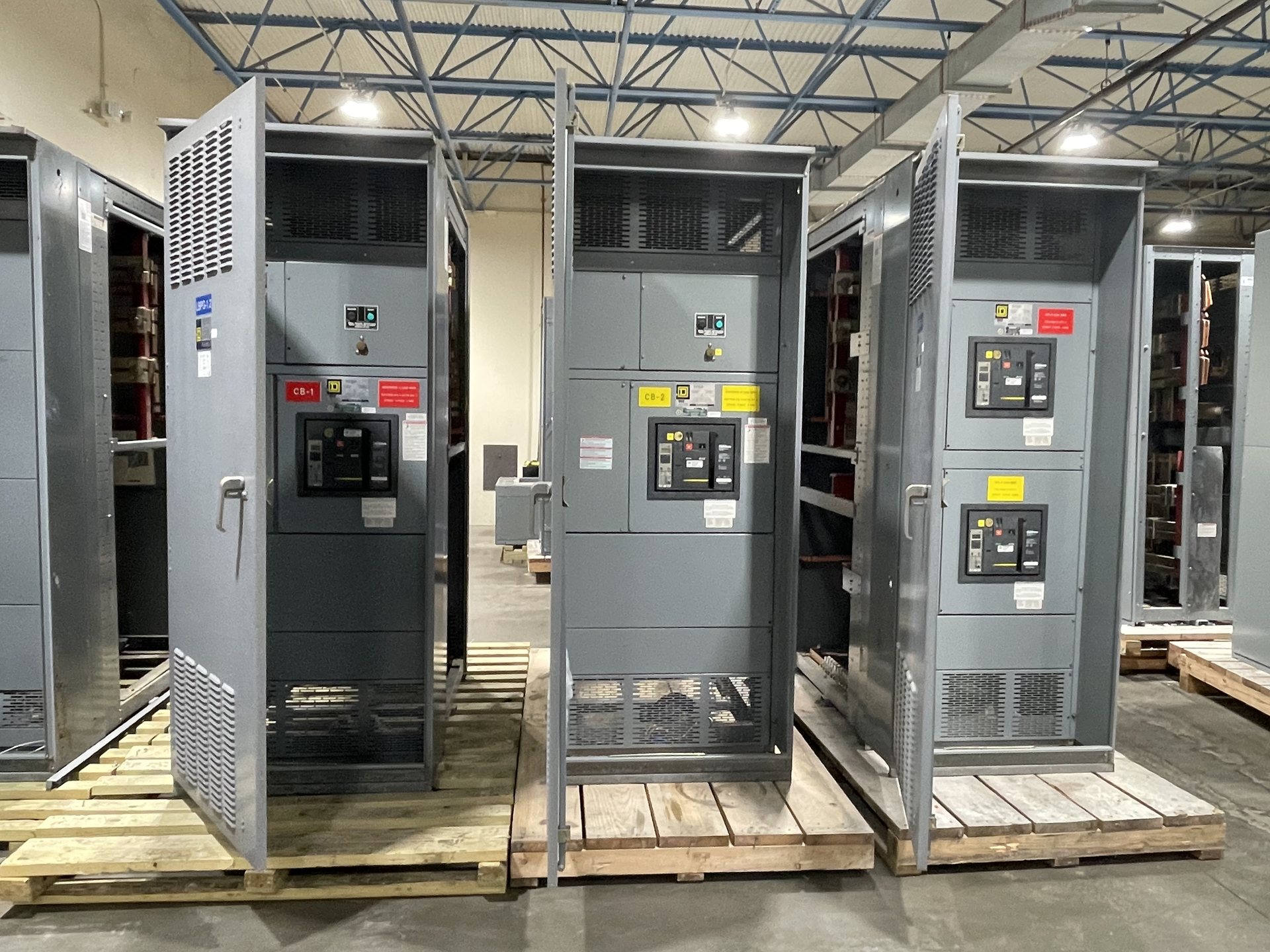
Coordinate the service entrance with the utility
For a Laredo service entrance, begin by confirming the serving utility’s current service requirements rather than assuming a familiar arrangement will be accepted. Identify the service voltage and phase, requested capacity, point of delivery, available fault-current information, metering method, and any utility-controlled compartments or access provisions. The utility’s service guide and written project direction are important inputs; the switchboard manufacturer cannot establish utility approval on the utility’s behalf.
Before requesting pricing, share the latest one-line diagram, electrical service application information that affects the assembly, and utility comments or approved metering details when available. Clarify who will obtain utility review and whether the design is preliminary or released for construction. Early coordination can reveal conflicts in compartment layout, equipment access, or conductor entry before they become procurement questions.
Define service disconnects and protection
The service disconnect configuration determines how the installation is divided into service equipment and downstream distribution. Specify the required number and arrangement of service disconnects, their intended functions, and how they relate to feeders, emergency systems, or separately supplied sections shown on the drawings. Confirm the project’s grounding and bonding scheme and identify any selective coordination or protection requirements that affect device selection and assembly layout.
Provide the engineer’s protective-device schedule and relevant short-circuit and coordination study criteria, if available, with the pricing request. Clarify whether adjustable trip functions, accessories, remote operation, or provisions for future circuits are required; do not rely on a general description such as “main breaker” to convey the design. Final device and assembly details are subject to engineering review, project documentation, and the requirements applicable to the configuration.
Resolve metering compartment requirements
Metering can shape the entire service entrance lineup. Establish whether the utility requires instrument transformers, a particular meter socket or test arrangement, dedicated utility-accessible space, or separation between utility and customer equipment. The exact requirements vary by service and utility direction, so the drawings should show the intended metering method and compartment boundaries rather than leaving the manufacturer to infer them.
Ask the project team to confirm who supplies and installs meter-related components, which components must be furnished with the switchboard, and what access and sealing provisions are required. Document meter location, viewing or operating access, conduit or wiring paths, and any barriers specified by the utility. Submit the proposed arrangement for utility review where required, and resolve comments before treating the configuration as final.
Plan incoming conductors and entry space
Incoming conductor requirements affect termination space, bus arrangement, enclosure dimensions, and field routing. The pricing package should identify conductor material, quantity and size per phase, neutral requirements, expected entry direction, and whether conductors arrive through the top, bottom, or another defined route. Include the service raceway arrangement and any project-specific constraints such as limited wall clearance or obstructions that could restrict bending and termination access.
Coordinate conductor details with the electrical engineer and installing contractor, using the design documents and applicable requirements to establish workable entry and termination conditions. Confirm whether the specified conductors are parallel sets, whether a full-size or reduced neutral is intended, and how grounding conductors are routed. These decisions need to align with the switchboard configuration; changes after approval may require a design review and revised quotation.
Document grounding and bonding intent
At service equipment, grounding and bonding details must be explicit. Provide the one-line diagram and grounding notes showing the intended neutral-to-ground bond location, grounding electrode conductor connection, equipment grounding paths, and any separate service sections. Identify requirements for a main bonding connection, grounding terminals, or other provisions through the project specification and drawings. The final arrangement must be evaluated against the applicable electrical code and the approved system design.
Avoid treating a generic ground bar request as a complete grounding specification. Clarify conductor landing needs, terminal quantities, conductor ranges where known, and connections required for the service and downstream equipment. If the design includes separately derived systems, generators, or other sources, show how they relate to the service grounding scheme. Qualified design professionals should resolve code and system questions before equipment approval.
Prepare a complete quotation and submittal package
A useful request for pricing includes the service rating and voltage, one-line diagram, utility metering criteria, disconnect and protective-device schedule, enclosure and environmental requirements, conductor entry details, and grounding notes. Add site constraints that affect dimensions or access, the requested delivery destination in Laredo, and the project schedule. State whether the request is for a new service entrance assembly or new components for a retrofit; we supply new equipment and new retrofit components.
Review the quotation and submittal for configuration, component origin, availability, lead time, and requested test documentation, confirming each item for the specific project. UL 891 applies to switchboards; it is not a blanket listing for every switchgear configuration. Verify the applicable standard and any listing requirements for the proposed assembly rather than assuming they apply. Installation, inspection, testing, and energization must be performed by qualified personnel under approved procedures.