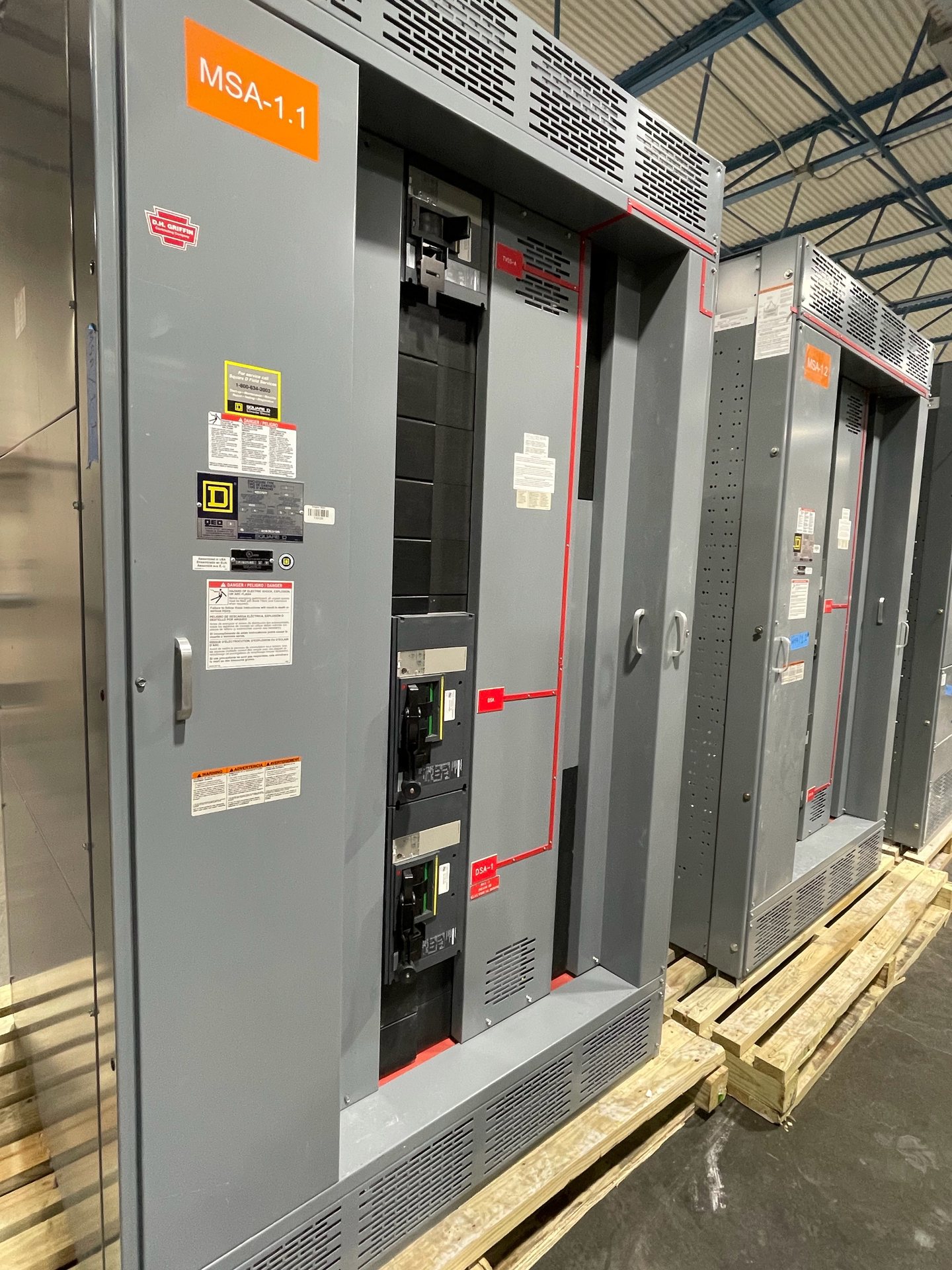
Plan the MCC lineup around the motor schedule
An MCC lineup is a coordinated arrangement of units serving groups of motors and related loads. Start the scope with the motor schedule: identify each motor by tag, driven equipment, operating duty, voltage, phase, horsepower or other relevant load data, and required starting method. Note which loads need local control, remote operation, interlocking, or status reporting. These details let us review the proposed unit mix and identify missing information before pricing.
Also define the installation context and lineup constraints. Provide available room dimensions, access and cable-entry preferences, incoming supply information, and the expected location of the MCC relative to the equipment it serves. Identify future spaces or planned additions separately from currently populated units. Because configuration and component availability are project-specific, the quotation should establish what is included, what remains open, and which design assumptions require confirmation.
Select starter types for each motor duty
Starter selection should follow the motor application rather than a lineup-wide default. Across a schedule, different loads may call for different starting and control approaches, such as full-voltage starting, reduced-voltage starting, or variable-speed operation. The engineer should identify the required method for each motor and explain any operating constraints, including frequent starts, acceleration needs, process coordination, or restrictions on disturbance to the supply. We can build the specified arrangement into a new MCC configuration.
For each starter unit, clarify the motor rating and control intent, including whether commands originate locally, from an operator station, or from a control system. State required permissives, interlocks, hand-off-auto functions, and indication where applicable. If a drive or other specialized device is intended, identify its scope and interfaces rather than assuming it is interchangeable with a conventional starter. Final equipment selection and suitability are reviewed against the complete project requirements.
Coordinate feeder units and protection
MCC feeder units serve loads that are not necessarily motor starters, so list them separately in the equipment schedule. For each feeder, describe the connected load, required switching and protective functions, conductor or cable interface, and any monitoring or remote-control needs. Distinguish motor feeders from branch or auxiliary loads, and identify loads that must remain available when another unit is isolated. This separation helps keep unit descriptions, drawings, and pricing aligned.
Overload protection must be matched to the motor and its operating conditions, while short-circuit and ground-fault protection depend on the system design and applicable project requirements. Provide the protection philosophy, coordination study assumptions where available, and any specified device or setting constraints. Do not treat overload protection as a substitute for other protective functions. The responsible electrical engineer establishes settings and coordination; installation, testing, and energization require qualified personnel following approved procedures.
Define control power and automation interfaces
Control power affects how starters, relays, indication, and connected control devices operate. Specify the intended source, control voltage, distribution approach, and requirements for isolation or backup if applicable. Identify which control components are part of the MCC scope and which are furnished elsewhere. If the project uses separate control transformers, power supplies, or control panels, show their relationship to the lineup so the equipment boundary is clear.
For automation integration, provide the control-system architecture and an interface schedule showing command, status, alarm, and interlock points for each relevant unit. State whether signals are hardwired, networked, or a combination, and identify protocol or communication requirements when selected by the project. Clarify who supplies network equipment, programming, and field wiring. These decisions affect unit construction and documentation; they should be resolved before approval rather than inferred from a generic MCC description.
Specify new retrofit components carefully
For an existing MCC, a new retrofit component must be scoped against the installed equipment, not only against the motor rating. Provide the original manufacturer and model information if known, lineup and unit identification, photographs or drawings, dimensions, bus and connection details, and the existing control scheme. Describe the intended change and whether adjacent units, wiring, or automation interfaces are affected. We supply new retrofit components.
Compatibility and fit cannot be assumed from appearance or a partial nameplate description. The existing assembly configuration, condition, protection scheme, and available documentation all matter. A project review may identify the need for additional measurements, engineering information, or a broader replacement scope. State whether the request is for a component, a replacement unit, or a new lineup, and keep the quotation boundary explicit so procurement and installation planning account for required work outside the supplied equipment.
Prepare submittals, purchasing scope, and delivery planning
A useful MCC submittal package can include the lineup arrangement, unit schedule, elementary or control diagrams as applicable, interface information, and identified assumptions. Tell us which documents are required for engineering review, construction coordination, and closeout, and whether project-specific formats or review milestones apply. Confirm the standards and listing requirements for the configuration; UL 891 applies to switchboards and is not a blanket standard for MCCs. Applicable standards and any listing must be verified for the proposed equipment.
For pricing, send the current motor schedule, one-line and control drawings where available, equipment specifications, site constraints, required options, and requested delivery location. Identify the project schedule and any approval dependencies; lead time is subject to project review and confirmation in the quotation. If American components are specified, state that requirement for review. Component origin and documentation are confirmed for each quotation, and specifying domestic components alone does not establish compliance with a separate domestic-content requirement.