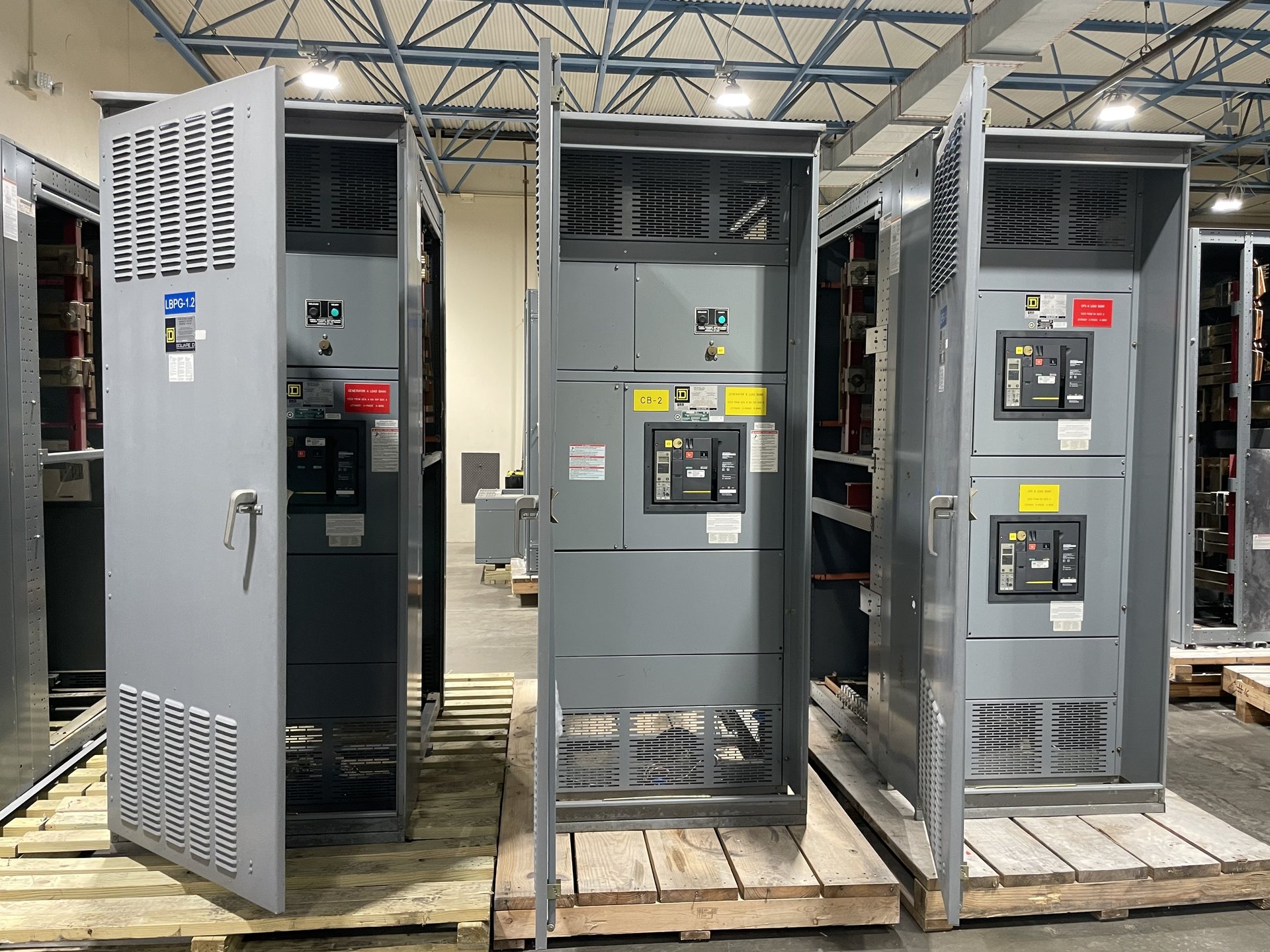
Full replacement or retrofit: define what changes
A full replacement removes the existing lineup from the project scope and supplies a newly manufactured assembly designed to the specified electrical and physical requirements. This approach may be appropriate when the existing structure, bus, barriers, or arrangement is unsuitable for continued use or cannot be reliably documented. It can also provide an opportunity to reconsider lineup organization, future provisions, and equipment interfaces as one coordinated design.
A retrofit keeps some or much of the existing assembly in service and introduces newly manufactured components intended to fit and function with it. That can limit the amount of equipment being changed, but it makes the retained assembly an important design constraint. Compare the two options by identifying exactly what stays, what is replaced, what interfaces must be verified, and which party is responsible for validating the existing equipment. Neither choice should be treated as a drop-in solution without engineering review.
Assess the existing assembly before choosing
For a retrofit evaluation, gather equipment nameplates, manufacturer and model information, drawings, connection details, component identification, and records of modifications. Document the condition and configuration of the compartments and supporting structure through qualified personnel using approved procedures. Missing drawings, undocumented changes, corrosion, damaged insulation, or uncertain component history can restrict the scope that can be responsibly designed around the existing assembly.
For a replacement, record the existing lineup’s electrical role and physical constraints rather than assuming its layout must be copied. Identify loads served, incoming and outgoing connections, required protective functions, room access, cable entry, clearances, and any site limitations that affect removal or installation. These details help determine whether a new lineup can meet the project requirements and what site work, transition planning, or additional verification the replacement scope may involve.
Verify mechanical and electrical interfaces
A retrofit depends on more than a component’s nominal dimensions. The project team should establish the existing assembly’s manufacturer and design, compartment geometry, mounting and connection arrangements, bus details, control wiring, and protective-device requirements. Confirm which drawings are current and whether field conditions match them. Interface assumptions should be recorded and reviewed before a quotation is finalized; configuration, engineering feasibility, and availability of the specified new components require project-specific confirmation.
A new lineup offers a coordinated design of the supplied assembly, but its connections to retained equipment and the facility still need careful definition. Provide one-line diagrams, available elevations and plan drawings, connection requirements, control and communications expectations, and relevant operating constraints. Where the new equipment must connect to existing conductors or adjacent assemblies, define the transition scope and responsibility for field measurements. Verify applicable standards and any requested listing for the actual configuration rather than assuming a standard applies to every assembly.
Plan outage scope and installation boundaries
A retrofit may reduce the amount of equipment removed, yet work inside or around an existing assembly can still require a significant outage. The plan should distinguish component replacement from enclosure changes, bus work, wiring changes, protection updates, and site modifications. Ask which loads must be unavailable, whether work can be divided into phases, what temporary arrangements are permitted, and what prerequisites must be complete before the outage begins. Schedule assumptions remain subject to engineering review and site conditions.
A full replacement typically involves a broader changeover scope that can include removal, delivery access, positioning, reconnection, and coordination with other contractors. Establish who handles demolition, rigging, foundations or supports, conductors, controls, and commissioning activities. Provide access routes, room dimensions, delivery restrictions, and outage windows during quotation. Lead time and installation sequencing depend on the final design, components, documentation, and project review; confirm these for the specific proposal instead of relying on a general schedule assumption.
Make safety and verification part of the decision
The comparison must account for the condition of retained equipment and the risks of relying on uncertain interfaces. A retrofit proposal should identify what is included, what existing equipment remains, and what conditions or documentation are required to validate the design. A replacement proposal should likewise define boundaries with retained systems and identify assumptions that affect coordination. Installation, inspection, testing, and energization require qualified personnel working under approved procedures; equipment selection alone does not establish that a site is ready for operation.
Request a clear documentation plan for the proposed scope. Depending on the configuration, relevant documents may include approved drawings, component information, interface details, applicable standards, and test documentation. Confirm which documents are available for the quoted equipment and what must be supplied or verified by others. UL 891 applies to switchboards; it is not a blanket standard for all switchgear. Verify the applicable standards and any requested listing for the specific assembly and configuration.
Compare lifecycle needs and prepare a useful quote request
Look beyond initial scope to the equipment’s expected role over its service life. Consider whether the retained structure has known maintenance needs, whether replacement parts and records are identifiable, and whether the facility expects changes in loads, protection, controls, or expansion requirements. A retrofit can preserve selected existing infrastructure, while a full replacement can address the lineup as a new coordinated design. The better fit depends on documented condition, technical feasibility, operating constraints, and the owner’s lifecycle priorities—not on a universal rule.
For a pricing request, provide the one-line diagram, equipment nameplates, available drawings, photos or field documentation, required functions, site and connection constraints, outage assumptions, requested component origin, and applicable standards or listing expectations. State whether the request is for a new lineup or newly manufactured retrofit components, and identify what existing equipment will remain. We build to specification using American components as requested; component origin, engineering, availability, lead time, and test documentation must be confirmed for each quotation. We serve Texas from the United States and ship nationwide.