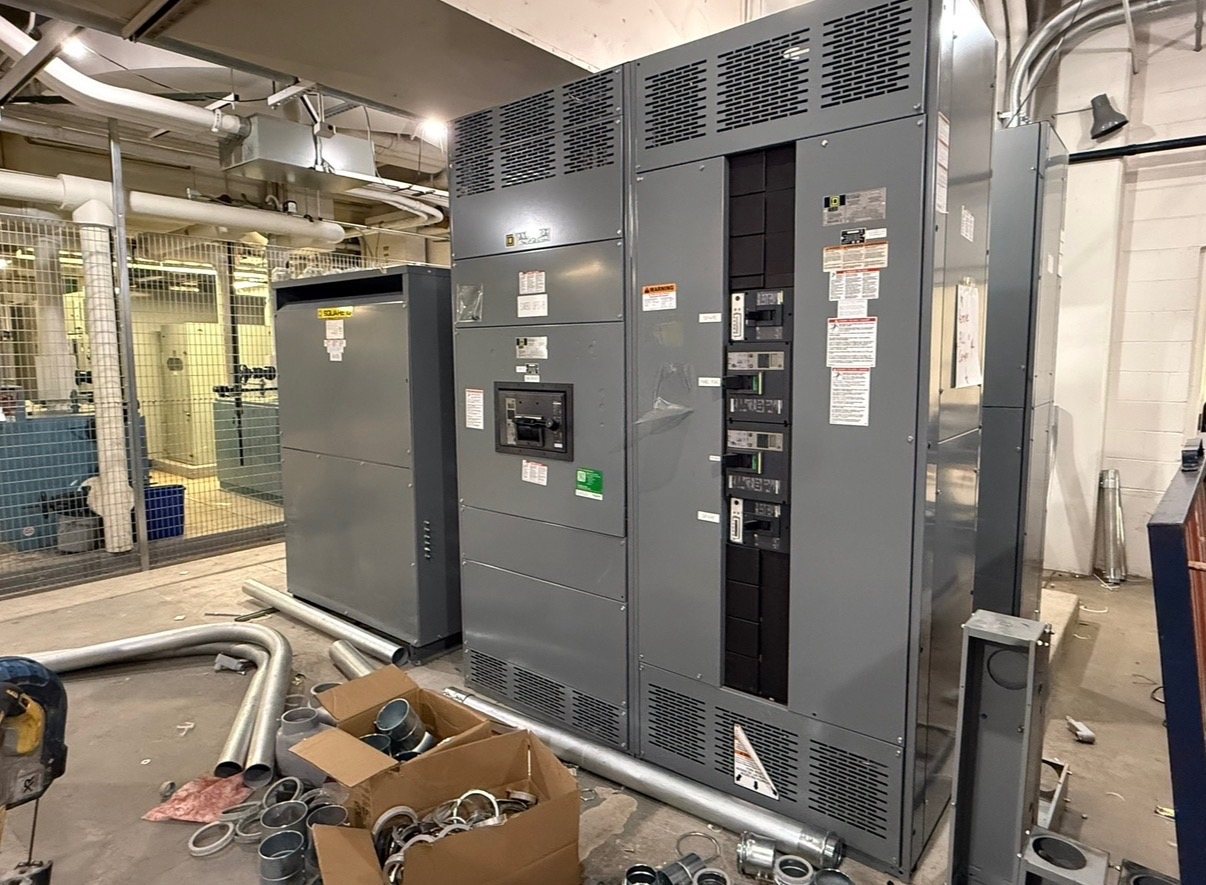
Switchgear vs. switchboard: start with construction
The terms describe different equipment approaches, but the exact construction varies by design and configuration. Switchgear commonly uses separate compartments or barriers to organize devices and isolate sections; a switchboard is generally a more integrated assembly of distribution devices and bus within a common structure. Those broad distinctions are not enough to establish suitability. Compare the proposed arrangement, device type, access, barriers, and available options in the actual manufacturer’s drawings.
For a meaningful comparison, document the source and load arrangement, main and feeder device requirements, system voltage, available fault current, and intended mounting location. Identify whether devices must be fixed or drawout, how incoming conductors enter, and what connections or transitions are required. These details affect the construction proposal and footprint. We review them against the requested configuration rather than assuming a category name defines a standard design.
Verify the applicable standard and configuration
UL 891 is a standard for switchboard assemblies; it is not a blanket listing for every type of switchgear. Requirements and applicable standards depend on the equipment category, intended use, configuration, and project specifications. A comparison should therefore state the required standard and any listing expectations for each proposed assembly, rather than treating “switchgear” or “switchboard” as proof that a particular standard applies.
Include the project’s specification sections, one-line diagram, equipment schedule, and any owner or authority requirements with a pricing request. Ask which standards apply to the proposed configuration, what documentation is available, and whether the specified arrangement can be supplied as requested. Listing and applicable standards should be verified for the configuration. Any requested test records, component origin information, or domestic-content terms also require confirmation for the specific quotation.
Compare maintainability and operating access
Maintainability depends on how equipment is arranged and operated, not simply on its label. Review whether the design provides the access needed to inspect, isolate, or replace devices under the site’s approved procedures. Consider compartmentation, device mounting, front or rear access needs, cable landing space, and whether maintenance activities affect adjacent circuits. Also check door swing, working clearances, and the route for moving replacement components into the electrical room.
Ask the design team to describe the intended maintenance approach and identify any operational constraints that matter, such as equipment downtime or the need to isolate individual sections. For retrofit planning, provide the existing equipment identification, dimensions, drawings, and device information where available. We supply new retrofit components only; compatibility, interfaces, and suitability must be reviewed for the specific existing equipment. Installation, servicing, testing, and energization require qualified personnel following approved procedures.
Plan selective coordination around the system
Selective coordination is a system-design objective: protective devices are selected and coordinated so that the device nearest a fault is intended to operate while upstream devices remain closed when the design permits. Neither switchgear nor a switchboard guarantees that outcome by category alone. Device type, trip functions, settings, available fault current, system topology, and the selected combination of upstream and downstream equipment all influence the coordination study.
Provide the one-line diagram, device and trip-unit requirements, available fault-current information, and any coordination or code criteria established by the project engineer. Ask for the proposed device schedule and the data needed to evaluate coordination before equipment is finalized. If selectivity, ground-fault protection, or adjustable protection is required, identify those needs early; they can affect device selection, assembly layout, documentation, and the eventual price.
Fit the equipment to the electrical room
Space comparisons should use the proposed equipment dimensions and its installation and operating clearances, not a general assumption that one category is always smaller. The lineup length, depth, height, incoming and outgoing cable space, bend requirements, access side, and room obstructions can all change the usable footprint. The electrical room must also accommodate the delivery path and any planned removal or replacement of devices.
Share room plans and elevations, wall and door locations, structural constraints, cable entry direction, and routing assumptions. Confirm whether rear access is possible and whether future feeders or sections are part of the project. A compact arrangement that conflicts with cable access or maintenance clearances is not a practical fit. We use the project layout and electrical requirements to evaluate a proposed configuration, with final dimensions and interfaces confirmed during quotation and engineering review.
Evaluate total cost and request a comparable quote
Cost depends on the selected devices, bus and enclosure requirements, construction, options, documentation, and project-specific engineering—not just whether the equipment is called switchgear or a switchboard. Compare quotations with the same electrical ratings, device functions, access expectations, standards, documentation, and scope boundaries. A lower initial equipment price may not represent equivalent scope if key requirements, accessories, or interfaces are omitted.
For a useful quotation, send the one-line diagram, equipment schedule, project specification, site constraints, requested delivery window, and any required component-origin or test-documentation terms. We manufacture and supply new equipment and new retrofit components using American components as specified; component origin and project requirements must be confirmed for each quotation. Lead time, availability, engineering, and documentation are subject to project review. Request pricing for the configuration that best fits the design.